The 6 Best Super-Automatic Espresso Machines of 2026

Jack · Founder & Lead Reviewer
Researches every machine through engineering analysis, long-term owner reports, and independent technical testing, including Italian and German sources most English-language reviews skip.
Last updated
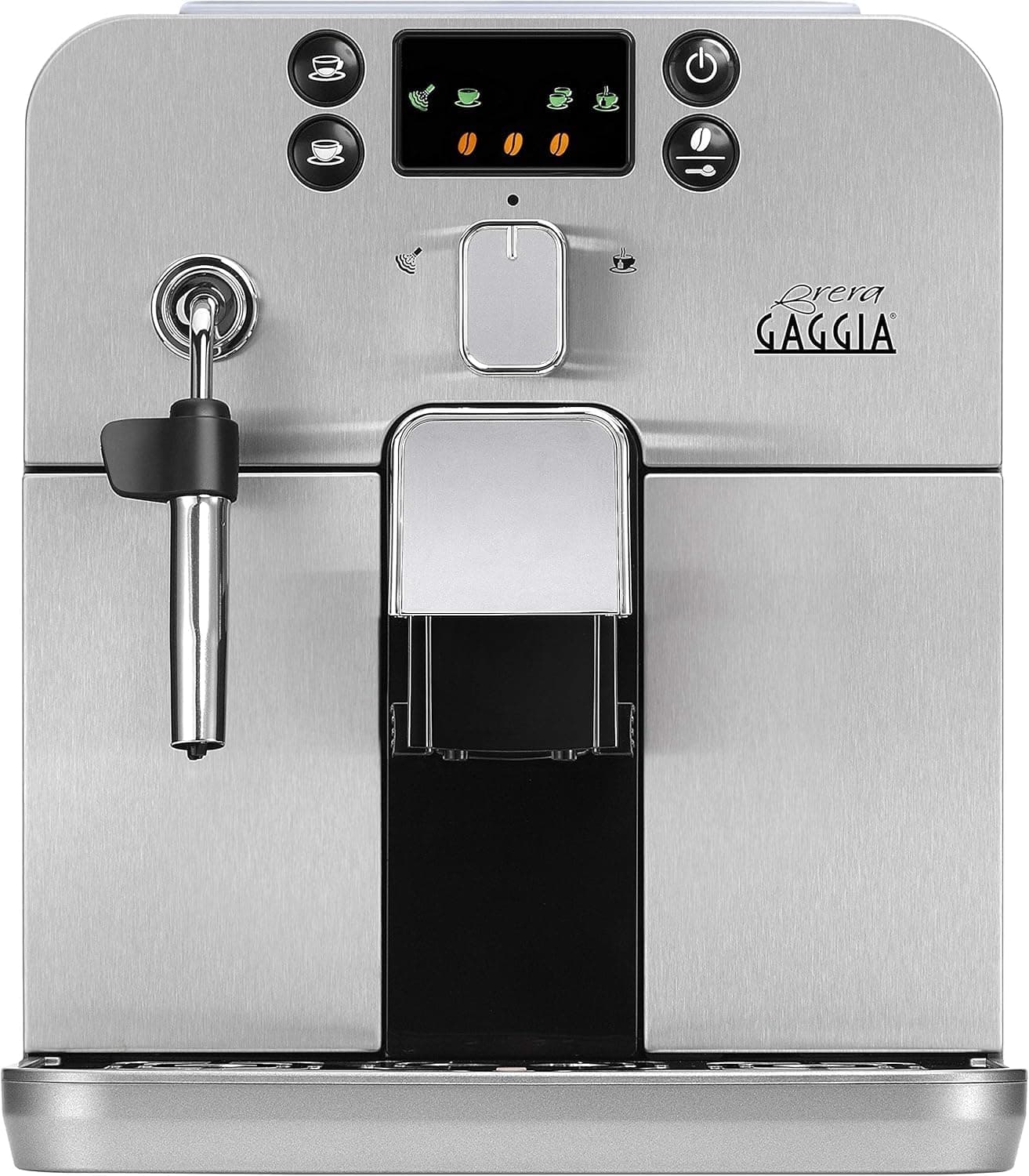
Super-automatics do one thing exceptionally well: they get out of your way. Grind, dose, tamp, brew, eject the puck, rinse the milk circuit, all at the push of a button, start to finish in under 90 seconds. You give up meaningful control over the extraction and pay a significant premium over semi-automatic machines. In exchange, you get café drinks every morning without skill, fuss, or cleanup time.
This guide is for convenience-first buyers: busy households where two people want different drinks fast, offices where no one wants to learn latte art, and anyone who values a repeatable result over a perfected one. These are not for espresso purists. If you want to dial in shot pressure and adjust extraction by the second, see my full ranking of the best espresso machines of 2026.
What Is a Super-Automatic Espresso Machine?
A super-automatic (also called fully automatic or bean-to-cup) handles every step of espresso preparation internally. Whole beans go in the top, water goes in the reservoir, and a finished drink comes out the spout. The machine grinds the beans, transfers the grounds to an internal brew group, tamps them under pressure, runs water through at the correct temperature and pressure, extracts the shot, and ejects the spent puck, all without any manual steps.
A semi-automatic, by contrast, requires you to grind separately, dose and tamp the portafilter yourself, lock it into the group head, and start the pump manually. That hands-on process is where espresso quality comes from. With a decent semi-automatic and a separate grinder, you can produce a better shot than a super-automatic costing considerably more, but you need to learn how. The best espresso machines guide covers that category in full.
Milk systems:three approaches exist at this price tier. A carafe system (De’Longhi LatteCrema, Jura) attaches a jug of milk and froths automatically into the drink, fast, but the carafe needs refrigerating after each use. The Philips LatteGo uses a two-compartment lid that clicks onto any container and rinses clean quickly with no disassembly. Manual panarello wands (Magnifica Evo base model, Gaggia Brera) inject air through a sleeve, easier than a real steam wand, but producing different texture than true microfoam.
Who should avoid super-automatics: espresso enthusiasts who enjoy the craft, anyone who wants to pull shots on a specific pressure profile, anyone buying mainly for espresso quality rather than drink volume, and anyone who wants to experiment with different baskets, grind sizes, and water temperatures. A semi-automatic will serve those buyers far better for far less money.
My Top Super-Automatic Picks at a Glance
Six machines ranked across the $549–$4,000 range, by value, drink quality, and daily usability.
| Machine | Rating | Pressure | Boiler | Price | Best for | |
|---|---|---|---|---|---|---|
| 4.4 | 15 bar | Thermoblock | Around $550price may vary | Best Super-Automatic | Check Price | |
Pros & consPros
Cons
| ||||||
| 4.2 | 15 bar | Thermoblock | Around $550price may vary | Best Budget Super-Automatic | Check Price | |
Pros & consPros
Cons
| ||||||
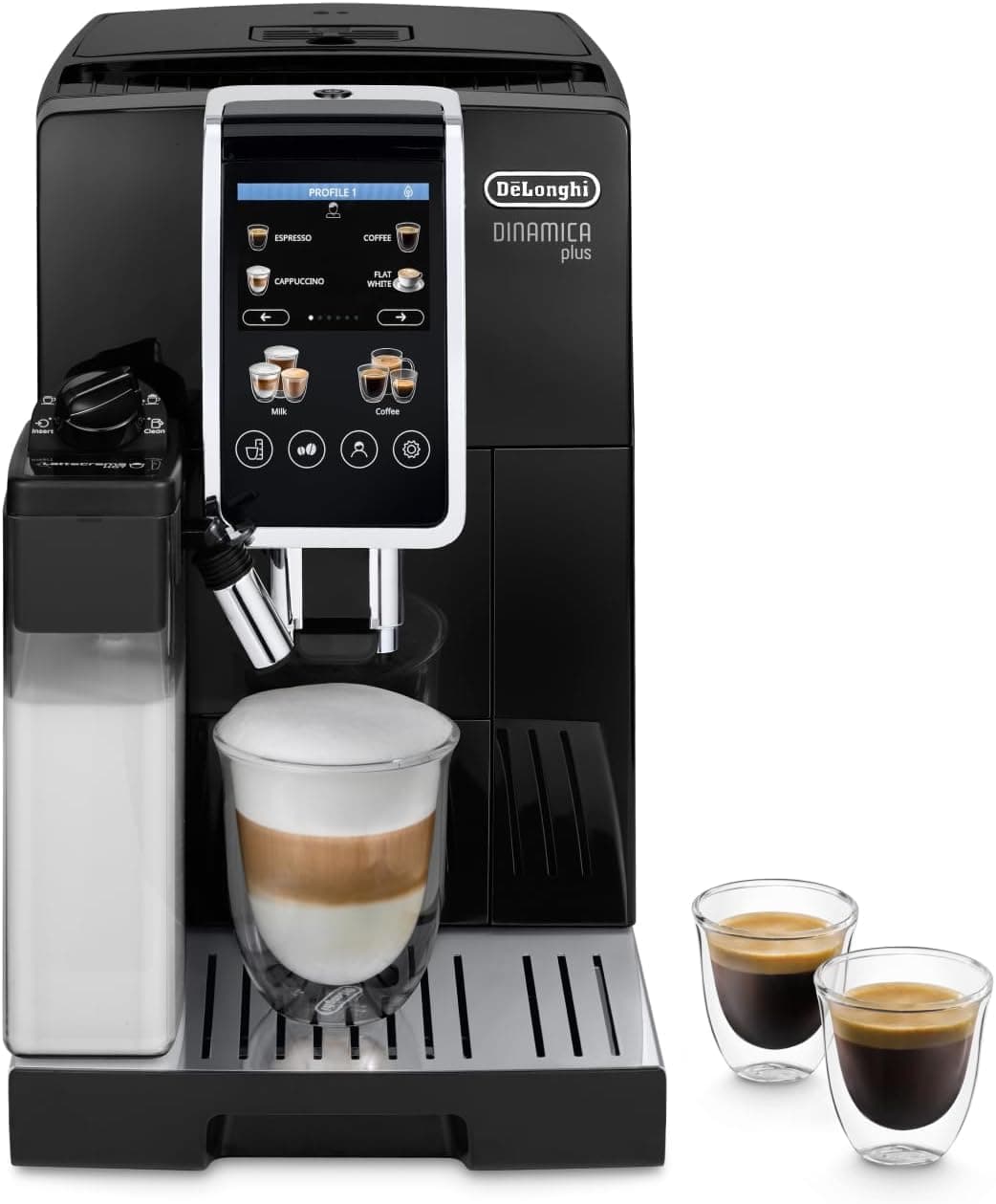 De'Longhi Dinamica Plus | 4.4 | 15 bar | Thermoblock | Around $999price may vary | Best for Drink Variety | Check Price |
Pros & consPros
Cons
| ||||||
| 4.2 | 15 bar | Thermoblock | Around $399price may vary | Best Compact Super-Automatic | Check Price | |
Pros & consPros
Cons
| ||||||
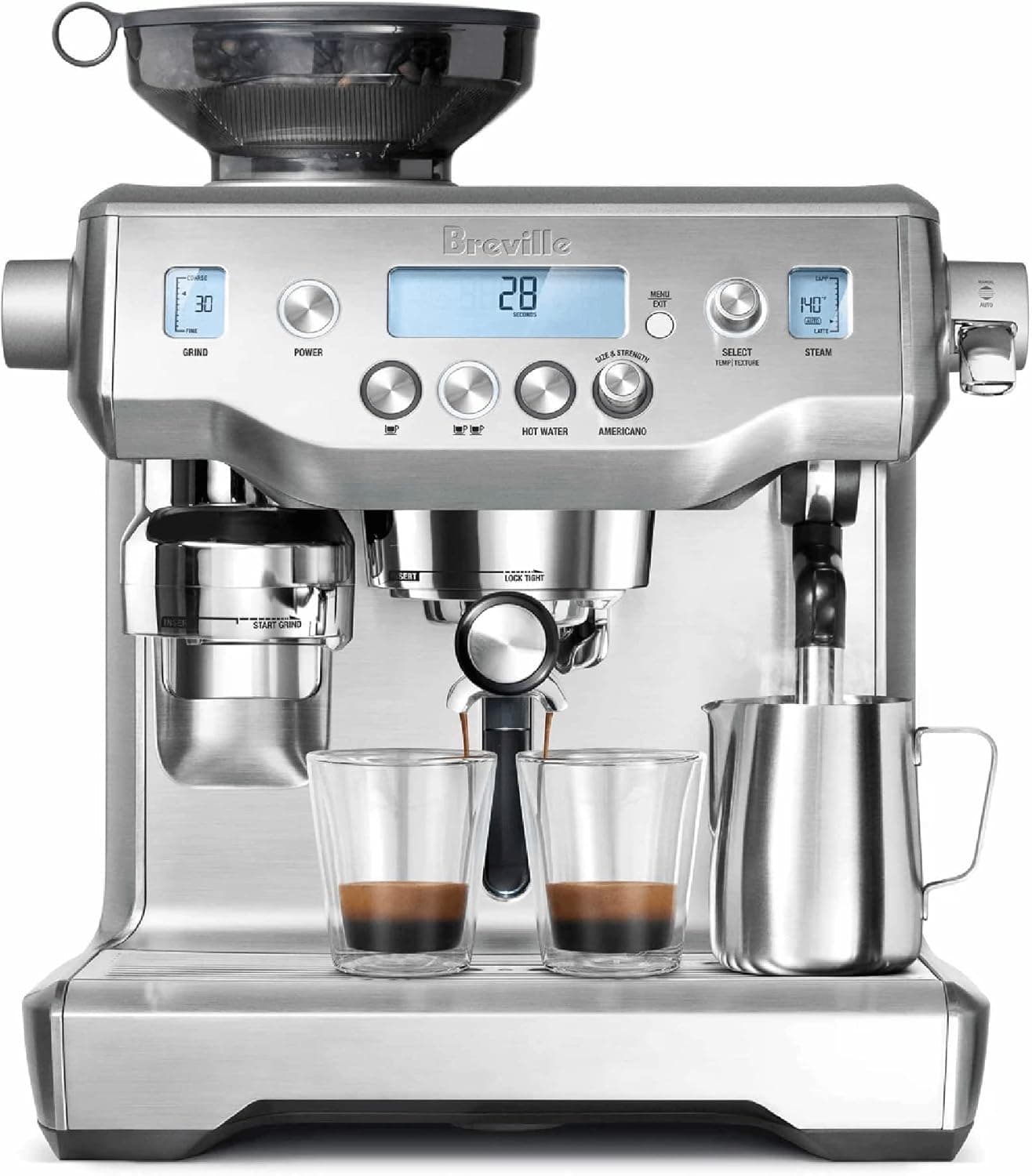 Breville Oracle Touch | 4.5 | 9 bar | Dual Boiler | Around $2,799price may vary | Best for Espresso Control | Check Price |
Pros & consPros
Cons
| ||||||
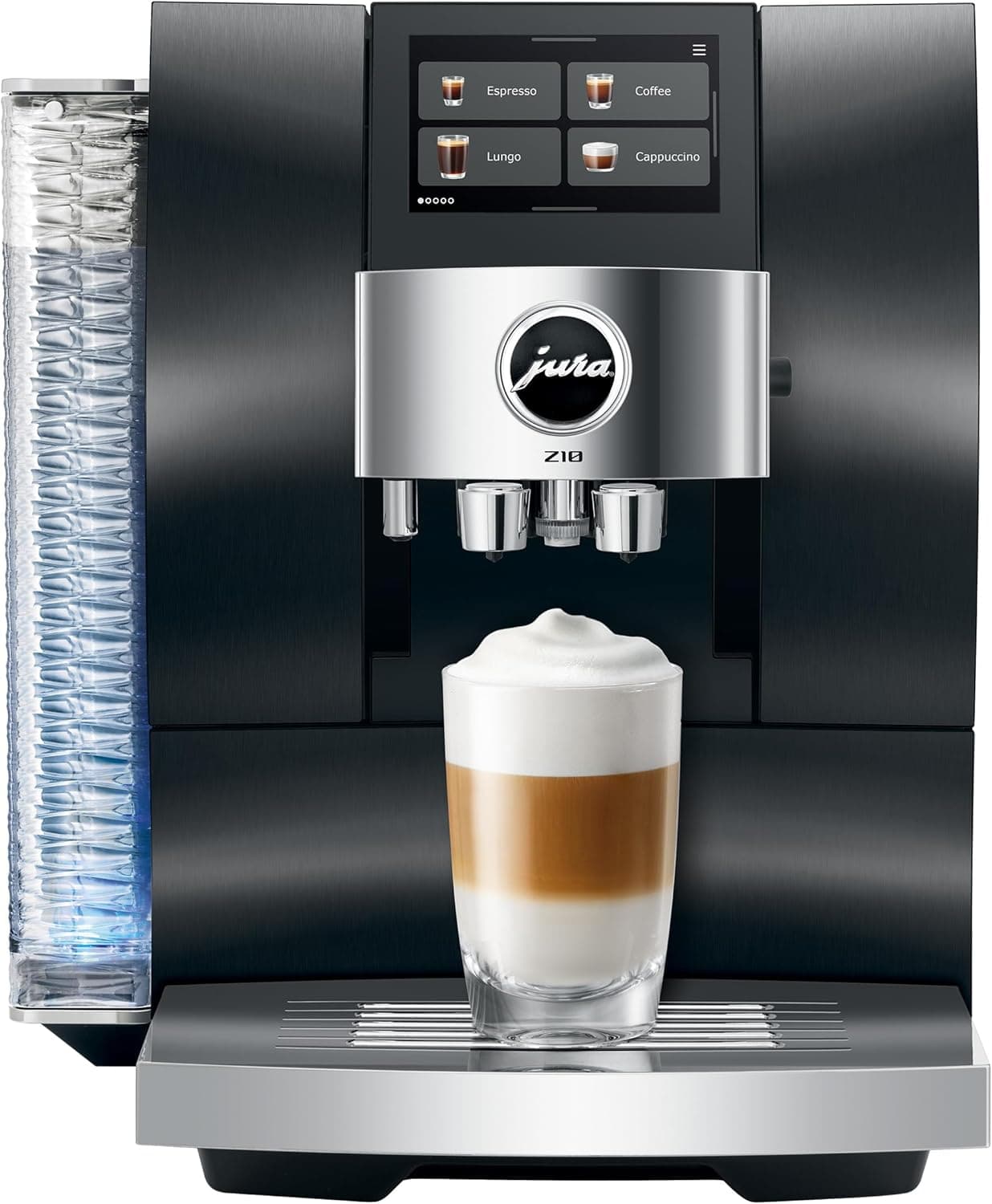 Jura Z10 | 4.6 | 15 bar | Thermoblock | Around $3,999price may vary | Best Premium Super-Automatic | Check Price |
Pros & consPros
Cons
| ||||||
15 bar · Thermoblock · $$$
Best Super-AutomaticPros & cons
Pros
- One-touch espresso, bean to cup
- Built-in grinder with 13 settings
- Automatic milk carafe included on base model
- Compact for a super-automatic
Cons
- No user profiles for multiple drinkers
- Plastic-heavy build
- Milk carafe too small for two latte macchiatos at once
15 bar · Thermoblock · $$$
Best Budget Super-AutomaticPros & cons
Pros
- LatteGo milk system rinses in under 15 seconds, no tubes to clean
- Ceramic flat burr grinder with 12 settings runs cool and quiet
- AquaClean filter pushes descaling interval to 5,000 cups
- Compact footprint at 9.8 inches wide
Cons
- Owner reports show a meaningful failure rate within the first 5-6 months
- No bypass doser, can't use pre-ground coffee reliably
- Only 5 drink options, limited for the price
- De'Longhi Dinamica Plus4.4
15 bar · Thermoblock · $$$$
Best for Drink VarietyPros & cons
Pros
- 24+ drink recipes including cold brew and over-ice options
- LatteCrema system produces dense, consistent milk foam
- Color touch display is the clearest at this price
- Bypass doser accepts pre-ground coffee
- My Latte Art mode with 6 latte art designs on the display
Cons
- Expensive for what is essentially automation upgrades over the Magnifica Evo
- App connectivity is finicky on some Android versions
- Large at 9.5 inches wide, takes up real counter space
 4.2
4.215 bar · Thermoblock · $$$
Best Compact Super-AutomaticPros & cons
Pros
- Removable brew group makes deep cleaning actually achievable
- Ceramic burrs run cooler and quieter than steel
- Compact footprint for a super-automatic
- Bypass doser accepts pre-ground coffee
Cons
- False 'no beans' error triggers when hopper runs low, a known quirk
- 1.2L water tank needs frequent refilling for a two-person household
- Manual panarello wand, not automatic milk
- Breville Oracle Touch4.5
9 bar · Dual Boiler · $$$$
Best for Espresso ControlPros & cons
Pros
- Dual boiler: simultaneous brewing and steaming at full pressure
- Auto dose, grind, tamp, and milk, every step is also manually overrideable
- 58mm portafilter gives access to the full commercial accessories ecosystem
- TFT touch screen saves individual recipe profiles
Cons
- Price is difficult to justify against semi-auto machines with full manual control at a fraction of the cost
- Grinder chute clogs periodically, needs regular brushing
- 28 lbs, this does not move easily once placed
- Jura Z104.6
15 bar · Thermoblock · $$$$
Best Premium Super-AutomaticPros & cons
Pros
- P.R.G. grinder reads bean type and adjusts grind automatically
- P.E.P. pulse extraction extends contact time without over-extracting
- Hot AND cold extraction, cold brew espresso in 4 minutes
- 32 specialty drinks including iced beverages
- CLARIS Smart+ filter pushes descaling to every 6 months
Cons
- Price alone could buy multiple capable machines from other brands, with money left over
- US service network is limited, Swiss-service repairs can take weeks
- Full app features require a J.O.E. subscription
How I Evaluated These
I score each super-automatic against independent lab tests, professional reviews, and long-term owner reports rather than a single unit I bought and ran myself. For each machine I weigh crema consistency, shot quality, and milk texture across the automated milk system, drawing on the same criteria used throughout this site.
Daily maintenance burden gets real weight in the scoring, since a machine that’s a chore to rinse and empty gets used less over time. Cleaning time varies meaningfully across this category, that’s a genuine differentiator, not a footnote. For full methodology details, see my how we test espresso machines page.
The 6 Best Super-Automatic Espresso Machines
1. De’Longhi Magnifica Evo: Best Overall Value
- Grinder: Steel burr, 13 settings
- Milk: Manual panarello wand
- Drinks: Espresso, coffee, americano
- Tank: 1.8L
- Best for: First super-automatic, daily driver
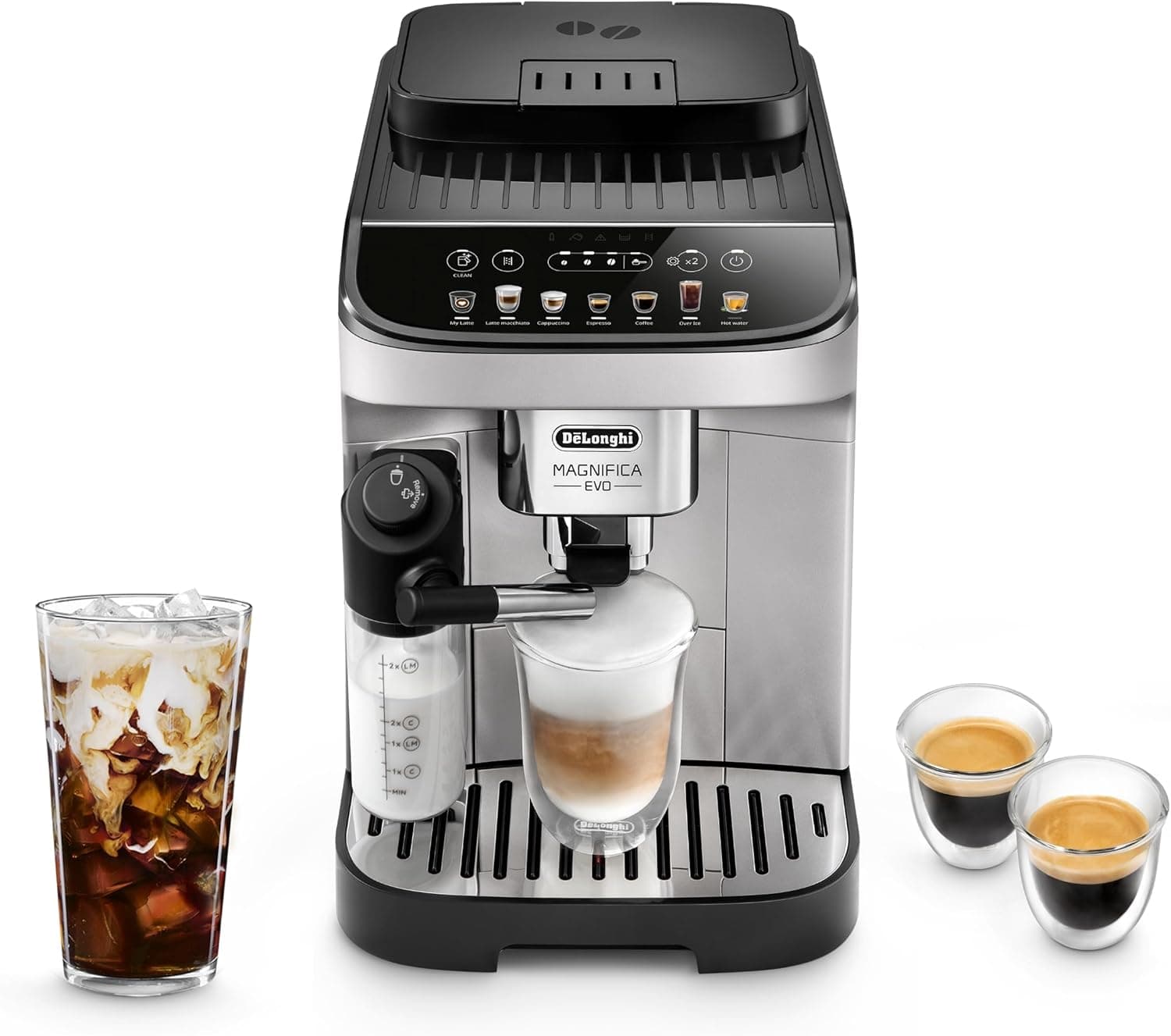
The Magnifica Evo is the clearest entry point into the super-automatic category. It grinds, doses, tamps, and brews at a button press. The 13-setting steel burr grinder adjusts fine enough to make a meaningful difference with different bean types, the 1.8L water tank goes two to three days between refills in a two-person household, and the grounds drawer holds about 14 pucks before it needs emptying. Owner reports describe minimal maintenance beyond a quick daily rinse.
The honest limitation is the milk system. The base Magnifica Evo includes a panarello wand, a manual frother with an air injection sleeve that produces warm, textured milk but not the dense microfoam you’d get from a real steam wand or an automatic carafe system. For straight espresso and americanos, it’s irrelevant. For milk-heavy drinks, the Philips 3200 LatteGo is actually a better daily driver.
The Magnifica Evo ECAM series offers a “Plus” variant with an iced coffee function and a slightly different My Menu interface for a bit more. For most buyers, the base Evo is enough, the Plus adds features most people won’t use.
2. Philips 3200 Series LatteGo: Best Budget Pick
- Grinder: Ceramic flat burr, 12 settings
- Milk: LatteGo carafe (auto)
- Drinks: 5 (espresso, coffee, americano, cappuccino, latte macchiato)
- Tank: 1.8L
- Best for: Milk drinks, low-maintenance households
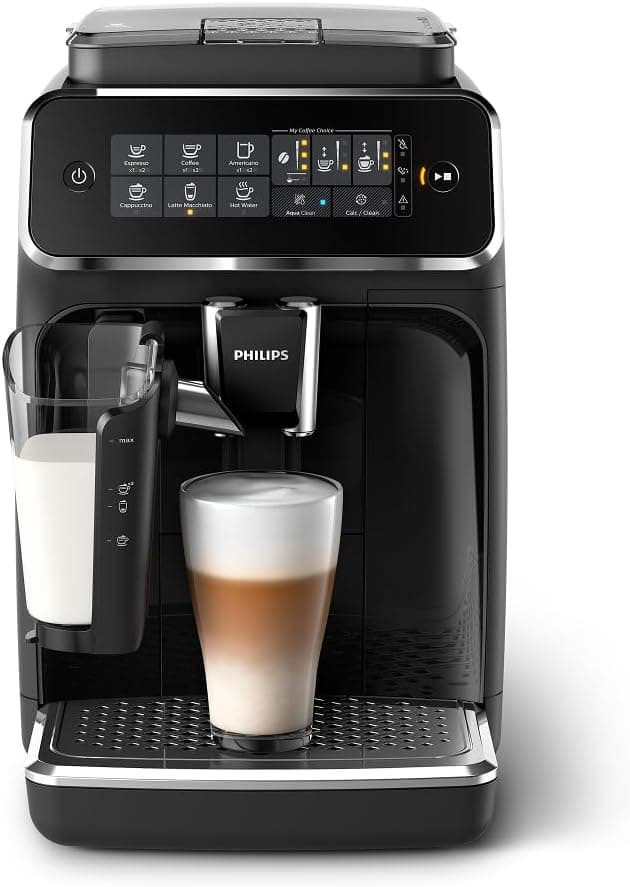
15 bar · Thermoblock · $$$ · Best Budget Super-Automatic
The milk system is what stands out most about the Philips 3200. LatteGo is a two-piece lid that clips onto any milk container, froths automatically into the drink, and rinses clean under the tap in a quick pass, no disassembly, no soaking, no milk residue to worry about. It's a genuinely easier clean than carafe-style auto-frothers, which typically need more time to rinse and reassemble, or manual panarello wands, which need more careful attention to avoid dried milk buildup.
The ceramic flat burr grinder is the other standout. Ceramic burrs run cooler than steel during extended grinding sessions, which matters less at home than in a café but still preserves volatile aromatics slightly better. Twelve grind settings give more adjustment range than the five levels on the Gaggia Brera. AquaClean filter technology pushes the descaling interval to 5,000 cups, well over a year for most households depending on how much you brew.
The real constraint is the drink menu: five options. You get espresso, long coffee, americano, cappuccino, and latte macchiato, and that’s it. No bypass doser means you can’t use pre-ground coffee. If the five core drinks cover your household’s needs, the Philips 3200 LatteGo is a strong value in this category.
The premium sibling, the Philips 3300 LatteGo, adds a quieter SilentBrew motor and a sixth drink preset. For a head-to-head against the Ninja Luxe Café Pro, Ninja Luxe Café vs Philips 3300 LatteGo breaks down both machines across espresso quality, milk frothing, and ease of use.
3. De’Longhi Dinamica Plus: Best for Drink Variety
- Grinder: Steel burr, 13 settings
- Milk: LatteCrema carafe (auto)
- Drinks: 24+ recipes
- Tank: 1.8L
- Best for: Large households, variety seekers
15 bar · Thermoblock · $$$$ · Best for Drink Variety
The Dinamica Plus is the machine you buy when a five-drink menu isn’t enough. Twenty-four plus recipe options include flat whites, cold brew over ice, hot chocolate, and a “My Latte Art” mode that syncs milk and espresso timing to print latte art designs on the display, not on the drink, but it’s genuinely fun. The LatteCrema milk carafe produces denser foam than the Magnifica Evo’s panarello wand: real microfoam texture that settles cleanly in layered drinks.
The color touch display is the clearest interface at this price tier. Customization is deep: you adjust drink temperature in 5 steps, milk froth density in 3 levels, and shot strength and volume per drink type, all saved as user profiles. The bypass doser lets you use pre-ground coffee when you need to. Owner reports describe drink consistency as reliably tight once a recipe is dialed in and saved.
The honest question is whether the extra features over the Magnifica Evo justify the higher price. For a two-drink household pulling the same americano every morning, probably not. For a household of four who all want different drinks, the Dinamica Plus earns its price. De’Longhi’s Bluetooth app integration works well on iOS; the Android version has connectivity issues that the brand hasn’t resolved as of this writing.
4. Gaggia Brera: Best Compact
- Grinder: Ceramic burr, 5 settings
- Milk: Manual panarello wand
- Drinks: Espresso, coffee, americano
- Tank: 1.2L
- Best for: Small kitchens, espresso-first households
The Brera is 8.7 inches wide, narrower than any other super-automatic at this price. If your espresso machine has to fit in a specific cabinet gap, or you’re comparing it against the 9.8-inch Philips or the 9.5-inch Dinamica, the Brera wins by default. Gaggia built it with the same removable brew group they put in their commercial machines: pull it out monthly, rinse it under the tap, and you’re cleaning parts that most super-automatics let accumulate oil and residue inside the machine permanently.
The ceramic burrs keep extraction temperature steadier than steel burrs tend to run during a long back-to-back brewing session, which helps avoid the flavor drift that heat buildup can cause. The bypass doser, a slot for pre-ground coffee, is a feature the Philips 3200 skips entirely. If you occasionally use specialty pre-ground or decaf, the Brera handles it.
There’s one known quirk every Brera owner deals with: the machine occasionally triggers a false “no beans” error when the hopper runs down to about a quarter full, even though beans remain. The fix is to shake the machine slightly the beans settle and the sensor resets. It’s annoying rather than serious, but you need to know about it before buying. The 1.2L water tank is genuinely small and needs frequent refilling.
5. Breville Oracle Touch: Best for Espresso Control
- Grinder: Steel conical burr, 45 settings
- Milk: Automatic steam wand (real microfoam)
- Drinks: Espresso + any milk drink
- Tank: 2.0L
- Best for: Control-minded buyers, upgrade path
9 bar · Dual Boiler · $$$$ · Best for Espresso Control
The Oracle Touch occupies a category of its own: it’s the only machine on this list that automates the full espresso workflow, dose, grind, tamp, brew, milk, while also letting you override every single step manually. It has a real dual boiler (dedicated brew boiler at 200°F and a separate steam boiler), so you can pull a shot and steam milk simultaneously. The 58mm portafilter means every aftermarket basket, tamper, and distributor on the market fits it. The automatic steam wand produces actual microfoam, not the injected-air texture of a panarello.
The Oracle Touch is the machine for someone who wants café-quality espresso with the option of full automation on mornings when they don’t have time to dial in a shot. The TFT touch screen lets you save recipe profiles per drink useful for households where two people have different preferences. The conical burr grinder has 45 settings, far finer than the 5-setting range of most super-autos in this guide.
The honest critique: at this price, you could buy the Gaggia Classic Pro E24 plus a professional grinder and still have a substantial amount left over for specialty beans. The Oracle Touch’s premium is for the automation, not for the espresso quality, a skilled semi-auto user will pull better shots on a much cheaper machine. The built-in grinder chute also clogs with fine grounds over time and needs monthly cleaning with a brush.
6. Jura Z10: Best Premium
- Grinder: P.R.G. stainless steel
- Milk: Auto HNBW milk system (hot + cold)
- Drinks: 32 specialty drinks
- Tank: 1.0L (aluminum-coated)
- Best for: Office, premium household, cold brew
15 bar · Thermoblock · $$$$ · Best Premium Super-Automatic
The Jura Z10 sits at the top of this category on price. That needs justification and it only partially delivers one. What the Z10 does that no other machine at any price does: hot and cold brew in one machine, from whole beans, at the press of a button. Cold brew espresso in 4 minutes. Iced americanos, cold foam milk drinks, 32 specialty drink options that include combinations most machines can’t produce at all. The P.R.G. (Product Recognizing Grinder) reads the type of bean using integrated sensors and adjusts grind fineness automatically, a genuine automation improvement, not a marketing claim.
Jura’s P.E.P. (Pulse Extraction Process) uses a series of short water pulses during extraction instead of continuous flow, which the brand claims optimizes contact time for short shots without over-extracting. I haven’t found independent testing that confirms how much difference this makes in the cup on light-roast beans specifically, so treat it as Jura’s own claim rather than a verified result. The build quality is the best in the class: the Z10 feels like precision equipment, not an appliance.
The practical problems at this price: the US service network is limited to Jura-authorized centers, and repairs have been reported to take two to four weeks. The 1L water tank is small for a flagship machine, the Breville Oracle Touch has a 2L tank. Full app features for recipe customization require Jura’s J.O.E. app subscription. If cold brew from whole beans in 4 minutes matters to your household, the Z10 is the only machine that does it. If it doesn’t, the Dinamica Plus handles everything else at a fraction of the price.
Ceramic vs Steel Grinders: Which Matters?
The Philips 3200 and Gaggia Brera use ceramic flat burrs. The De’Longhi machines and most of the mid-range competition use steel. The Jura Z10 uses its own stainless P.R.G. system that doesn’t map cleanly to either category.
Ceramic burrs run cooler at speed. Grinding generates friction heat, and ceramic conducts it less than steel, which means volatile aromatics in freshly roasted beans degrade slightly less during grinding. In a commercial setting grinding 200 shots a day, the difference is measurable. At home grinding one to four shots a day, the difference is unlikely to be noticeable cup to cup. Ceramic is also harder and should last longer before dulling though most super-automatic grinders are replaced with the machine rather than independently.
Steel burrstypically offer a wider grind range and finer adjustment steps. The De’Longhi 13-setting steel burr gives more steps between coarse and fine than the Gaggia’s 5-setting ceramic range. For a super-automatic that adjusts grind automatically based on brew pressure feedback, more steps means more precision. Most buyers won’t notice the difference. The grinder type matters less than the grinder quality: a well-calibrated five-step ceramic beats a poorly calibrated 13-step steel every time.
How to Choose a Super-Automatic Espresso Machine
Milk system.If milk drinks are your primary use case, this is the most important spec. LatteGo (Philips) rinses in 15 seconds, the easiest in the category. Carafe systems (De’Longhi LatteCrema, Jura) need refrigeration after use and take longer to rinse. Manual panarello wands (Magnifica Evo base, Gaggia Brera) require technique and produce different foam texture.
Number of drinks.The Philips 3200 covers five drinks. The Magnifica Evo covers three core espresso types. The Dinamica Plus covers 24+. Before buying, count how many drinks your household actually needs, every drink type above your core usage is money you’re paying for menu items you won’t order.
Grinder type and settings.Ceramic burrs run cooler; steel burrs offer more adjustment range. More grind settings matter if you buy a variety of beans with different roast levels. Five settings (Gaggia Brera) is adequate for a household that buys one bean type consistently; 12-13 settings (Philips, De’Longhi) gives room to adjust.
Cleaning and maintenance.Super-automatics that include a removable brew group (Gaggia Brera, some De’Longhi models) are meaningfully easier to deep clean. Look for auto-rinse cycles that run on startup, grounds drawers that hold at least 10 pucks, and AquaClean-type filters that extend descaling intervals. Descaling takes 30-60 minutes and uses descaling solution; machines that need it every 3 months vs every 18 months are genuinely different ownership experiences.
Water tank size.The Gaggia Brera’s 1.2L tank needs daily refilling for a two-person household. The 1.8L tanks on the Philips and De’Longhi machines go two to three days. The Breville Oracle Touch at 2.0L goes longer. The Jura Z10’s 1.0L aluminum tank is the smallest flagship tank in this lineup.
Budget tiers. Entry level (Philips 3200, Magnifica Evo): daily driver quality, the right choice for most households. Compact mid-range (Gaggia Brera): best compact option with a unique maintenance advantage. Upper mid-range (Dinamica Plus): step up for drink variety and household size. Premium (Oracle Touch): espresso control with automation, only if you genuinely want both. Flagship (Jura Z10): cold brew and premium build, niche justification. The best automatic espresso machine for most people is the Magnifica Evo.
Looking for Something Else?
- Prefer hands-on control? My best espresso machines of 2026 covers semi-automatics, all-in-ones, and every type across all budgets.
- Want to learn real technique? My best semi-automatic espresso machines guide ranks six machines for buyers who want to control grind, dose, and tamp themselves.
- New to espresso? The best machines for beginners ranks options by how forgiving and easy they are to learn including super-automatics for beginners.
What is the best super-automatic espresso machine?
For most buyers, the De'Longhi Magnifica Evo is the best super-automatic espresso machine. It grinds, doses, tamps, brews, and ejects the puck with one button press, the grinder has 13 settings, and the daily maintenance is straightforward. The Philips 3200 LatteGo is the better choice if you want automatic milk drinks and the easiest cleaning in the category, thanks to its tubeless LatteGo system. At the premium end, the Jura Z10 adds cold brew, 32 drink recipes, and the best build quality in this category.
Are super-automatic espresso machines worth it?
That depends entirely on what you're buying them for. Super-automatics are worth it if you want café drinks at home without learning espresso technique, one button, one drink, done. They're not worth it if you're a purist who wants to dial in extraction: a semi-automatic machine with a separate grinder will produce better-tasting espresso than a super-automatic costing considerably more. The tradeoff is real. You pay a premium for convenience, not for the espresso itself.
What's the difference between super-automatic and semi-automatic?
A super-automatic (also called fully automatic or bean-to-cup) handles grinding, dosing, tamping, brewing, and puck ejection without any input from you beyond pressing a button. A semi-automatic gives you control over dosing, tamping, and extraction time, you grind the beans, tamp the portafilter, and start and stop the shot yourself. Semi-automatics produce better espresso with skill; super-automatics produce consistent drinks with zero skill. See my guide to the best espresso machines overall for the full semi-auto rankings.
How much does a good super-automatic espresso machine cost?
Genuine super-automatic quality starts with the Philips 3200 LatteGo at the entry end of this category, below that, the grinders and brew mechanisms are too limited to produce reliable espresso. The entry to mid tier covers the Philips 3200 and De'Longhi Magnifica Evo, both solid daily drivers. A step up, the De'Longhi Dinamica Plus adds 24+ drink recipes and a better milk system. Beyond that, you're buying premium features like cold brew (Jura Z10), dual boilers (Breville Oracle Touch), or flagship build quality. Most households are very happy at the entry to mid tier.