The 8 Best Espresso Machines of 2026, Tested and Ranked

Jack · Founder & Lead Reviewer
Researches every machine through engineering analysis, long-term owner reports, and independent technical testing, including Italian and German sources most English-language reviews skip.
Last updated
Most “best espresso machine” lists are written by people who’ve never pulled a real shot. I know because I’ve read plenty of them while researching this category. They rank machines by Amazon star average and price tier, copy spec sheets, and call it a guide.
I do it differently. Every machine in this ranking is evaluated against independent lab tests, professional reviews, and long-term owner reports rather than a spec sheet alone. I score each one on eight criteria: shot consistency, heat-up time, ease of use, steam wand quality, build quality, cleaning burden, noise, and long-term value, weighted by how much they matter in real daily use. This guide covers home espresso machines from $130 to $800. If you’re shopping for a capsule machine, you’re in the wrong place.
Not sure which to pick? Answer 10 quick questions and get a personalised recommendation. Take the free quiz →
My Top Picks at a Glance
Eight machines ranked. Jump to any section for the full breakdown.
| Machine | Rating | Pressure | Boiler | Price | Best for | |
|---|---|---|---|---|---|---|
| 4.7 | 9 bar | Thermocoil | Around $790price may vary | Best Overall | Check Price | |
Pros & consPros
Cons
| ||||||
| 4.6 | 9 bar | ThermoJet | Around $500price may vary | Best Compact | Check Price | |
Pros & consPros
Cons
| ||||||
| 4.5 | 9 bar | Single boiler | Around $452price may vary | Best for Enthusiasts | Check Price | |
Pros & consPros
Cons
| ||||||
| 4.5 | 19 bar | Thermoblock | Around $749price may vary | Best All-in-One | Check Price | |
Pros & consPros
Cons
| ||||||
| 4.0 | 15 bar | Thermoblock | Around $130price may vary | Best Budget | Check Price | |
Pros & consPros
Cons
| ||||||
| 4.4 | 15 bar | Thermoblock | Around $550price may vary | Best Super-Automatic | Check Price | |
Pros & consPros
Cons
| ||||||
| 4.6 | 9 bar | ThermoJet | Around $850price may vary | Best Upgrade Pick | Check Price | |
Pros & consPros
Cons
| ||||||
| 4.3 | 15 bar | Thermoblock | Around $400price may vary | Best for Latte Art Learners | Check Price | |
Pros & consPros
Cons
| ||||||
9 bar · Thermocoil · $$$
Best OverallPros & cons
Pros
- Impress Puck System removes dosing and tamping errors
- Consistent shot quality, higher floor than the standard Express
- Built-in conical burr grinder with 25 grind settings
- Thermocoil holds extraction temperature tightly between shots
- Dry puck cleanup, puck knocks out cleanly every time
Cons
- 54mm portafilter limits accessories vs 58mm commercial standard
- Grinder steps are coarse at the fine end, hard to dial in light roasts
- Can't brew and steam simultaneously (single Thermocoil)
- Auto-tamp adds a real premium over the standard Express
9 bar · ThermoJet · $$$
Best CompactPros & cons
Pros
- 3-second ThermoJet heat-up, no warm-up wait
- Automatic steam wand produces latte-art microfoam hands-free
- Low-pressure pre-infusion improves extraction consistency
- 7.7-inch footprint fits where no other espresso machine will
- 64oz removable tank, several days between refills
Cons
- No built-in grinder, budget for a separate one
- Auto steam wand limits manual technique development
- 54mm portafilter narrower accessories ecosystem than 58mm
9 bar · Single boiler · $$$
Best for EnthusiastsPros & cons
Pros
- 58mm commercial portafilter, vast accessories ecosystem
- Brass boiler (E24) with 3°F temperature swing
- 3-way solenoid valve for dry pucks
- Built to last, 15-year lifespans common
- Most moddable machine at any price
Cons
- No PID out of the box
- Included tamper is cheap plastic
- Steam wand not cold-touch
- Ships with almost no accessories
19 bar · Thermoblock · $$$
Best All-in-OnePros & cons
Pros
- Non-pressurized baskets pull real espresso
- Built-in scale for weight-based dosing
- Integrated tamper + Barista Assist guidance
- Hands-free milk frother for dairy and plant milk
- Espresso, drip, cold brew, and hot water in one machine
Cons
- Drip tray too small, fills after two cappuccinos
- Runs a touch hot on back-to-back shots
- Bulky footprint on the counter
- Steep price for a newer brand
15 bar · Thermoblock · $
Best BudgetPros & cons
Pros
- Cheapest real espresso machine
- Compact
- Manual steam wand
- Dead simple to use
Cons
- Pressurized basket limits quality
- Mostly plastic build
- Basic steam wand
15 bar · Thermoblock · $$$
Best Super-AutomaticPros & cons
Pros
- One-touch espresso, bean to cup
- Built-in grinder with 13 settings
- Automatic milk carafe included on base model
- Compact for a super-automatic
Cons
- No user profiles for multiple drinkers
- Plastic-heavy build
- Milk carafe too small for two latte macchiatos at once
9 bar · ThermoJet · $$$
Best Upgrade PickPros & cons
Pros
- ThermoJet heats to brew-ready in 3 seconds, no warm-up routine
- 30 grind settings; newer units use Baratza-designed precision burrs
- LCD shows actual extraction temperature to the degree
- Powerful manual steam wand with fast recovery between drinks
- 54mm portafilter with single and dual-wall baskets included
Cons
- No dedicated PID, ThermoJet manages temp but you can't fine-tune it
- Grind retention in the chute, a quick purge before dosing fixes it
- No auto-tamping unlike the Barista Express Impress
- 54mm portafilter vs 58mm commercial standard
15 bar · Thermoblock · $$$
Best for Latte Art LearnersPros & cons
Pros
- Manual steam wand rated highly by independent reviewers for microfoam quality
- Integrated conical burr grinder, no separate grinder purchase needed
- Non-pressurized 51mm baskets included for real espresso extraction
- Compact footprint for a machine with a built-in grinder
Cons
- Only 8 grind settings, limited fine-tuning on light roasts
- Single thermoblock cannot brew and steam at the same time
- No guided dial-in (no Bean Adapt, no touchscreen presets)
- 51mm portafilter, not the 58mm commercial standard
How I Picked
Eight criteria, weighted by how much they matter in real daily use. Shot consistency carries the most weight, a machine that produces great espresso on the first pull but varies wildly on the fourth is less useful than one that’s reliably good shot after shot. Heat-up time and ease of use matter more than specs suggest because they determine whether you actually use the machine every morning.
Build quality and long-term value reflect a European testing perspective I think most US guides underweight: a machine that lasts 10 years and can be descaled, repaired, and upgraded is worth more than a cheaper one you replace in three. I weight cleaning burden heavily because the machine that sits dirty on your counter is the machine you stop using.
See the full scoring breakdown and testing process on my how we test page.
The 8 Best Espresso Machines, Reviewed
1. Breville Barista Express Impress: Best Overall
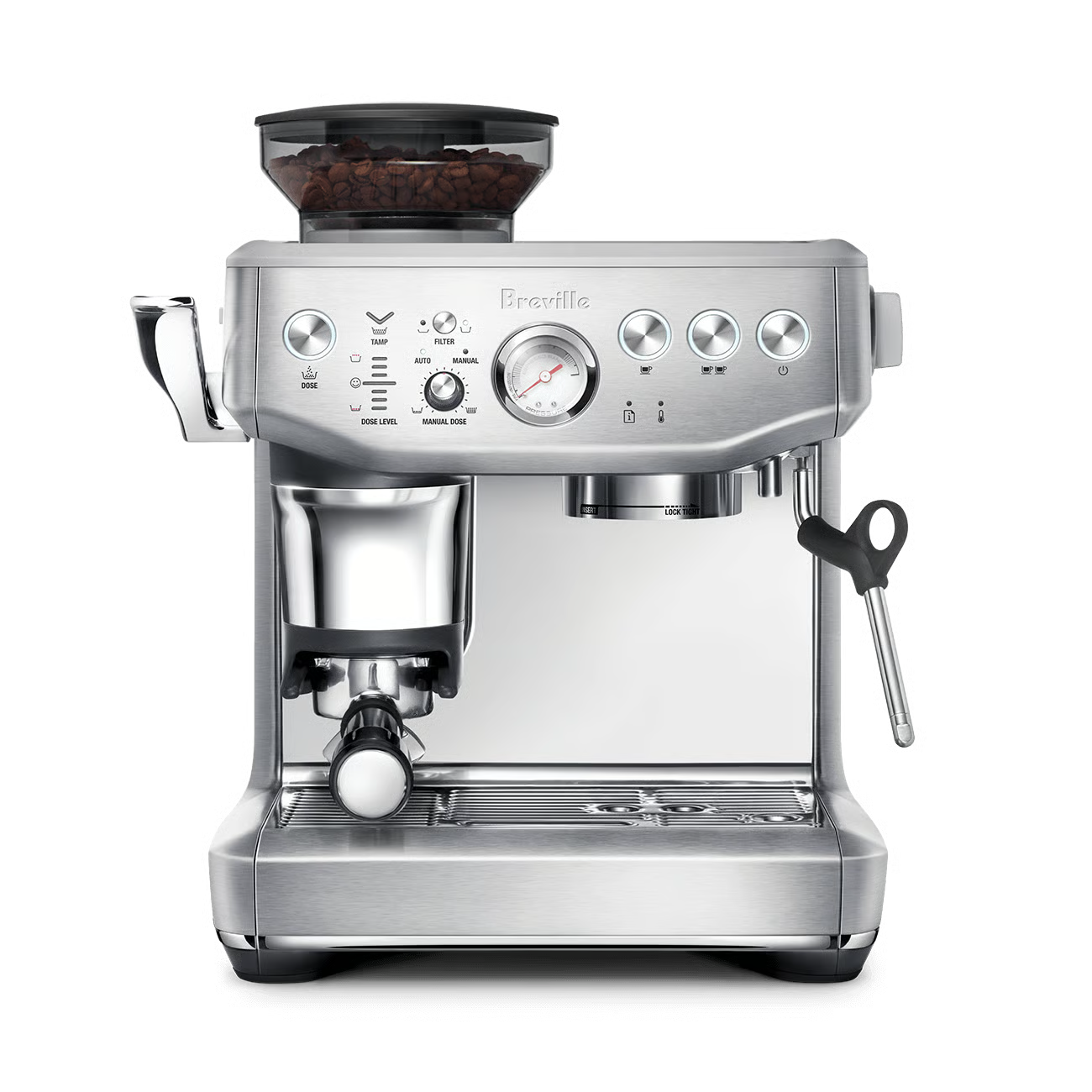
The Impress Puck System is why this machine sits at the top. Two things beginners reliably get wrong, inconsistent dosing and off-axis tamping, the Impress handles automatically. Intelligent Dosing calibrates to your beans on the first pull and remembers the right amount for next time. Assisted Tamping twists the portafilter into a recessed collar and applies consistent 10kg pressure, producing a flat polished puck every single time.
The floor is measurably higher than on the standard Barista Express: bad shots happen less often and less badly when they do. The PID-controlled Thermocoil holds brew temperature steady across consecutive extractions, according to the machine’s own review. The 25-setting conical burr grinder handles medium and dark roasts without complaint.
Two honest catches: the 54mm portafilter is outside the 58mm commercial standard, narrowing your aftermarket accessories options. And the grinder steps are coarser at the fine end than ideal for light roasts, dialing in very fine means accepting “close enough.” For the machine’s target audience, neither is a dealbreaker.
Read my full Breville Barista Express Impress review →2. Breville Bambino Plus: Best Compact
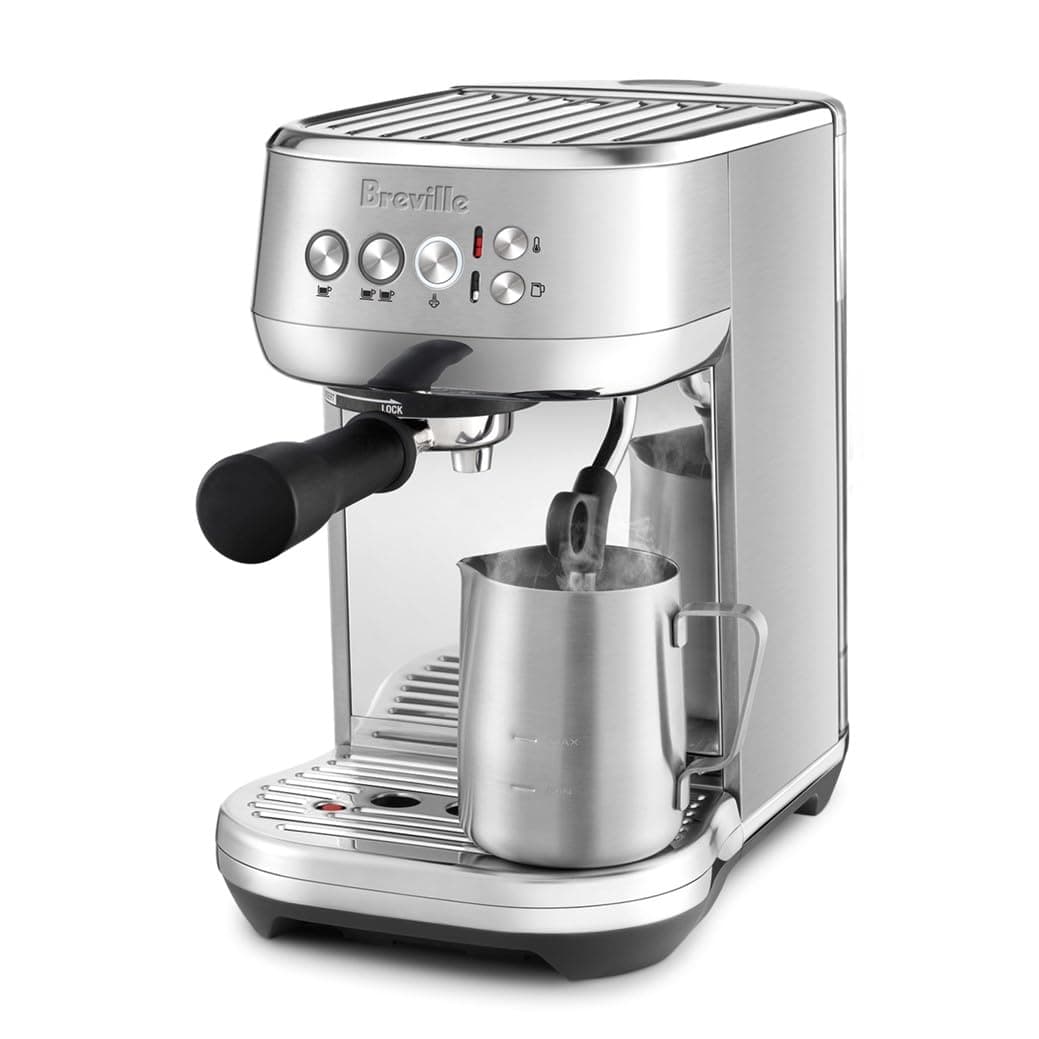
Three seconds from cold to extraction-ready, versus roughly thirty on many machines costing three times as much. The ThermoJet heating system is a real differentiator for weekday mornings. At 7.7 inches wide, the Bambino Plus fits on counters and under cabinets where nothing else in this ranking will.
The important caveat: no built-in grinder. The most common pairing is a Baratza Encore ESP or the Breville Smart Grinder Pro. A Bambino Plus plus a decent separate grinder lands at a similar total to the Barista Express Impress and often produces better espresso, because dedicated grinders give more precise control than integrated ones at the same price point.
The automatic steam wand produces latte-art-ready microfoam with minimal technique required, and reviewers describe good texture arriving quickly, without much of a learning curve. The limitation is also real: the machine controls the process, so you don’t develop the wrist feel a manual wand teaches. For consistency, that’s a feature; for barista skill development, it’s a ceiling.
Read my full Breville Bambino Plus review →3. Gaggia Classic Pro E24: Best for Enthusiasts
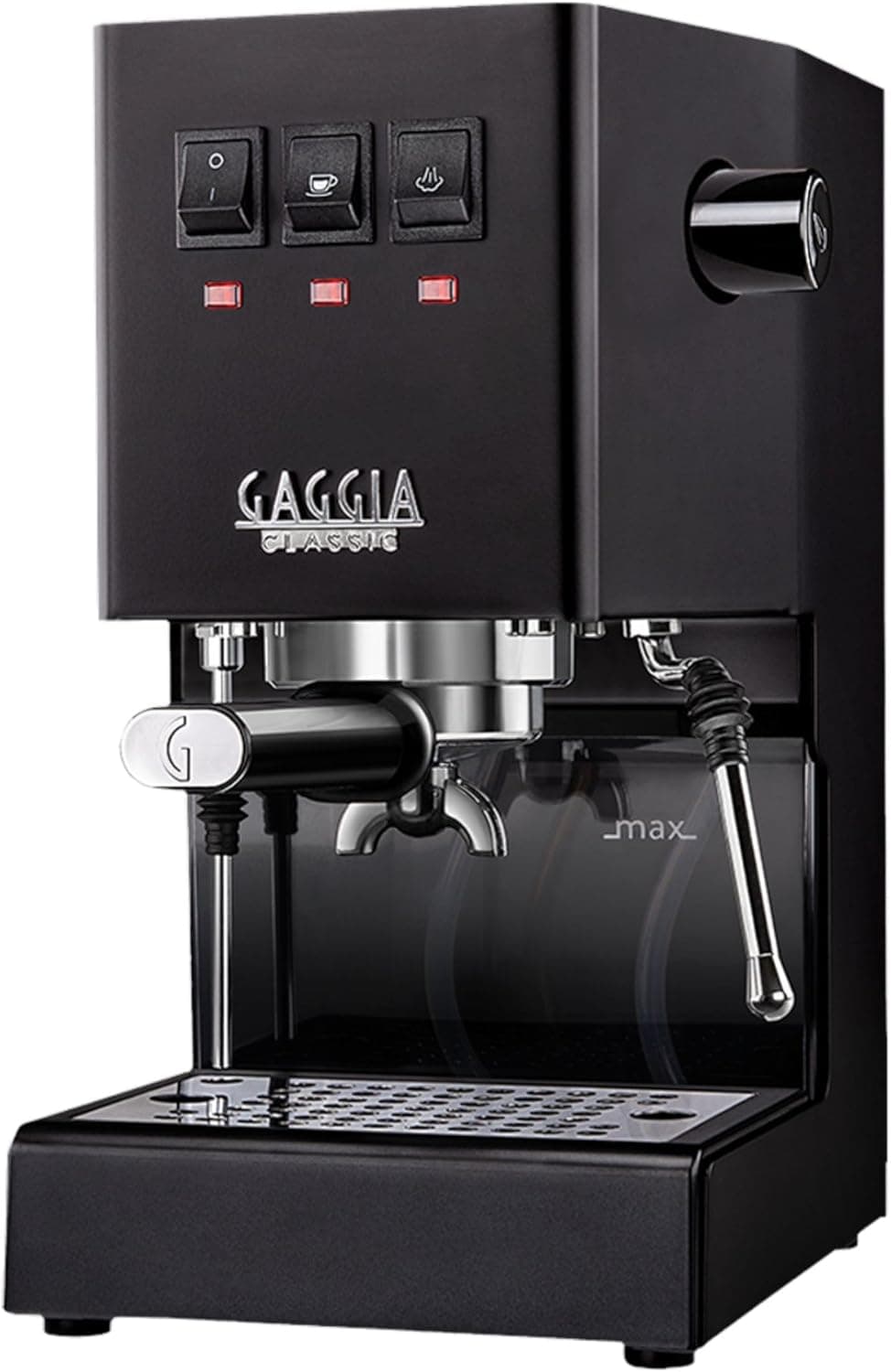
The 2024 E24 upgrade, a lead-free brass boiler replacing the previous aluminum, is a meaningful improvement. Whole Latte Love’s lab testing measured just 3°F temperature variance during extraction, comparable to machines at $900 or more. The 58mm portafilter is the commercial standard: every tamper, basket, distributor, and accessory manufacturer targets it, and the accessories ecosystem is enormous.
Two catches worth stating plainly. The Classic Pro ships without a PID, temperature relies on a mechanical pressurestat rather than digital precision. For medium and dark roasts, it’s fine. For light roasts needing precise temperatures between 92-96°C, most serious users add a PID within the first year. The included tamper is also plastic, worth replacing early on for a modest cost.
This is the most moddable machine at any price. PID installs, OPV spring adjustments, pressure gauge kits, the full Gaggiuino conversion, the forum community is enormous and well-documented. Requires a separate grinder. Not for someone who wants plug-and-play results; genuinely excellent for someone who wants to learn espresso from the ground up.
Read my full Gaggia Classic Pro E24 review →4. Ninja Luxe Café Pro ES701: Best All-in-One
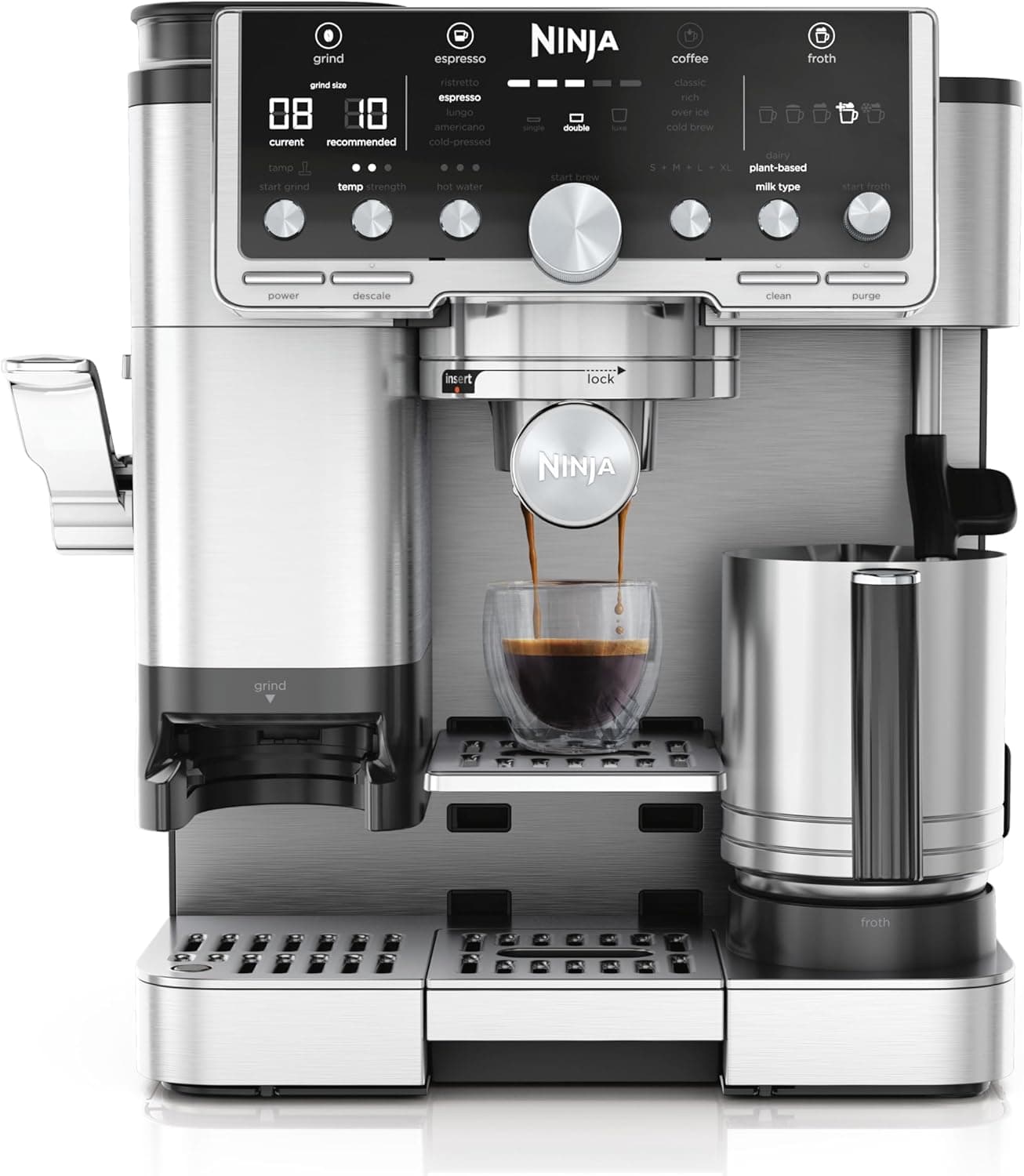
Ninja’s espresso credibility arrives late but the ES701 earns it. The machine ships with non-pressurized single-wall baskets, the same type professional equipment uses. Real crema from real extraction, not the artificial foam that pressurized baskets produce from pre-ground supermarket coffee. The built-in scale is genuinely rare at this price, a feature that shows up on machines costing considerably more.
Barista Assist gives directional grind feedback during extraction not “move two clicks finer” precision, but enough to cut a new user’s dial-in time from a frustrating afternoon to a learning-curve morning. It also handles espresso, drip, cold brew, and hot water from one device. For a shared kitchen or a household that drinks multiple brew styles, that versatility is a real argument.
Two legitimate criticisms: the drip tray fills after two cappuccinos and needs emptying constantly, the most common complaint across owner forums, and a valid one. The machine also runs a touch hot on back-to-back shots, per owner reports. Neither is a dealbreaker, but both are annoyances that shouldn’t exist at this price.
Read my full Ninja Luxe Café Pro review →5. De’Longhi Stilosa EC260: Best Budget
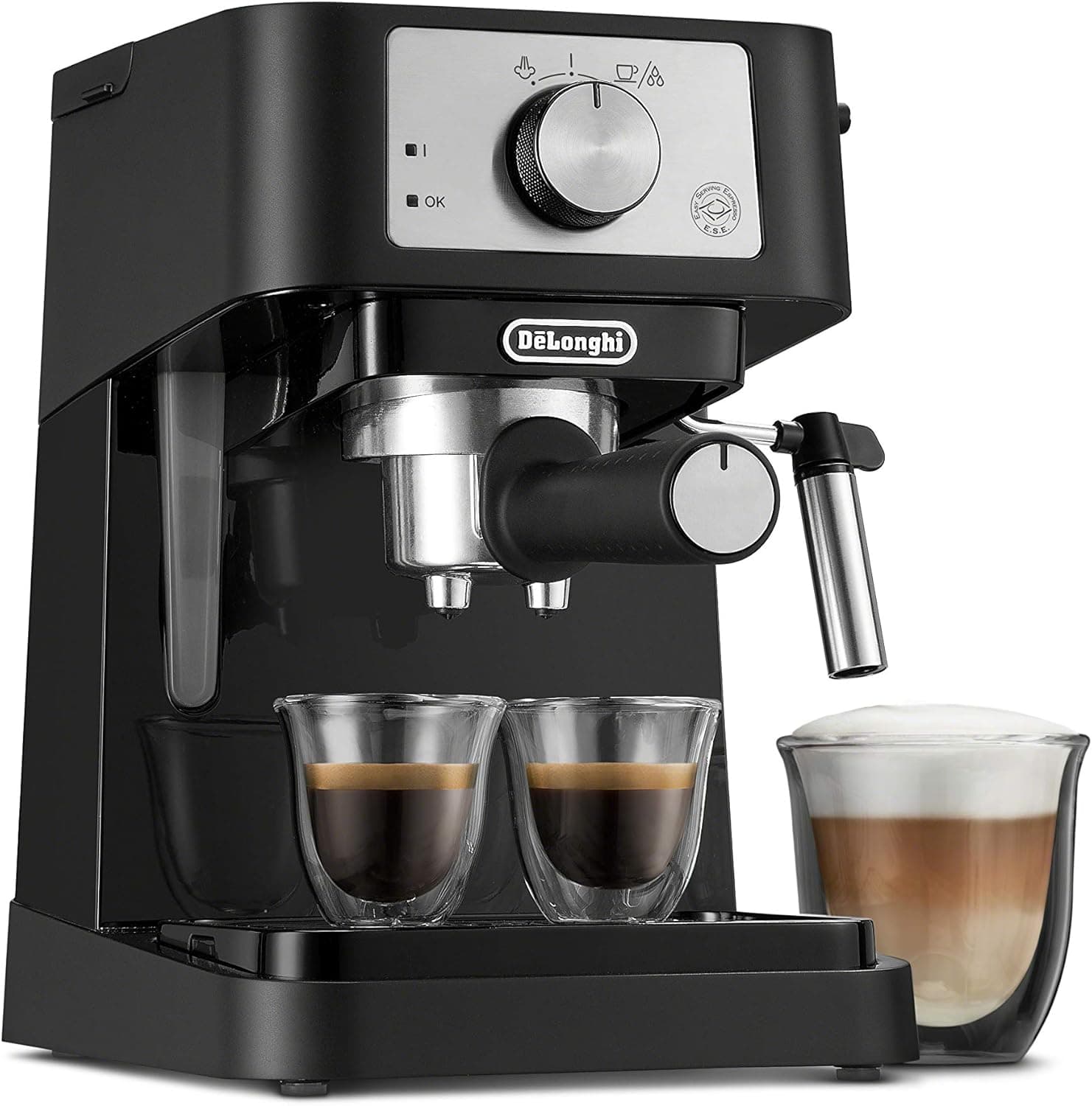
The Stilosa is the right machine for one specific person: someone who wants to spend the minimum necessary to find out whether home espresso is worth pursuing, before committing to a much bigger setup. It works. The thermoblock heats fast, the manual steam wand is teachable, and the machine is dead simple to operate and clean.
The honest limitation: the pressurized double-wall basket creates artificial back-pressure, which forces crema from beans that wouldn’t otherwise produce it. It makes the entry point more forgiving and makes mediocre coffee look better than it is. An IMS non-pressurized basket upgrade meaningfully improves shot quality once you’ve decided espresso is your hobby, worth considering after the first month.
Build is mostly plastic and the long-term durability is limited compared to the Gaggia Classic Pro or Barista Express. But De’Longhi’s quality control at the budget end is solid, the Stilosa rarely has defect issues, and the online community is large enough that any troubleshooting question is already answered somewhere.
Read my full De’Longhi Stilosa review →6. De’Longhi Magnifica Evo: Best Super-Automatic
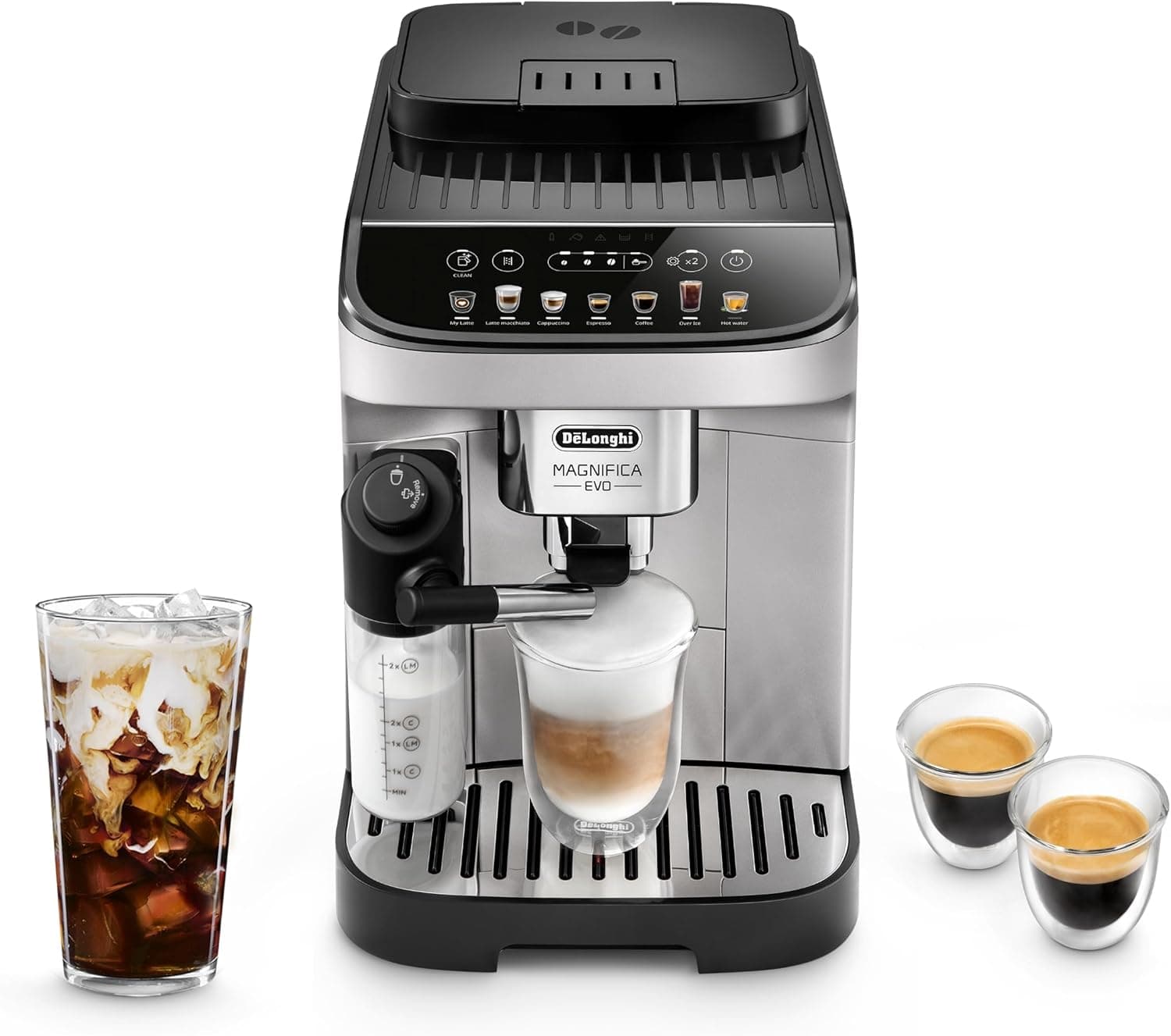
The only super-automatic in this ranking, and the best one under $700. You put whole beans in the hopper, press a button, and drink espresso. The 13-setting burr grinder handles grinding internally; the machine manages water temperature, extraction time, and dose. No technique required, no dial-in process, no mess.
The trade is honest and worth naming. Crema definition on the Magnifica Evo is softer than on a well-dialed semi-automatic the bean-to-cup workflow sacrifices some extraction precision for total automation. The build is more plastic-heavy than the Gaggia or Barista Express Impress at similar price points. The base ECAM290.21 ships with a manual Aeroccino-style frother; the ECAM290.61 adds automatic milk frothing for about $100 more.
Best for: offices where four people use the machine without any training, households where multiple people with different skill levels share it, or anyone who genuinely just wants coffee, fast, without the learning curve. Not for someone who cares about dialing in, the automation that makes it easy is also the ceiling on quality. If super-automatics are your focus, my best super-automatic espresso machines guide covers six bean-to-cup machines from $549 to $4,000 in depth.
7. Breville Barista Pro BES878BSS: Best Upgrade Pick
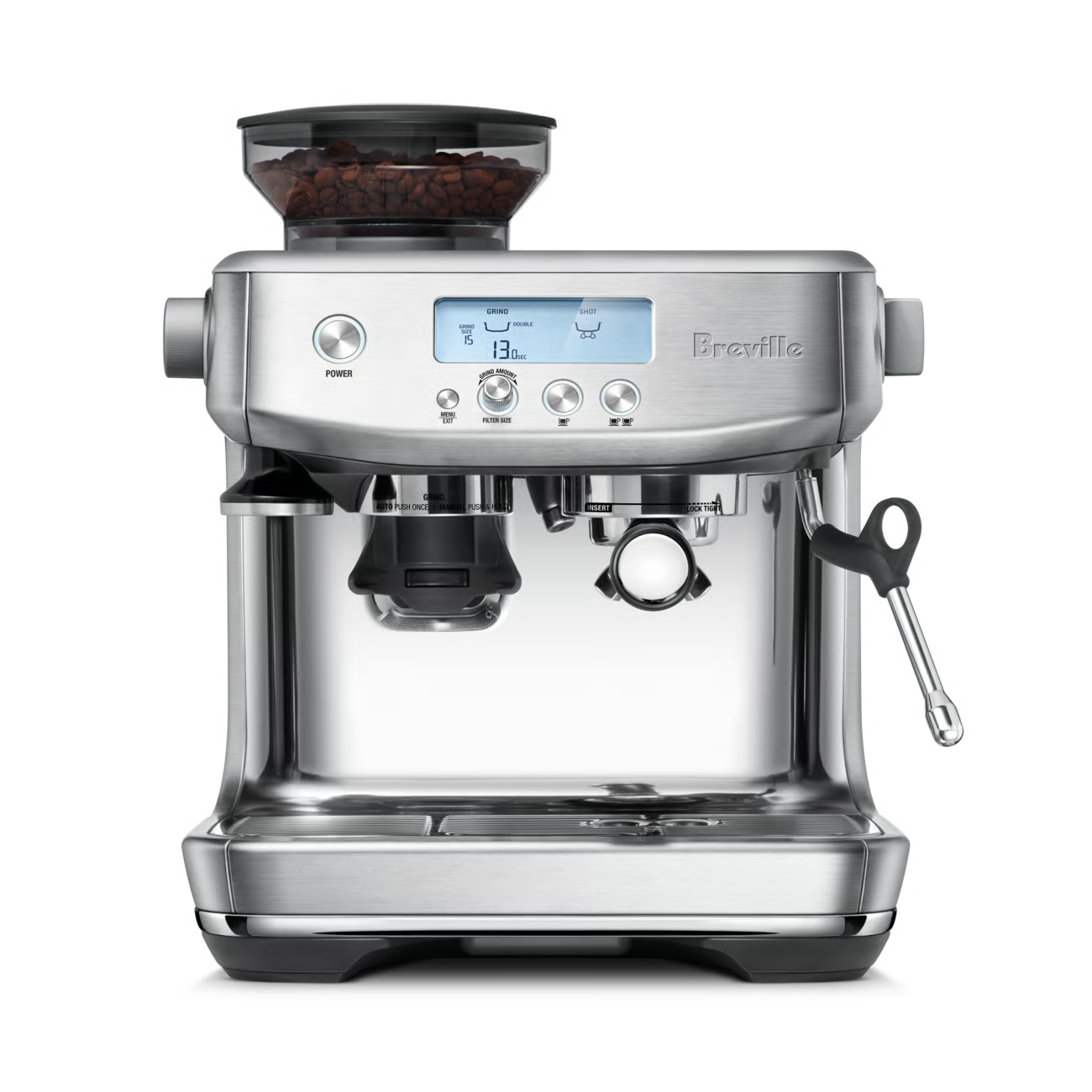
The Barista Pro addresses the most frequent complaint about the Barista Express line: no digital temperature display. The LCD screen shows your actual extraction temperature and lets you set brewing heat to the degree, a meaningful advantage for light roasts that need precise temperatures between 93°C and 96°C. ThermoJet heating gets the machine to ready in 3 seconds, matching the Bambino Plus.
The same 54mm portafilter and 67oz tank as the Barista Express Impress, with a 30-setting conical burr grinder, five more steps than the Impress's 25. What the Barista Pro trades is the Impress Puck System, no auto-dosing, no assisted tamping, for the digital display and faster heat-up. The right choice depends entirely on your priorities: if you tamp consistently and want temperature precision for specialty coffee, the Pro earns it. If you want assisted tamping and can live without the temperature display, the Impress is the better all-round value.
8. De’Longhi La Specialista Arte: Best for Latte Art
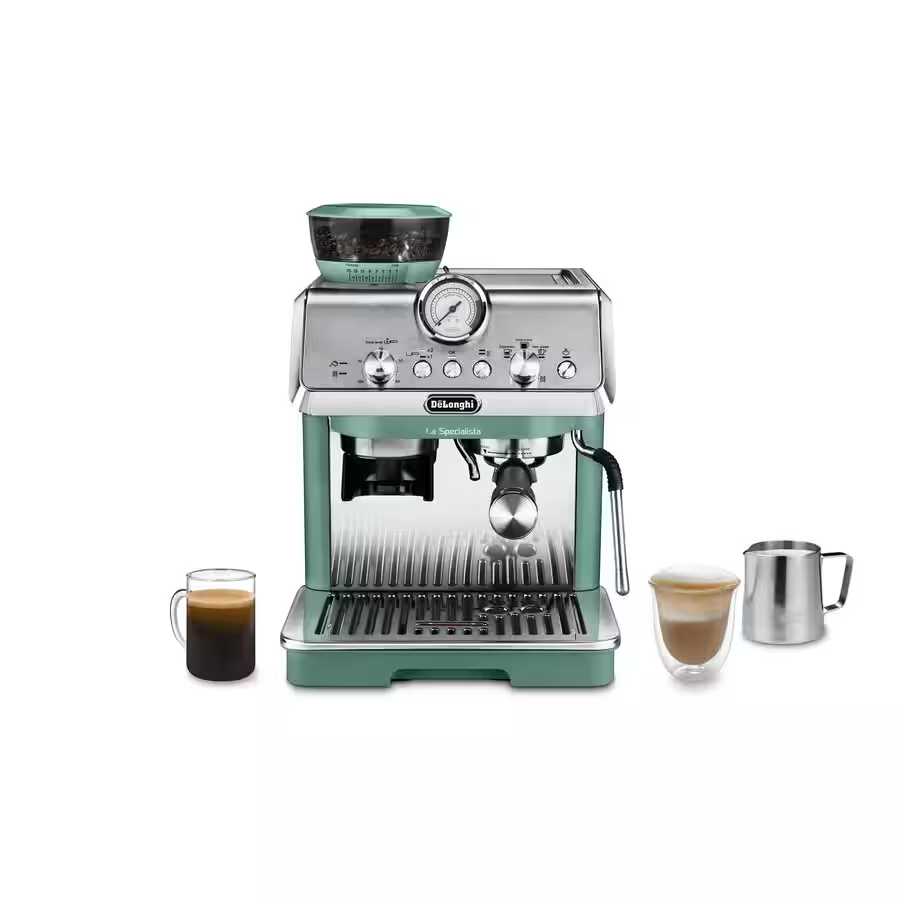
15 bar · Thermoblock · $$$ · Best for Latte Art Learners
The La Specialista Arte’s built-in tamping station is De’Longhi’s answer to Breville’s Impress Puck System, an adjustable tamper above the portafilter basket with a sensor that confirms consistent pressure before you pull. It lands at a lower price point than most of the field here, and pairs the guided tamping with a grinder that adjusts dose automatically via sensor grinding technology.
The LatteArt steam wand uses De’Longhi’s Active Temperature Control, designed to hold stable milk temperature throughout steaming. For someone whose main use case is milk drinks, lattes, flat whites, cortados, the La Specialista Arte’s milk system is more deliberately engineered for texture consistency than most machines at this price.
Practical limits: only 8 grind settings, narrower than the 25 Breville offers, and the thermoblock is less temperature-stable than thermocoil on back-to-back shots. The 54mm portafilter sits outside the 58mm commercial standard. For the target buyer someone who wants guided espresso with a focus on milk drinks and doesn’t plan to upgrade into enthusiast territory, these tradeoffs make sense at the price.
How to Choose the Right Espresso Machine
Machine type.Semi-automatic machines give you control over dose, grind, and extraction, the variables that determine espresso quality. Super-automatics handle everything internally for one-button convenience. Capsule machines (Nespresso, Vertuo) are outside this guide; they’re convenient but closed systems with a quality ceiling and an ongoing capsule cost. Every machine in this ranking is a semi-automatic or super-automatic.
Pressure is marketing, mostly.Machines advertise 15-bar or 19-bar pumps. Espresso extracts correctly at 9 bar. All of these machines regulate down to 9 bar at the puck, the extra pump headroom doesn’t add quality. Temperature stability and grind consistency affect taste far more than pump rating.
Boiler type.Thermoblock systems heat fast and cost less but vary temperature more between shots. Thermocoil (Breville’s approach in the Barista Express and Bambino Plus) gives better shot-to-shot stability. Dual boiler lets you steam milk and pull espresso simultaneously, that’s the café configuration, and it adds substantially to the price. For home use with one or two drinks per session, thermocoil is the practical sweet spot.
The grinder matters more than the machine.A decent dedicated burr grinder paired with the Bambino Plus often produces better espresso than the Barista Express Impress’s integrated grinder alone. If your budget allows it, a standalone grinder gives more precise control and can be upgraded independently when you outgrow it.
Budget tiers.At the entry level (Stilosa), you’re testing the hobby. In the mid tier (Bambino Plus, Gaggia Classic Pro), you’re buying a machine capable of genuine café-quality espresso. Higher up (Barista Express Impress, Ninja Luxe Café Pro, Barista Pro), you’re paying for integrated grinders, digital precision, and automation features that shorten the daily skill burden. Above roughly $1,000, returns diminish sharply for home use.
Maintenance and repairability.Every machine here needs regular descaling every 60-90 days at normal use, weekly backflushing for machines with 3-way solenoid valves, and daily steam wand cleaning. European machines like the Gaggia Classic Pro and De’Longhi line tend to be more repairable long-term: parts are available, repair manuals exist, and the Gaggia community regularly reports 15-year lifespans. Factor maintenance into your value calculation, a well-built machine you keep for over a decade beats a cheaper one you replace every few years.
Looking for Something Specific?
This guide covers the full range of home espresso machines from $130 to $800. If you have a more specific need, these dedicated guides go deeper:
- New to espresso? My best espresso machines for beginners guide focuses on forgiving machines that produce good results before you’ve fully dialed in your technique.
- On a tight budget? See my best budget espresso machines under $500 , every pick delivers real espresso without the premium machine price.
- Want one-touch bean-to-cup? My best super-automatic espresso machines guide ranks six fully automatic machines from $549 to $4,000 by value, milk quality, and cleaning effort.
- Want hands-on control specifically? My best semi-automatic espresso machines guide breaks down what “semi-automatic” actually means and ranks six machines from $130 to $999.95.
- Want the grinder built in? My best espresso machines with a grinder guide ranks six all-in-one machines that skip the separate grinder purchase entirely.
- Tight on counter space? My best small espresso machines guide ranks picks by real footprint, with exact dimensions for tight kitchens.
- Want the long version on any specific machine? My individual espresso machine reviews cover each model on its own, with the same eight-criteria scoring used in this guide.
What is the best espresso machine for home use?
It depends on what you need. For an all-in-one with a built-in grinder and consistent results from day one, the Breville Barista Express Impress is my top pick. If counter space is the main constraint, the Breville Bambino Plus heats up in 3 seconds and fits in 7.7 inches, though it needs a separate grinder. For anyone who wants to learn the craft with room to grow, the Gaggia Classic Pro E24 is the most moddable machine at any price, with a 58mm commercial portafilter and a 15-year lifespan.
How much should I spend on a good espresso machine?
At the entry level (De'Longhi Stilosa), you can test the hobby with real equipment before committing more money. In the mid tier (Bambino Plus, Gaggia Classic Pro), you're buying a machine capable of café-quality shots with the right technique. Higher up (Barista Express Impress, Ninja Luxe Café Pro), you're paying for integrated grinders, auto-tamping, and automation features that reduce the daily skill burden. Always budget for a separate grinder if your machine doesn't include one, the grinder matters more than the machine itself.
Are expensive espresso machines worth it?
Up to a point, yes, the quality gap between entry-level and mid-tier machines is real. In my assessment, both the Barista Express Impress and the Ninja Luxe Café Pro produce shots that hold up well against machines costing considerably more. Above roughly $1,000, returns diminish sharply for home use. The exception: a Gaggia Classic Pro plus a good separate grinder plus a PID upgrade can outperform machines costing much more in the hands of someone willing to learn.
What's the difference between a semi-automatic and a super-automatic espresso machine?
Semi-automatic machines, the Bambino Plus, Barista Express Impress, Gaggia Classic Pro, and five others in this ranking, require you to grind, dose, tamp, and start extraction manually. You control the variables and the outcome improves with technique. Super-automatic machines (the De'Longhi Magnifica Evo in this ranking) handle everything internally from whole beans to finished drink at one button press. Semi-automatics give better extraction control and more consistent crema with practice; super-automatics make more sense for high-volume households or offices where multiple people use the machine without any training.