De'Longhi Stilosa Review

Jack · Founder & Lead Reviewer
Researches every machine through engineering analysis, long-term owner reports, and independent technical testing, including Italian and German sources most English-language reviews skip.
Last updated
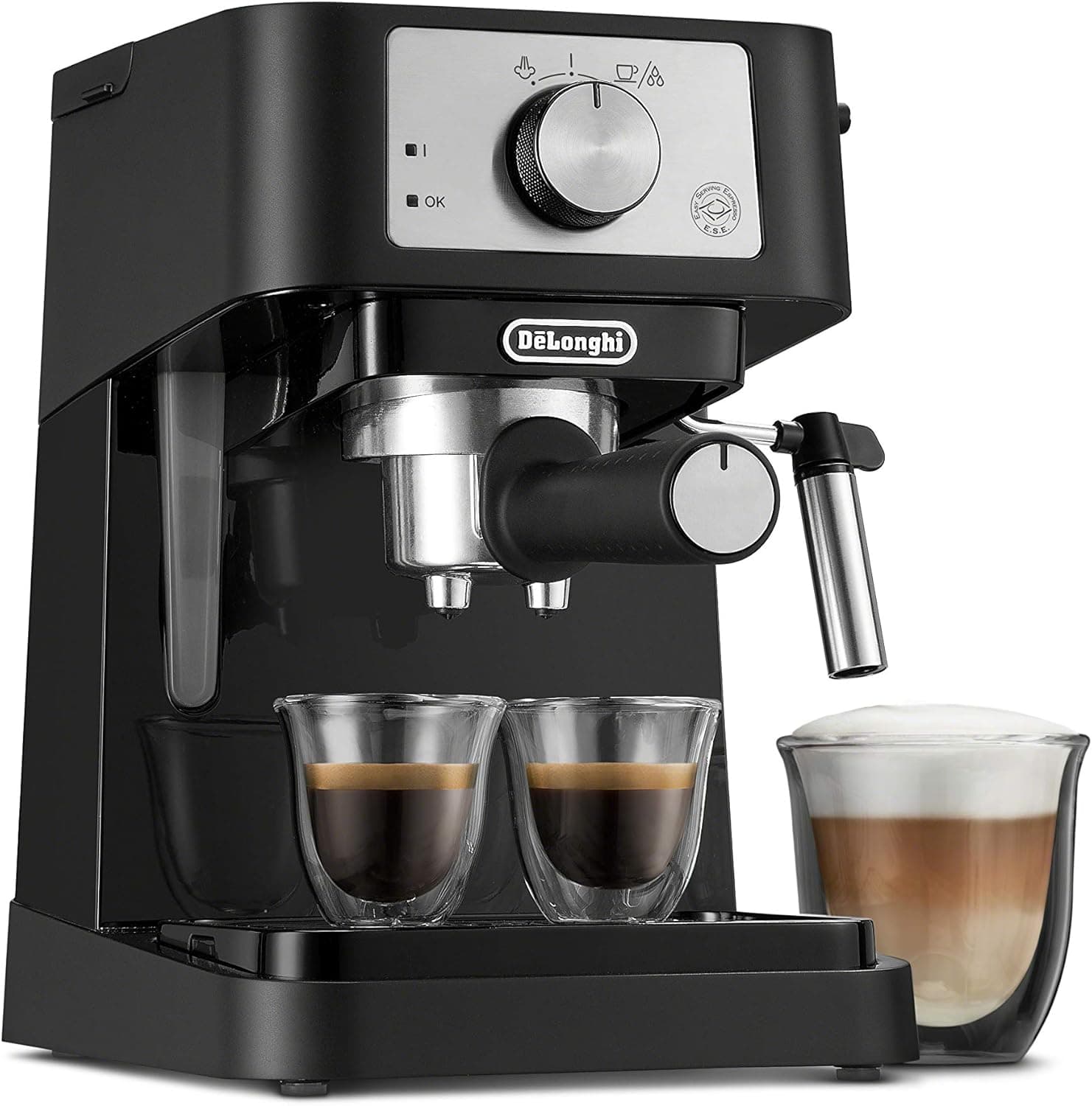
The build is where the price shows. Lots of plastic, and a drip tray and portafilter that feel light. German reviewers land on the same verdict: functional, not premium.
The De'Longhi Stilosa EC260 is the strangest machine in its price class, and the reason is hiding inside it. At $130, it makes better espresso than it has any right to. The question is what you're actually giving up.
The verdict up front
If your budget is fixed at $130 and you want a real portafilter machine, not pods, not capsules, the Stilosa is your only serious option at this price. Step up to $280 and the Breville Bambino Plus changes the conversation entirely. Know which situation you're in before you buy.
What you get for $150
The hardware: 15-bar pump, thermoblock heating system, 1-liter removable water tank, manual steam wand with a single-hole tip. The boiler is stainless steel. The body, drip tray, and portafilter handle are plastic.
At 51mm, the portafilter is smaller than the 54mm standard Breville uses or the 58mm found on most prosumer machines, and it matters more than you might expect. Single-wall basket upgrades exist for 51mm, but you'll search harder to find them in the US than you would for 58mm alternatives. Tampers too.
De'Longhi sells nearly the same machine under at least three model numbers: the EC260, EC230, and EC235. They're the same machine with minor cosmetic differences, distributed under different model numbers in different regions. If you see the EC230 listed cheaper, it pulls the same shot.
What ships in the box is pressurized double-wall baskets, which matters a lot for espresso quality, more on that next.
How the espresso actually tastes
Pressurized double-wall baskets have a restricted exit hole that generates artificial back-pressure. This forces crema even from stale, coarsely ground supermarket coffee. It looks convincing. It isn't real crema. The oils and aromatic compounds that authentic extraction crema carries just aren't there, and if you drop a grain of sugar onto it, it sinks right through.
For cappuccinos with grocery-store pre-ground, this honestly doesn't matter much. The espresso underneath is balanced, not harsh, with enough body to hold up to milk. The Stilosa ships with pressurised baskets, so the basket builds resistance artificially instead of the coffee puck doing the work. That makes it forgiving for a beginner, but it caps how good the espresso can get, and it makes shot timing less meaningful than on a single-wall setup. Coffeeness recommends swapping in single-wall baskets and a real tamper to get closer to true espresso.
Here's the surprise. Where most sub-$150 machines use a quick thermoblock, the Stilosa has a proper stainless steel boiler, which gives it steadier shot-to-shot temperature than its price suggests. Both UK reviewers and German reviewers single this out. The real limiter on this machine isn't temperature, it's the pressurised basket.
Anyone wanting to dial in real single-origin shots should buy single-wall baskets. You'll also need a proper burr grinder at that point, which doubles your investment fast. For most people buying a Stilosa, that's beyond the point of the machine.
Good espresso for $130. Not great espresso. That's an honest verdict.
The steam wand: manageable, not magical
Steam pressure runs around 3 bar, which is low. Low enough that achieving the rolling vortex you need for proper microfoam is difficult. What I could reliably produce was cappuccino-quality foam: stiff, airy, totally fine for a home cappuccino, not useful for latte art.
The wand tip angle is awkward. It points slightly forward rather than straight down, which means your jug positioning has to compensate. It took me about a week before I stopped fighting it. The learning curve here is steeper than it needs to be for a beginner machine.
For anyone who wants to make morning cappuccinos, the wand works. For anyone chasing latte art, it's a ceiling you'll hit fast.
Living with it
The 1L tank is on the small side. Two double shots a day means refilling every couple of days. Refilling is fast and clean, the tank pulls straight out. No complaints there.
Temperature isn't the weak point people expect at this price. The boiler keeps shot-to-shot heat reasonably steady. What actually limits the cup is the pressurised basket, covered above.
Cleaning is genuinely simple: knock the puck, rinse the portafilter, wipe the wand after every use. The drip tray holds about eight espressos' worth before it needs emptying. It's worth dumping and rinsing the drip tray daily. De'Longhi recommends descaling around every 200 shots, roughly every couple of months, depending on your water hardness and how often you brew, and the machine flashes a red light as a reminder.
One thing worth knowing before you commit: at $130, the Stilosa is closer to disposable than a $700 unit would be. The boiler and pump components at this price tier don't carry the same durability floor as prosumer machines, and that's worth factoring into your expectations from the start.
De'Longhi Stilosa vs the competition
The Stilosa sits at the floor of what I'd call a real espresso machine: portafilter, pump, actual espresso. Below this price, you get capsule machines or steam-pressure toys that don't extract real shots at all.
For a clear upgrade path, look at the Breville Bambino Plus. At around $280, you get a 54mm portafilter with a real aftermarket ecosystem, faster heat-up, and meaningfully better steam pressure. The shot quality gap is real. If you're trying to decide between entry-level options, my best espresso machines for beginners guide walks through the whole spectrum with side-by-side comparisons.
The Stilosa also appears in my roundup of the best espresso machines under $200, where I compare it directly against the Gevi 20-bar and a handful of others at this price tier.
Who should buy the De'Longhi Stilosa?
Buy it if: You've never owned an espresso machine, your budget is genuinely capped at $150, and you want to find out whether you'll actually use a machine before committing to something more expensive. The Stilosa is a real machine at a price that makes the experiment cheap.
Skip it if: You want cafe-quality espresso at home, you have any interest in latte art, or you already know you'll want to dial in shots with freshly ground single-origin beans. You'll outgrow this machine inside six months, and the 51mm ecosystem will frustrate you on the way out.
How to use the De'Longhi Stilosa
- Fill the water tank to the MAX line and seat it firmly in the machine.
- Insert the portafilter with the double-wall basket installed.
- Press the power button and wait for the indicator light to hold steady, about 40–45 seconds.
- Dose 14–16g of medium-fine pre-ground into the basket. Tamp lightly; the pressurized basket doesn't need aggressive pressure.
- Lock the portafilter in, press the shot button. Target 25–30 seconds for a double.
- For milk: open the steam valve immediately after pulling your shot. Purge for two seconds to clear condensate. Submerge the tip just below the milk surface and texture for 20–30 seconds. Wipe and purge again.
The pressurised baskets keep extraction forgiving from pull one. When you upgrade to single-wall baskets, grind size and tamping consistency become the critical variables.
What size portafilter does the De'Longhi Stilosa use?
The Stilosa uses a 51mm portafilter, smaller than the 54mm Breville standard or the 58mm found on most prosumer machines. Aftermarket accessories exist but are harder to find in the US than 58mm equivalents. If you plan to upgrade baskets or buy a proper tamper, search specifically for 51mm.
Can you use single-wall baskets with the Stilosa?
Yes. Third-party 51mm single-wall (unpressurized) baskets are available on Amazon. They let you pull real extraction shots from freshly ground coffee, but they're far less forgiving than the included pressurized baskets, grind consistency matters a lot more. You'll want a burr grinder if you go this route.
How long does the Stilosa last?
Reliability is mixed at this price tier. Many machines run three to four years with regular descaling. Components at this price point don't carry the same durability floor as prosumer machines, so budget for eventual replacement rather than a costly repair.
Is the De'Longhi Stilosa good for beginners?
Yes, with caveats. The machine itself is simple: one button for shots, one knob for steam. The pressurized baskets are forgiving with pre-ground coffee and require minimal technique. The limits show when you want to improve, the 51mm ecosystem is narrow and the pressurised basket doesn't reward dialing-in the way single-wall baskets on larger machines do. It's a good starting point, not a long-term destination.