
Gaggia Classic Pro Review (2026)

Jack · Founder & Lead Reviewer
Researches every machine through engineering analysis, long-term owner reports, and independent technical testing, including Italian and German sources most English-language reviews skip.
Last updated
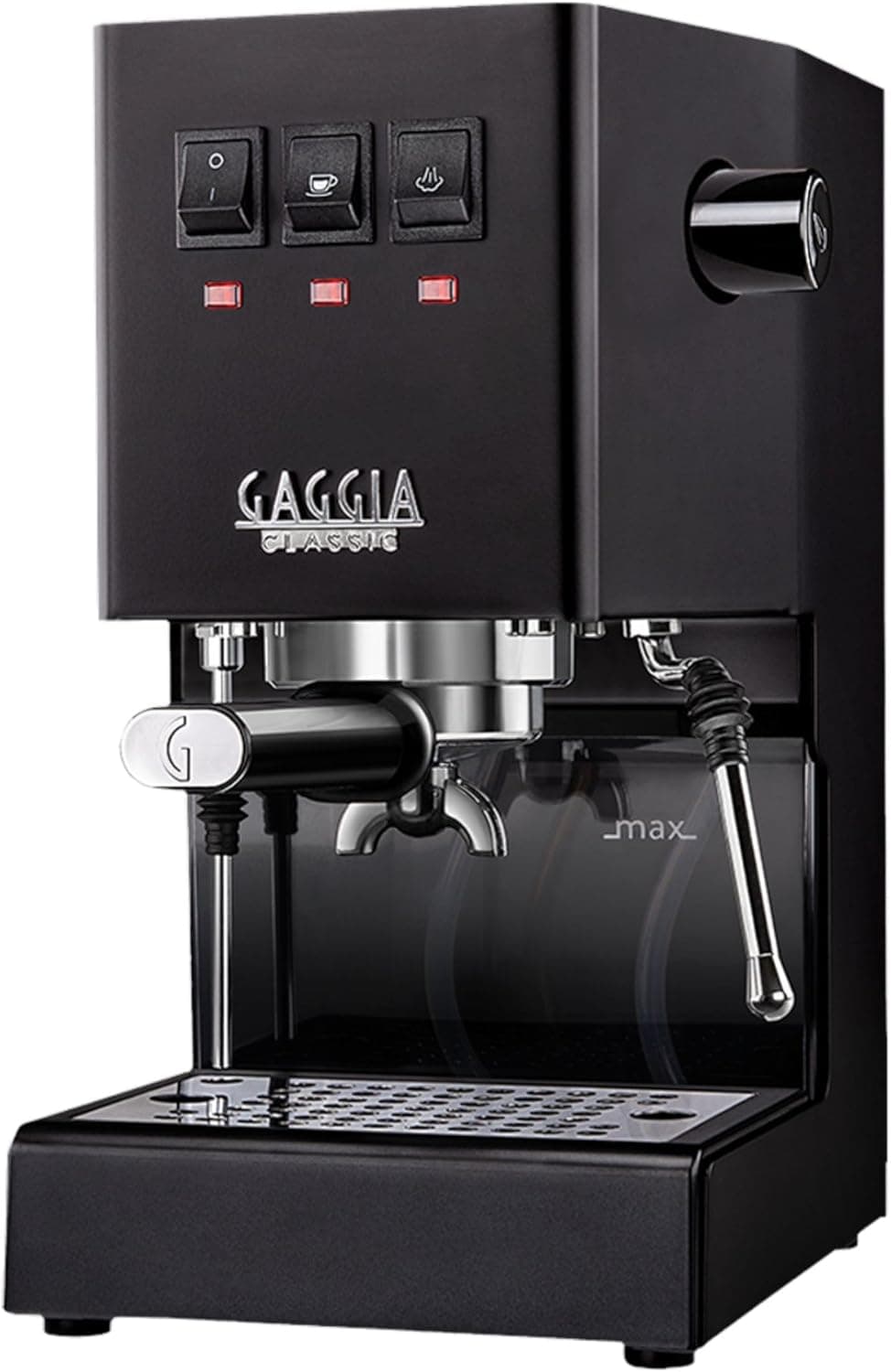
The Gaggia Classic has inspired more online arguments than any other espresso machine I know of. Fifteen years of owner forums, PID debates, OPV spring guides, and Gaggiuino conversion threads, this machine earns devotion the way very few products do. The 2024 E24 finally swaps the aluminum boiler for brass. At $452, the question isn't whether the Classic is good. It's whether this version answers the criticisms that followed the previous ones.
The Verdict Up Front
The Gaggia Classic Pro E24 is the right machine for someone who wants to learn real espresso and isn't afraid of a learning curve. The brass boiler is a genuine upgrade. The 58mm portafilter and 3-way solenoid valve are features you won't find on anything near this price. Buy it knowing you'll want a better tamper and possibly a PID within the first year.
Which Gaggia Classic Should You Buy? (The Confusing Part)
There are three versions of the "Gaggia Classic Pro" in circulation, and retailers still sell all of them. Here's what actually separates them.
The Classic Pro 2019 was the machine that revived the Classic line after Gaggia's US hiatus. Coated aluminum boiler, around $399 new when it launched. Solid, but the boiler coating caused concern.
The Evo Pro 2023 addressed "Boilergate", reports of the 2019 coating flaking over time. Gaggia moved to an uncoated aluminum boiler with a Teflon sleeve. Around $449. Better, but aluminum still struggles with thermal stability on back-to-back steaming.
The Classic Pro E24 2024 is the one I tested and the one you should buy today. Lead-free brass boiler, same 58mm commercial portafilter, same iconic rocker switches, same 37-ounce water tank. US units ship pre-calibrated to 9-bar OPV. European units still need the spring mod, but American buyers get it out of the box.
If you see a "Gaggia Classic Pro" listed below $420, check the ASIN against the E24 (B07RQ3NL76) before buying. You may be looking at old stock.
What Makes the Classic a Classic
The 58mm portafilter is the headline spec, and it matters more than the number suggests. At 58mm, you're using the same basket diameter as commercial machines. Every tamper, distributor, dosing funnel, and aftermarket basket on the market fits. The accessories ecosystem for 58mm is enormous in a way that 54mm or 51mm portafilters simply aren't.
The 3-way solenoid valve is the other feature that defines this machine's reputation. When you pull a shot and stop, the valve releases pressure back into the drip tray rather than letting it sit against the puck. Dry pucks. Cleaner portafilter releases. Less mess. This is a pro feature that most machines at $452 skip entirely.
The build is Italian, mechanical, and repairable. Owner reports of 15-year lifespans are common in enthusiast forums. I've spoken to people who replaced a pump once in 16 years of use. Repair manuals exist, replacement parts are stocked, and this machine is not designed to be thrown away.
The Brass Boiler: Does It Actually Matter?
Yes. Measurably. Whole Latte Love's lab testing of the E24 measured just 3°F temperature swing during extraction, performance that rivals machines in the $900-1,000 range. The old aluminum boiler varied more, and serious users worked around it with temperature surfing: pulling a shot, watching the thermostat light cycle, waiting for a specific moment in the cool-down. The brass boiler removes most of that guesswork.
The boiler is about 25% larger than the previous aluminum unit. More thermal mass means it holds temperature longer between shots. Back-to-back cappuccinos, steam, pause, steam, are noticeably more consistent than on the 2019 Pro. I ran six consecutive milk drinks one morning and the foam quality on the sixth was close to the first. That surprised me.
The machine pulls 1425W and runs a 15-bar pump regulated to 9 bar at the puck. The ready light comes on after roughly 3 to 6 minutes, but that only means the boiler thermostat has hit its trigger point, not that the machine has stabilized. Long-term owner reports and independent reviews consistently put full thermal stability across the boiler, group head, and portafilter at closer to 15 to 20 minutes, and that's the wait that actually matters for a shot you care about. The steam boiler sits around 255°F, sufficient for quick steaming without a switchover wait.
Where It Frustrated Me
No PID. This is the machine's loudest and most repeated criticism, and it's fair. A PID controller lets you set exact boiler temperature digitally. Without one, you're working with a pressurestat, a mechanical thermostat that cycles the element on and off around a set point. The E24's brass boiler narrows the variance dramatically, but it doesn't eliminate it. Serious dialing in, especially with light roasts that need precise temperatures, will push most owners toward a PID mod within the first year.
The included tamper is plastic. At $452, this stings. Budget $25-50 for a decent 58mm tamper from day one. It makes an immediate difference in shot consistency and is the first upgrade most owners make.
The machine ships with almost no accessories. No milk jug. No cleaning brush. No descaling sample. Gaggia includes a single-shot and double-shot pressurized basket, not the unpressurized baskets most enthusiasts will want, plus the plastic tamper. That's it. Factor in $50-100 for the accessories you'll actually need.
One E24-specific trade-off: the larger brass boiler takes up more internal space, making PID and Gaggiuino installs trickier than on the aluminum-boiler machines. Forum members report it's still doable, but older tutorials don't transfer directly.
The Steam Wand and Milk
The Classic Pro uses a commercial-style pannarello wand with two steam holes. It's not cold-touch. The wand gets genuinely hot during steaming, and staying aware of your fingers is part of using it, not ideal for a beginner reaching across a counter.
What it does well: real microfoam. I was getting latte art-capable foam by the end of the first week, which isn't something I can say about most machines in this price range. Steaming 5oz of milk to 140°F takes around 24 seconds. The wand has no elbow joint, so finding the right pitcher angle requires some experimentation. I ended up tilting the jug rather than the wand.
For flat whites and lattes, the foam is excellent once you've learned the machine. For cappuccinos, the stiff foam comes naturally with less technique. Either way, this is a wand you'll actually improve with over time rather than one that plateaus quickly.
Gaggia Classic Pro vs Breville Barista Express
These two machines get compared constantly, and the comparison is useful because they represent genuinely different philosophies at a similar price.
The Gaggia is a pure espresso machine. No grinder, no frills, endlessly moddable. Check out our best espresso machines ranking to see how both land in the full field.
The Breville Barista Express bundles a grinder, guided workflow, and a larger accessory kit. It's the better choice for someone who wants to avoid buying separate equipment. The trade-off: the integrated grinder can't be upgraded independently, and the machine lacks the Gaggia's mod community and longevity track record.
If you want to learn espresso at a deep level and you're willing to buy a separate grinder, the Gaggia is the better long-term investment. If you want one box that does most of the work for you, the Breville wins. Our best espresso machines for beginners guide covers both in detail.
Who Should Buy the Gaggia Classic Pro E24?
Buy it if: You want to learn real espresso from the puck up. You value durability and repairability over convenience. You might want to mod it someday. PID, OPV spring, Gaggiuino, pressure gauge. You're mostly making drinks for one.
Skip it if: You want a plug-and-play machine that comes with everything included. You need a built-in grinder and don't want to budget for a separate one. You're making back-to-back drinks for a household of four and need steam power to match.
What's the difference between the Gaggia Classic Pro and the E24?
The E24 (released 2024) replaces the aluminum boiler with a lead-free brass boiler. Brass has better thermal stability. Whole Latte Love measured just 3°F temperature variance during extraction. US E24 models also ship pre-calibrated to 9-bar OPV; European versions still need that as a manual mod. The chassis, rocker switches, 58mm portafilter, and 3-way solenoid valve are unchanged. If you're buying new, the E24 is the version to get.
What size portafilter does the Gaggia Classic Pro use?
58mm, the commercial standard. Every major accessory manufacturer targets this diameter: tampers, distributors, dosing funnels, bottomless portafilters, aftermarket baskets. The ecosystem is far larger than for 54mm or 51mm machines, and it future-proofs your accessories if you ever upgrade to a higher-end machine.
Does the Gaggia Classic Pro need a PID?
Not necessarily. The E24's brass boiler cuts temperature variance to around 3°F during extraction, adequate for medium and dark roasts. For light roasts, which need precise temperatures between 92-96°C, most serious users add a PID within the first year. It's not required to make good espresso from the box, but it unlocks the machine's ceiling for specialty coffee.
How steep is the Gaggia Classic Pro's learning curve?
Steeper than most machines at this price, and that's the point. A few weeks of learning grind size, dose, and extraction time and the Classic Pro teaches skills that transfer to any machine you ever own. If you want results from day one without fiddling, a more guided machine like the Breville Bambino Plus gets you there faster. The Gaggia takes longer to learn, and goes further.