
Breville Barista Express Impress Review

Jack · Founder & Lead Reviewer
Researches every machine through engineering analysis, long-term owner reports, and independent technical testing, including Italian and German sources most English-language reviews skip.
Last updated
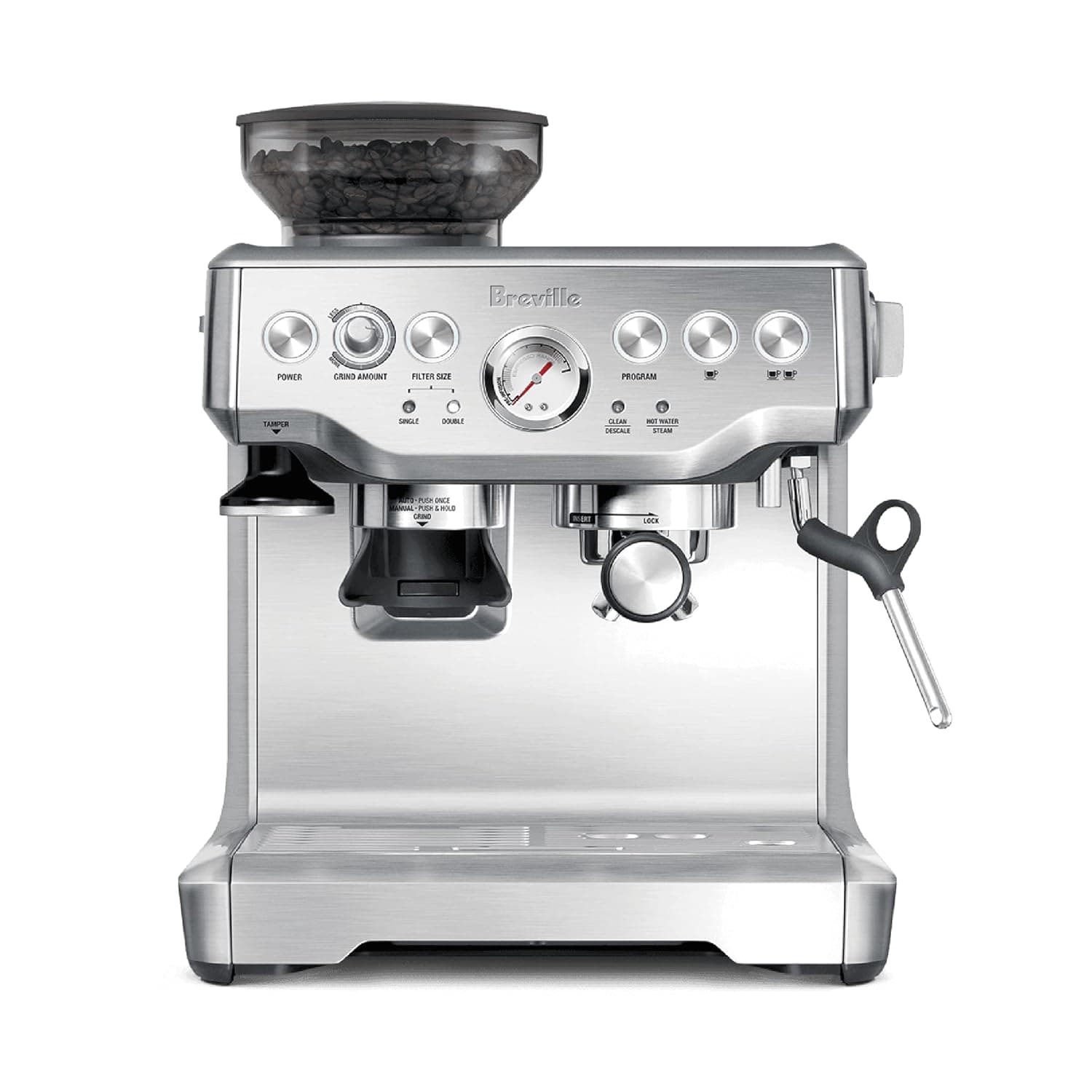
Most home espresso shots go wrong before the water ever runs. Inconsistent dosing and off-axis tamping account for a disproportionate share of bad mornings, and both are human errors, not machine failures. Breville's answer is a system that removes both variables automatically. Rather than a simple feature upgrade over the standard Barista Express, the Impress Puck System is a specific bet: that removing those two mistakes is worth $100 extra.
Two criticisms before I say anything positive: the 54mm portafilter is a narrower ecosystem than the 58mm commercial standard you'll find on the Gaggia Classic Pro at roughly the same price, and the 25-setting grinder has coarser steps at the fine end than I'd like, dialing in a light roast means accepting "close enough" rather than landing precisely where you want. Neither kills the machine. Both are things you should know going in.
My take, up front
The Breville Barista Express Impress earns its price if you're new to espresso or you just want consistent shots without the fuss of learning to tamp. The auto-tamp isn't a gimmick, it's solving a real problem for a real audience. If you already tamp well, the standard Express does the same core job for less, without the assisted dosing and tamping.
What's new: the Impress Puck System
The Impress Puck System is two things: Intelligent Dosing and Assisted Tamping. They work together, and the combination is more useful than either one alone.
Intelligent Dosing monitors grind time and auto-adjusts on subsequent brews. On the front panel, a smiley-face gauge confirms whether the dose hit the target range, the recommended 18g for a double shot. The machine records the adjustment and applies it the next time you brew with the same beans. First pull from a new bag triggers the calibration cycle; the green confirmation LED lights when you're in range.
Assisted Tamping is the attention-getter. After dosing, you seat the portafilter with a 7-degree barista twist into a recessed collar, and the machine presses down with consistent 10kg pressure. Out comes a flat, polished puck with no voids, no angled tamp, no channeling from a rushed technique. The puck looks like it came from a machine ten times the price.
My honest take: this removes the two mistakes beginners make most. Inconsistent dosing and off-axis tamping account for a disproportionate share of bad home espresso. Eliminating them before they happen is a genuinely useful feature, not marketing. Whether it's worth the $100 premium over the standard Express depends entirely on whether you want to learn those skills or skip straight to good coffee.
One underrated detail: the green "dose confirmed" light on the LED display gives you visual confirmation the dose is right before you pull. That feedback builds trust in the calibration far faster than a manual process would, which is a real help on the beginner learning curve.
Breville Barista Express vs Barista Express Impress
The hardware underneath is identical. Same 25-setting conical burr grinder grinding direct into the portafilter. Same Thermocoil heating element, same 9-bar extraction pressure, same 67oz removable water tank, same pressure gauge on the front, same 1400W draw. Both ship with a single-wall basket for the double shot.
What changes: the Impress adds the Puck System hardware and runs about half an inch taller and slightly wider. Check your cabinet clearance before ordering, it's a small difference but it matters if you're fitting it under a low shelf.
The standard Barista Express lists for less than the Impress, with the assisted puck prep being the main thing you pay extra for. Here's how I think about it: if you're a beginner who's never tamped before and you want to skip that learning curve entirely, the Impress earns its premium clearly. If you already tamp consistently or you specifically want to develop the manual skill, maybe you're planning to upgrade to a machine without auto-tamp in a few years, save the money and get the standard Express.
If you're still mapping out your options, my best espresso machines for beginners guide covers both the Express and Impress in context alongside everything else in this price range.
Consistency: where the Impress earns its keep
Consistently good. That's the honest summary, and consistency is the operative word.
The grinder runs 25 settings, and Breville suggests starting around 16 and adjusting from there. The conventional starting recipe is 18g in for roughly a 36g shot in 25 to 30 seconds. The assisted dosing trims each dose to about half a gram of consistency, which is what keeps shots repeatable once it's dialed in. Adjusting dose or yield for ristretto or lungo? My coffee ratio calculator works out the exact gram amounts across the full range. Real crema, not the artificial foam you get from pressurized baskets on budget machines. The extraction is genuinely correct.
Against the standard Express, reviewers tend to frame the Impress as a convenience upgrade rather than a flavor revolution: the same core espresso, with the assisted puck prep removing the variability that trips up newcomers. That consistency advantage from the auto-tamp is measurable, the Impress raises the floor rather than making better espresso at the ceiling.
The grinder limitation is real and worth naming again. Light roasts are where the grinder shows its limit. The steps can feel coarse at the fine end, so very light single-origins that want a grind between two settings can be hard to nail. For medium and dark roasts, the range is plenty.
For an independent review of the Puck System mechanics, grind settings, and heat-up performance, see the Coffeeness Barista Express Impress assessment.
Temperature is a strength here. The PID-controlled thermocoil holds the brew around 200°F (93°C) and keeps it steady across consecutive shots, which is what you want for repeatable extractions. A few owners report minor drift from the displayed setting, but nothing that derails a shot.
The grinder, steam wand, and daily use
The conical burr grinder grinds fresh straight into the portafilter, though a little coffee lingers in the chute, so regular cleaning keeps doses fresh. The grind-on-demand workflow, no hopper to fill, no dosing cup, keeps things simple.
Powerful and capable of proper microfoam, the steam wand is good enough for latte art once your technique is there. The single-hole tip is on the slower side for back-to-back milk drinks, so it suits one or two at a time better than a big round.
You can't brew and steam at the same time. The Thermocoil heats for one task at a time, so each cappuccino is a two-step sequence: pull the shot, switch to steam, froth the milk. For one or two drinks it's fine. For four cappuccinos before a morning meeting it's noticeable. This is a fundamental limitation of single-boiler machines at this price, not an Impress-specific issue.
Daily cleanup takes two minutes. The auto-tamp produces a dry, compact puck that knocks out cleanly into the grounds bin. Backflush the grouphead weekly, wipe the steam wand after each session, and descale every 60–90 days depending on your water hardness. For the complete cleaning routine, daily habits, weekly scrub, and the full backflush process, see my guide on how to clean your Breville.
Common issues (and fixes)
Red light flashing. The number one question in Breville forums for this machine. Most of the time it's one of two things: the water tank needs refilling, or the machine is overdue for descaling. The display shows different icons for each, a water droplet for the tank, a scale icon for mineral buildup. If both indicators look clear, check whether the drip tray is overfull. If the machine won't respond after addressing these, a hard reset (unplug for 30 seconds) usually clears transient faults.
Portafilter size: 54mm. Not the 58mm commercial standard. This comes up often from buyers upgrading from a Gaggia Classic Pro or Rancilio Silvia. Aftermarket baskets and tampers for 54mm exist. IMS, Pullman, and Weber all make them, but the selection is narrower than the 58mm ecosystem. Keep it in mind if accessory flexibility matters to you.
How to descale the Breville Barista Express Impress. Fill the 67oz tank with 1 liter of water mixed with Breville's descaling solution (or any citric acid-based descaler). Place a large container under the portafilter and steam wand spout. Press and hold the 1-cup and 2-cup buttons simultaneously until the CLEAN/DESCALE light flashes, the cycle runs automatically for about 25 minutes. Run two full tanks of clean water after to flush. For the full step-by-step, see my guide on how to descale your Breville.
Who should buy the Barista Express Impress?
Buy it if: You want café-quality espresso without spending months learning to dose and tamp consistently. You're new to espresso and you want a machine that handles the two hardest beginner variables automatically. You value shot-to-shot consistency over developing manual technique.
Skip it if: You enjoy the manual craft of espresso and want to build tamping skill yourself. You already tamp consistently and don't want to pay $100 for automation you won't use. Or you want a 58mm portafilter and the deeper accessories ecosystem that comes with it, in which case, the Gaggia Classic Pro is worth a serious look at a similar price point. Also worth comparing across the full field: my best espresso machines ranking puts both in context.
What's the difference between the Barista Express and the Express Impress?
The Impress adds Breville's Impress Puck System: Intelligent Dosing (auto-calculates your dose, records it for next time, confirms with a smiley-face gauge and green light) and Assisted Tamping (7-degree barista twist into a recessed seat, consistent 10kg pressure, polished puck). Every other spec is identical, the 25-setting conical burr grinder, Thermocoil heating, 67oz water tank, 54mm portafilter, and 9-bar extraction. The Impress is also about half an inch taller and runs roughly $100 more than the standard Express.
What size portafilter does the Barista Express Impress use?
54mm. Breville's standard across the Express, Barista Pro, and Bambino lines. It's not the 58mm commercial standard used by machines like the Gaggia Classic Pro. Aftermarket baskets and tampers exist for 54mm (IMS, Pullman, Weber all make them) but the selection is narrower than the 58mm ecosystem. If portafilter accessory depth is a priority, that's worth factoring into your decision.
Why is the red light flashing on my Barista Express Impress?
The most common causes are a low water tank or a machine due for descaling, the display shows different icons for each (water droplet vs. scale symbol). If both check out, make sure the drip tray isn't overfull. If the machine still won't respond, unplug it for 30 seconds and restart. Persistent red lights after addressing all three usually mean the descaling cycle wasn't completed fully and needs to run again.
Is the Impress Puck System actually worth it for beginners?
Yes, specifically for beginners. The Puck System handles dosing and tamping automatically, removing the two most common mistakes before they cause a bad shot. You still need to learn grind size and extraction time, but the machine eliminates two of the four core variables from day one. If you want to develop full manual technique from scratch, the [standard Barista Express](/reviews/breville-barista-express-review/) teaches you more. If you want good espresso fast, the Impress gets you there sooner.