The Best Espresso Machines for Beginners in 2026

Jack · Founder & Lead Reviewer
Researches every machine through engineering analysis, long-term owner reports, and independent technical testing, including Italian and German sources most English-language reviews skip.
Last updated
Buying your first espresso machine is genuinely overwhelming. Espresso machines in general span a huge price range, but every pick in this guide stays under $800. The jargon is impenetrable thermocoil, pre-infusion, single-wall basket, OPV pressure. And the fear of spending real money on something that just makes bitter mud is real.
I built this guide specifically for that situation. Every machine here was chosen because it’s forgiving of beginner mistakes, easy to clean, and produces good espresso before you’ve fully learned what you’re doing, based on independent reviews, owner reports, and how each machine’s engineering handles common beginner errors like inconsistent tamping or an off grind size. For the full ranking across all skill levels, see my best espresso machines of 2026. Once you’ve picked your machine, my how to use an espresso machine guide walks you through pulling your first shot.
What Makes an Espresso Machine Beginner-Friendly?
Guided dosing and tamping. The most common mistake among new espresso drinkers isn’t the wrong grind, it’s inconsistent tamping. A crooked or under-pressured tamp channels the water around the puck instead of through it, producing sour, weak shots no matter how good the beans are. Machines with assisted tamping (the Barista Express Impress) or integrated tamping stations (the Ninja Luxe Café Pro) eliminate this variable before it causes a problem.
Easy cleaning.The machine you don’t clean is the machine that makes terrible espresso. Beginner machines should have a simple backflush process, a removable drip tray that’s easy to empty, and a steam wand that doesn’t require a boiling water soak to un-clog. The machines that score highest here are the Magnifica Evo (the internal cleaning cycle is automated) and the Bambino Plus (dry pucks pop out cleanly, drip tray is large for the size).
Forgiving pressure and pre-infusion. Low-pressure pre-infusion, wetting the puck gently before full extraction pressure kicks in, covers up minor inconsistencies in grind distribution and tamping. Both the Bambino Plus and the Barista Express Impress use it. It doesn’t replace good technique, but it reduces the penalty for imperfect puck prep while you’re still learning.
Built-in grinder. A separate grinder adds a second piece of equipment to learn and a second variable to control. For most beginners, starting with an all-in-one machine (Barista Express Impress, Ninja Luxe Café Pro, Magnifica Evo) is simpler, one device, one workflow, one thing to clean. If you choose a machine without a grinder (the Bambino Plus or Stilosa), budget for a decent burr grinder from day one. Pre-ground supermarket coffee will technically work but will undersell every machine on this list.
Fast heat-up.The machine you don’t use in the morning is the machine that doesn’t make you a better espresso drinker. Long warm-up times kill the habit. The Bambino Plus reaches extraction temperature in 3 seconds flat. The Ninja Luxe Café Pro is close behind. Both are widely reported as fast heat-up machines, and the gap between them is small in practice.
What to avoid as a beginner. Bare prosumer machines, the Gaggia Classic Pro, the Rancilio Silvia , are excellent machines that reward dedicated learners. They’re not beginner machines. No PID, no guided workflow, no forgiveness for inconsistent technique. I love the Gaggia Classic Pro for what it is; I don’t recommend it as a first machine unless you already know what a PID is and why you’d want one.
My Top Beginner Picks at a Glance
Five machines ranked for beginner use. Jump to any section for the full breakdown.
| Machine | Rating | Pressure | Boiler | Price | Best for | |
|---|---|---|---|---|---|---|
| 4.5 | 19 bar | Thermoblock | Around $749price may vary | Best All-in-One | Check Price | |
Pros & consPros
Cons
| ||||||
| 4.7 | 9 bar | Thermocoil | Around $790price may vary | Best Overall | Check Price | |
Pros & consPros
Cons
| ||||||
| 4.4 | 15 bar | Thermoblock | Around $550price may vary | Best Super-Automatic | Check Price | |
Pros & consPros
Cons
| ||||||
| 4.0 | 15 bar | Thermoblock | Around $130price may vary | Best Budget | Check Price | |
Pros & consPros
Cons
| ||||||
| 4.6 | 9 bar | ThermoJet | Around $500price may vary | Best Compact | Check Price | |
Pros & consPros
Cons
| ||||||
19 bar · Thermoblock · $$$
Best All-in-OnePros & cons
Pros
- Non-pressurized baskets pull real espresso
- Built-in scale for weight-based dosing
- Integrated tamper + Barista Assist guidance
- Hands-free milk frother for dairy and plant milk
- Espresso, drip, cold brew, and hot water in one machine
Cons
- Drip tray too small, fills after two cappuccinos
- Runs a touch hot on back-to-back shots
- Bulky footprint on the counter
- Steep price for a newer brand
9 bar · Thermocoil · $$$
Best OverallPros & cons
Pros
- Impress Puck System removes dosing and tamping errors
- Consistent shot quality, higher floor than the standard Express
- Built-in conical burr grinder with 25 grind settings
- Thermocoil holds extraction temperature tightly between shots
- Dry puck cleanup, puck knocks out cleanly every time
Cons
- 54mm portafilter limits accessories vs 58mm commercial standard
- Grinder steps are coarse at the fine end, hard to dial in light roasts
- Can't brew and steam simultaneously (single Thermocoil)
- Auto-tamp adds a real premium over the standard Express
15 bar · Thermoblock · $$$
Best Super-AutomaticPros & cons
Pros
- One-touch espresso, bean to cup
- Built-in grinder with 13 settings
- Automatic milk carafe included on base model
- Compact for a super-automatic
Cons
- No user profiles for multiple drinkers
- Plastic-heavy build
- Milk carafe too small for two latte macchiatos at once
15 bar · Thermoblock · $
Best BudgetPros & cons
Pros
- Cheapest real espresso machine
- Compact
- Manual steam wand
- Dead simple to use
Cons
- Pressurized basket limits quality
- Mostly plastic build
- Basic steam wand
9 bar · ThermoJet · $$$
Best CompactPros & cons
Pros
- 3-second ThermoJet heat-up, no warm-up wait
- Automatic steam wand produces latte-art microfoam hands-free
- Low-pressure pre-infusion improves extraction consistency
- 7.7-inch footprint fits where no other espresso machine will
- 64oz removable tank, several days between refills
Cons
- No built-in grinder, budget for a separate one
- Auto steam wand limits manual technique development
- 54mm portafilter narrower accessories ecosystem than 58mm
The 5 Best Espresso Machines for Beginners
1. Ninja Luxe Café Pro ES701: Best Overall for Beginners
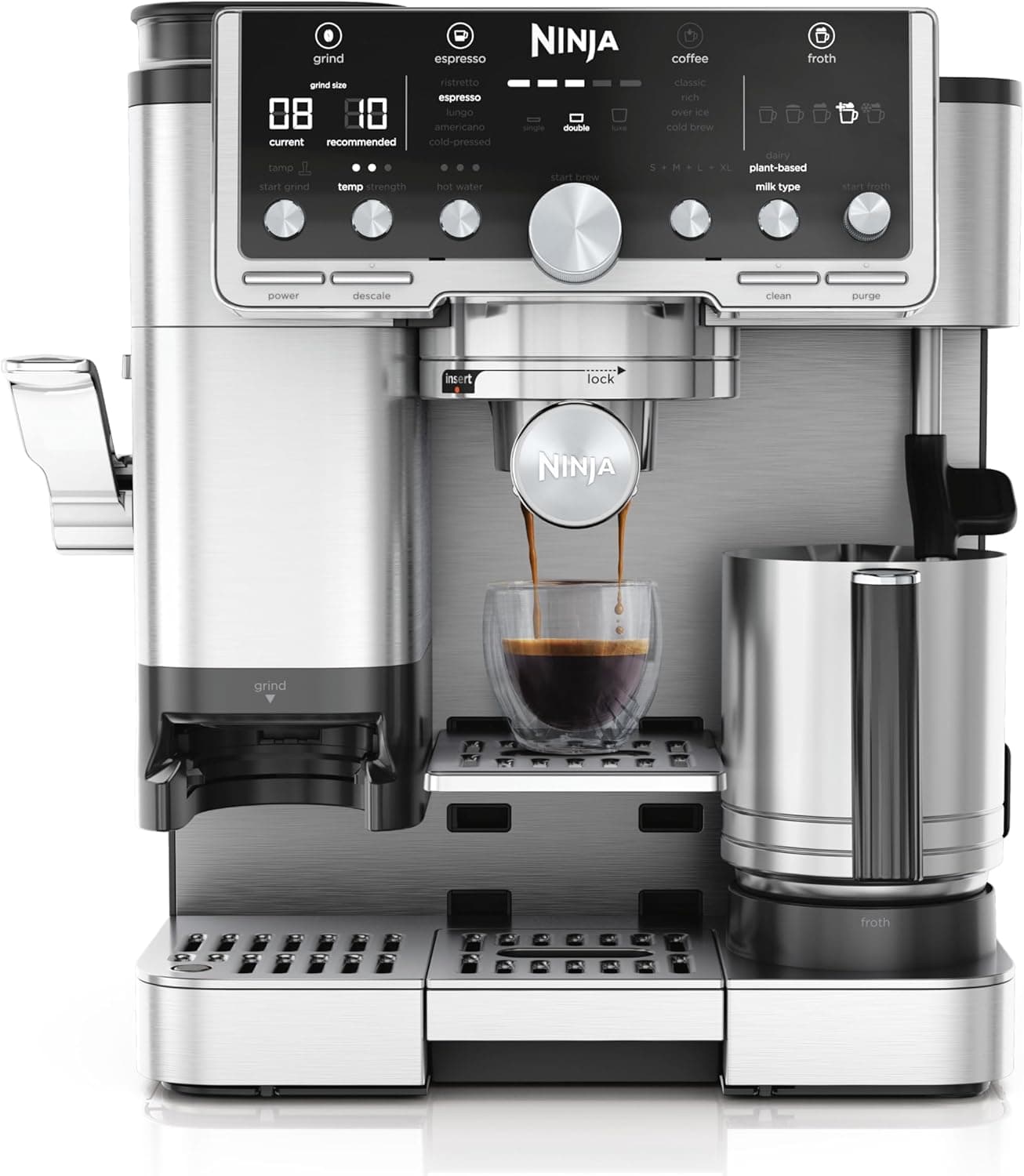
The Barista Assist system is what puts the Ninja at the top of this list. During extraction, it watches the shot in real time and tells you whether to grind coarser or finer. It’s not precise, “grind finer” rather than “move two clicks”, but it cuts dial-in time from a frustrating afternoon to a learning-curve morning. It shortens the path to a good first shot noticeably compared to a machine that gives you no feedback at all while you dial in.
The built-in scale handles weight-based dosing, the integrated lever tamper provides consistent pressure, and the non-pressurized baskets mean you’re learning real extraction from pull one. For a beginner who wants to actually develop espresso skills rather than just automate them, this is the most instructive machine on this list.
The honest catch: it’s expensive for this category, and the drip tray fills after two cappuccinos. You’ll empty it daily. The machine is also large, biggest footprint of the five picks here. If counter space is limited, the Bambino Plus is a better fit.
Read my full Ninja Luxe Café Pro review →2. Breville Barista Express Impress: Best with Auto-Tamping
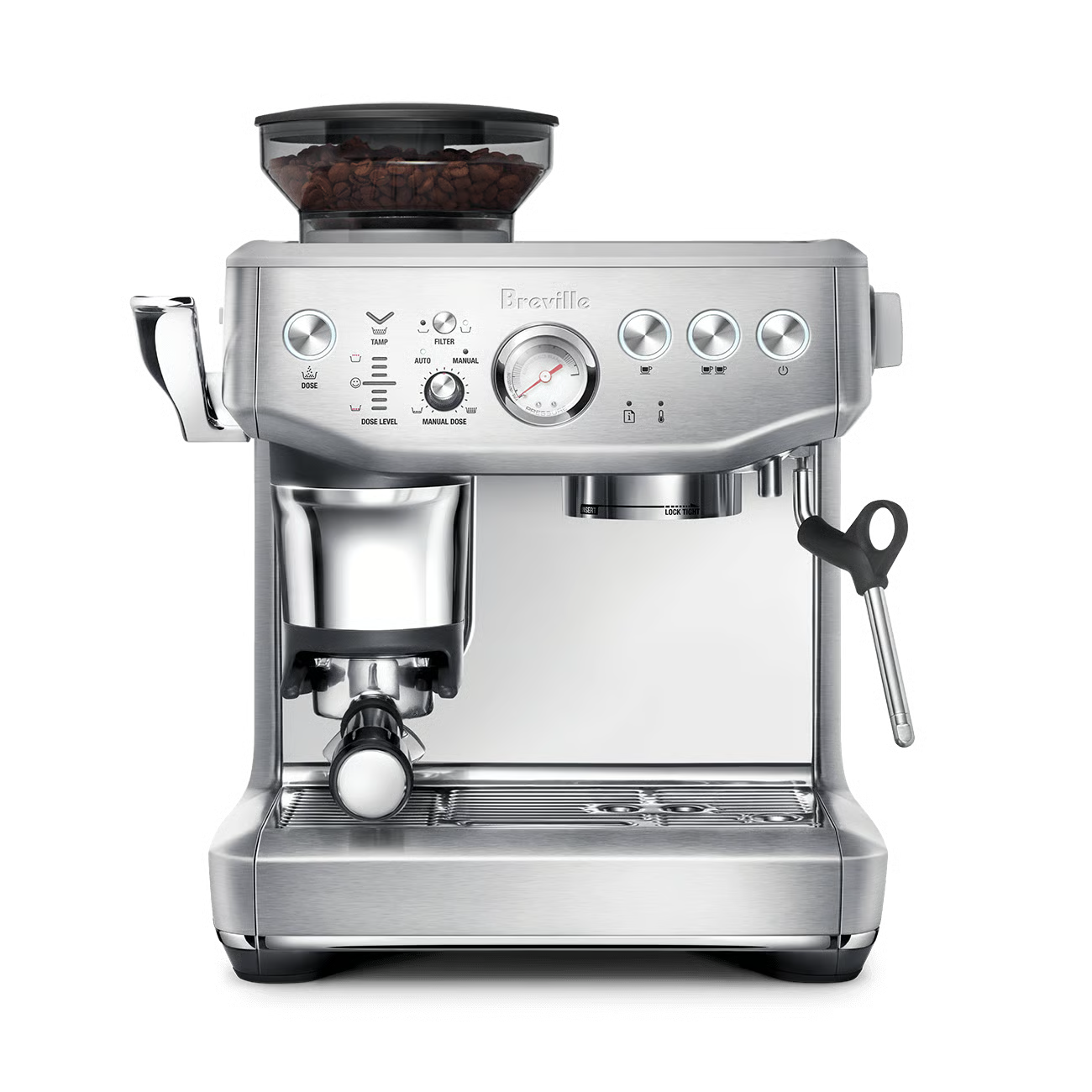
What the Impress Puck System does for beginners specifically: it removes tamping from the equation entirely. You twist the portafilter 7 degrees into a recessed collar, and the machine applies consistent 10kg pressure, flat puck, no channeling, every time. Inconsistent tamping is the #1 reason beginners pull sour, weak, or channeled shots in their first few weeks. The Impress makes that mistake impossible.
Intelligent Dosing auto-calibrates to your beans and confirms the target with a smiley-face gauge on the first pull. The smiley face sounds gimmicky; the feedback loop it provides is genuinely useful. It teaches you what a correct dose looks like without you having to weigh anything.
The learning curve that remains: grind size. The machine can’t dial in grind for you, that’s the one variable still on you, and it takes a week or two to get right. The 54mm portafilter also limits your accessories options as you advance. But for the first six months of home espresso, the Impress is the most forgiving machine with a built-in grinder on this list.
Read my full Breville Barista Express Impress review →3. De’Longhi Magnifica Evo: Best Super-Automatic for Beginners
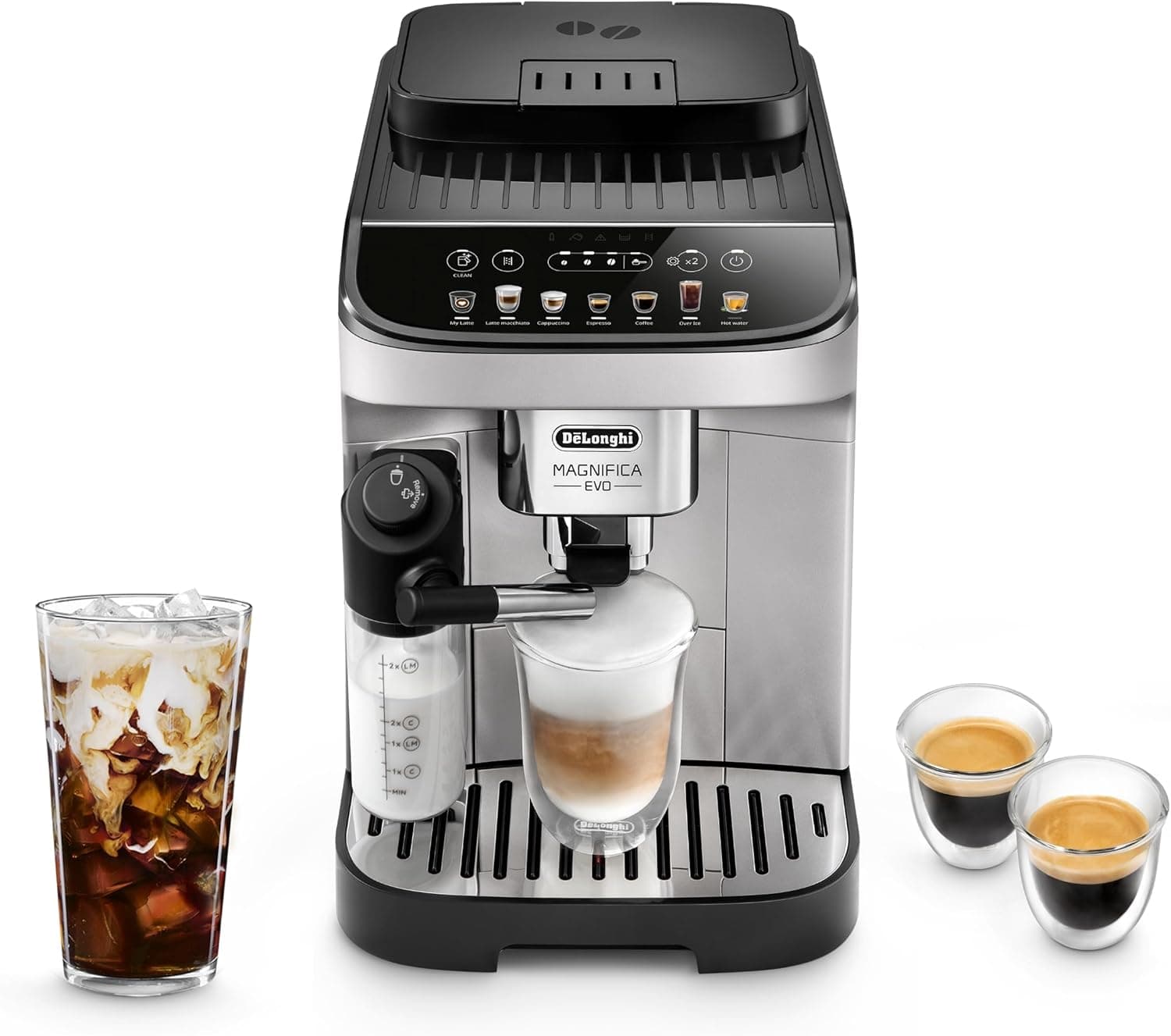
If you want espresso with zero learning curve, no technique, no variables to manage, no dialing in, the Magnifica Evo is the answer. You put beans in the hopper. You press one button. You get a drink. The internal 13-setting grinder handles everything else. For households where multiple people use the machine without any training, or for someone upgrading from a coffee maker who doesn’t want a new hobby, this is the cleanest upgrade path.
The cleaning is also nearly automatic. The machine prompts its own cleaning cycles and the internal rinse process runs with minimal input. Descaling takes about 30 minutes following the on-screen guide. Compared to the backflushing, wand wiping, and puck disposal on a semi-automatic, the maintenance burden here is genuinely lighter.
I’m honest about the ceiling: crema on the Magnifica Evo is softer than on a well-dialed semi-automatic, and the build is more plastic-heavy than the Breville or Gaggia machines at a similar price. You also won’t develop transferable espresso skills, if you later want to try a semi-automatic, you’re starting from scratch. Buy it knowing you’re optimizing for convenience, not craft.
4. De’Longhi Stilosa EC260: Best Budget Pick
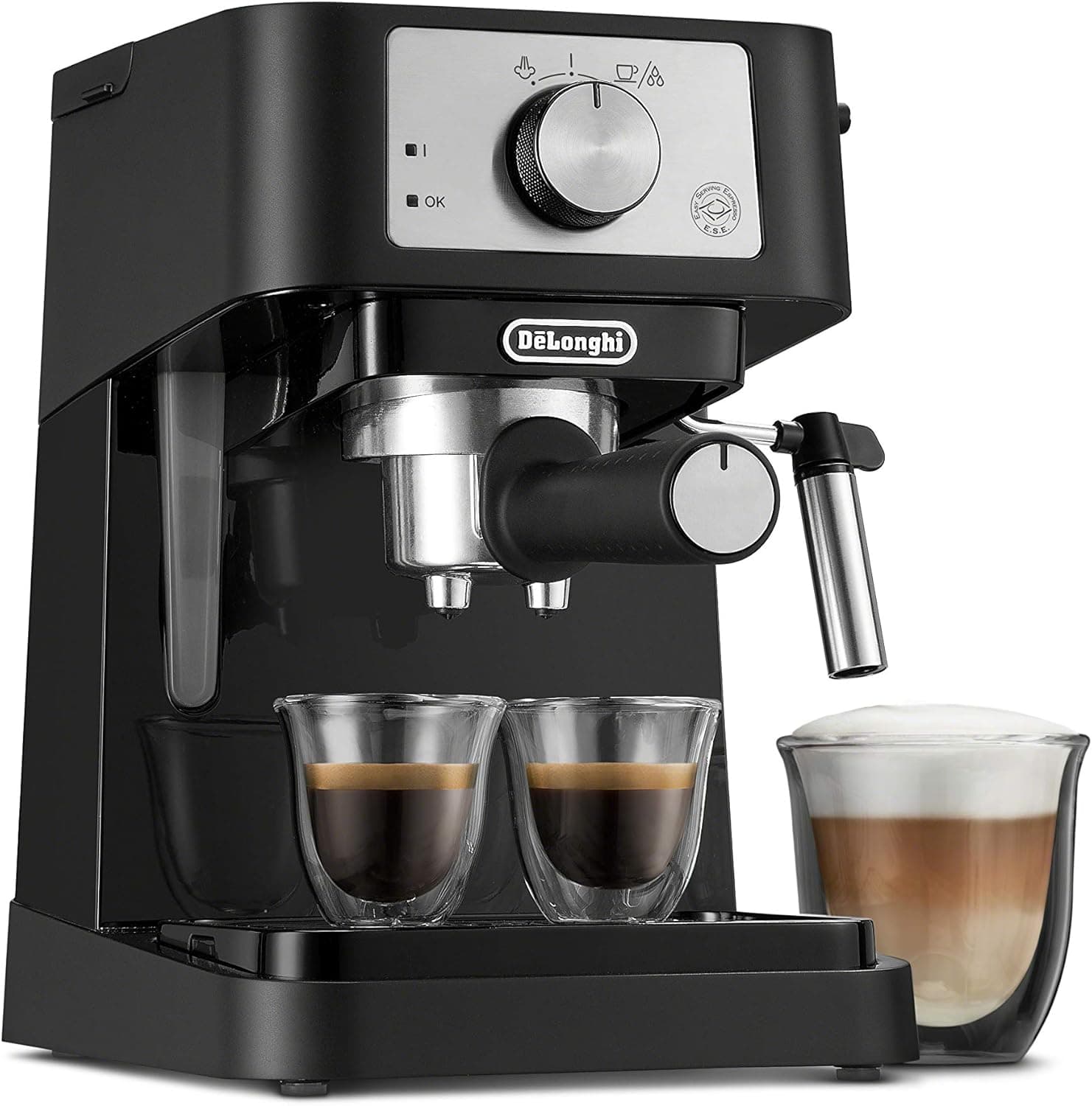
The Stilosa answers a question most beginner guides won’t: what if I’m not sure this is going to stick? It’s real espresso equipment. The thermoblock heats fast, the manual steam wand is teachable, and the workflow, dose, tamp, pull, steam, is the same workflow you’d follow on a much pricier machine. If espresso clicks for you, everything you learn here transfers.
The pressurized basket is actually beginner-friendly in a specific way: it creates artificial back-pressure that produces acceptable crema from beans that aren’t perfectly fresh or perfectly ground. A non-pressurized basket punishes inconsistency immediately; the pressurized one hides the worst mistakes while you learn the fundamentals. An IMS non-pressurized upgrade is available when you’re ready to progress.
No built-in grinder, you need to buy one. The plastic build limits long-term durability. And the ceiling is real: once you’re past the basics, you’ll want more machine. But for a first espresso machine where the goal is to learn the workflow cheaply before committing real money, there’s nothing better at this price.
Read my full De’Longhi Stilosa review →5. Breville Bambino Plus: Best Compact Pick
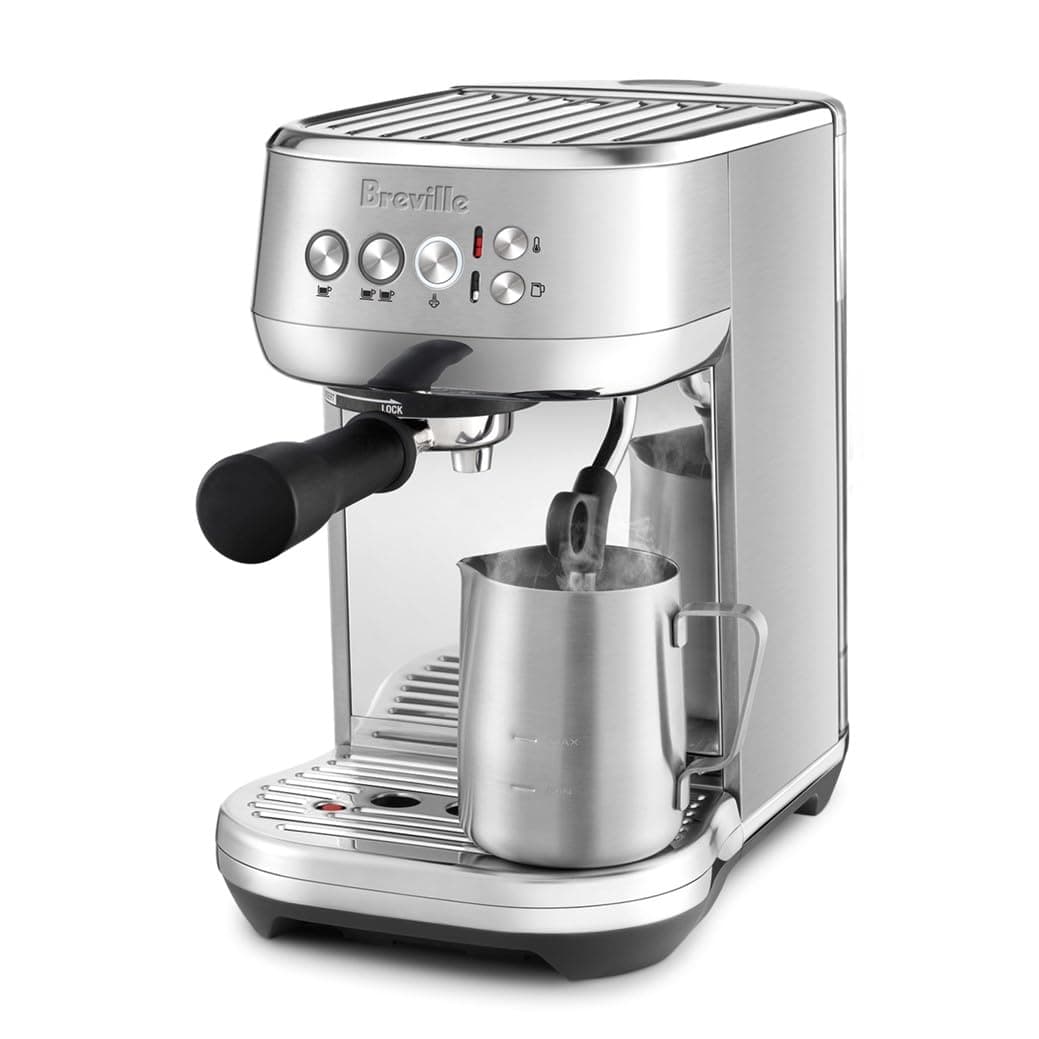
The 3-second heat-up removes one of the biggest beginner habit killers: forgetting to warm up the machine. You don’t need to plan ahead. You don’t need to flip it on ten minutes before you want coffee. You just press the button when you want espresso. At 7.7 inches wide, it also fits in apartments and kitchens where the other machines on this list won’t.
The automatic steam wand is beginner-friendly in a specific way: it produces latte-art-ready microfoam without requiring you to learn wand angle, jug position, or the subtle audio cues that manual steaming demands. Submerge, press the button, hit your temperature. For a beginner making lattes, this means good milk texture from day one rather than week three.
The catch that matters: no built-in grinder. The Bambino Plus needs a separate grinder, and the quality of your grind determines the quality of your espresso entirely. Budget for a Baratza Encore ESP or Breville Smart Grinder Pro alongside it. The total spend lands near the Barista Express Impress with a dedicated grinder that gives you more control.
Read my full Breville Bambino Plus review →Beginner Mistakes to Avoid
Using the wrong grind size. Too coarse and the water rushes through in under 15 seconds, sour, thin, under-extracted. Too fine and it stalls or chokes entirely. Target 25-30 seconds for a 36-38g shot from 18g of grounds. If you’re way off either direction, adjust grind before you adjust anything else.
Not using enough coffee. A standard double shot uses 18g of ground coffee. Many beginners under-dose because the basket looks full at 14g. It’s not. Under-dosing produces thin, bitter shots that get blamed on the machine. Buy a small kitchen scale and weigh your dose for the first few weeks, it removes the variable entirely.
Skipping the pre-heat. A cold portafilter drops extraction temperature by several degrees, which directly affects crema and flavor. Run a blank shot of hot water through the group head and portafilter before you pull the real one. Takes 10 seconds. Makes a noticeable difference.
Dirty equipment. Old coffee oils turn bitter faster than you think. Wipe the steam wand immediately after every use, milk scorches onto it in minutes and takes real effort to remove later. Backflush weekly. Descale every 60-90 days. My descaling guide covers the steps for each machine type.
Buying pre-ground coffee. Pre-ground espresso goes stale within days of opening. Every machine on this list will produce mediocre shots from pre-ground supermarket coffee, no matter how well you dial in the other variables. Fresh beans, ground right before extraction, make the single biggest difference in cup quality after the machine itself.
What About a Grinder?
Three of the five machines in this guide have built-in grinders the Ninja Luxe Café Pro, the Barista Express Impress, and the Magnifica Evo. For beginners, this is the simpler starting point: one device, one workflow, fewer variables to manage.
If you choose the Bambino Plus or the Stilosa, a grinder is not optional, it’s essential. The Baratza Encore ESP is the most common pairing for both. It grinds well at espresso fineness, holds consistent settings between uses, and has a large user community if you need troubleshooting help. A Bambino Plus plus the Encore ESP lands at a similar total to the Barista Express Impress, but with a dedicated grinder that you can upgrade independently as you advance.
Want More Options?
This guide focuses on beginner-friendly machines. If you want a broader view, these dedicated guides go deeper:
- For my full ranking across all price points and skill levels, see the best espresso machines of 2026 , 8 machines ranked, from $130 to $800.
- If budget is the main constraint, see my best budget espresso machines under $500 , real espresso without the premium price.
- Want the long-form version of any pick here? My full reviews archive breaks down each machine individually, scored the same way.
What is the easiest espresso machine for beginners to use?
The De'Longhi Magnifica Evo is the easiest, one button, bean to cup, zero technique required. If you want to actually learn espresso while keeping the difficulty low, the Ninja Luxe Café Pro ES701 is my top pick: Barista Assist gives real-time grind guidance, the built-in scale handles dosing, and the integrated tamper removes the most error-prone step. Both are forgiving in the ways that matter most when you're starting out.
Should a beginner get a machine with a built-in grinder?
Yes, for simplicity. A machine with an integrated grinder (Barista Express Impress, Ninja Luxe Café Pro, Magnifica Evo) means one device to learn, one thing to clean, and no grinder pairing decisions. The tradeoff is that integrated grinders can't be upgraded independently, when you outgrow them, you replace the whole machine. If you're ready to invest in the hobby from day one, a separate dedicated grinder often produces better results. For most beginners, integrated is the right starting point.
How much should a beginner spend on an espresso machine?
The De'Longhi Stilosa is the right answer if you're not sure espresso is your thing, it's real equipment at minimum financial risk. Once you're committed, the entry to mid tier (Bambino Plus, Magnifica Evo) delivers café-quality results without the steep learning curve of enthusiast machines. I don't recommend beginners spend over $800 without a specific reason, the machines above that price reward technique you haven't developed yet.
Is a super-automatic or semi-automatic better for beginners?
Super-automatics (like the Magnifica Evo) are easier on day one, press a button, drink espresso. But they don't teach you anything, and the results plateau quickly. Semi-automatics (Bambino Plus, Barista Express Impress, Ninja Luxe Café Pro) take a few weeks to learn but produce noticeably better espresso once you've dialed in grind size. If you want a long-term hobby, start with a guided semi-automatic. If you just want café drinks at home without any learning curve, a super-automatic delivers that reliably.