De'Longhi Magnifica Evo Review

Jack · Founder & Lead Reviewer
Researches every machine through engineering analysis, long-term owner reports, and independent technical testing, including Italian and German sources most English-language reviews skip.
Last updated
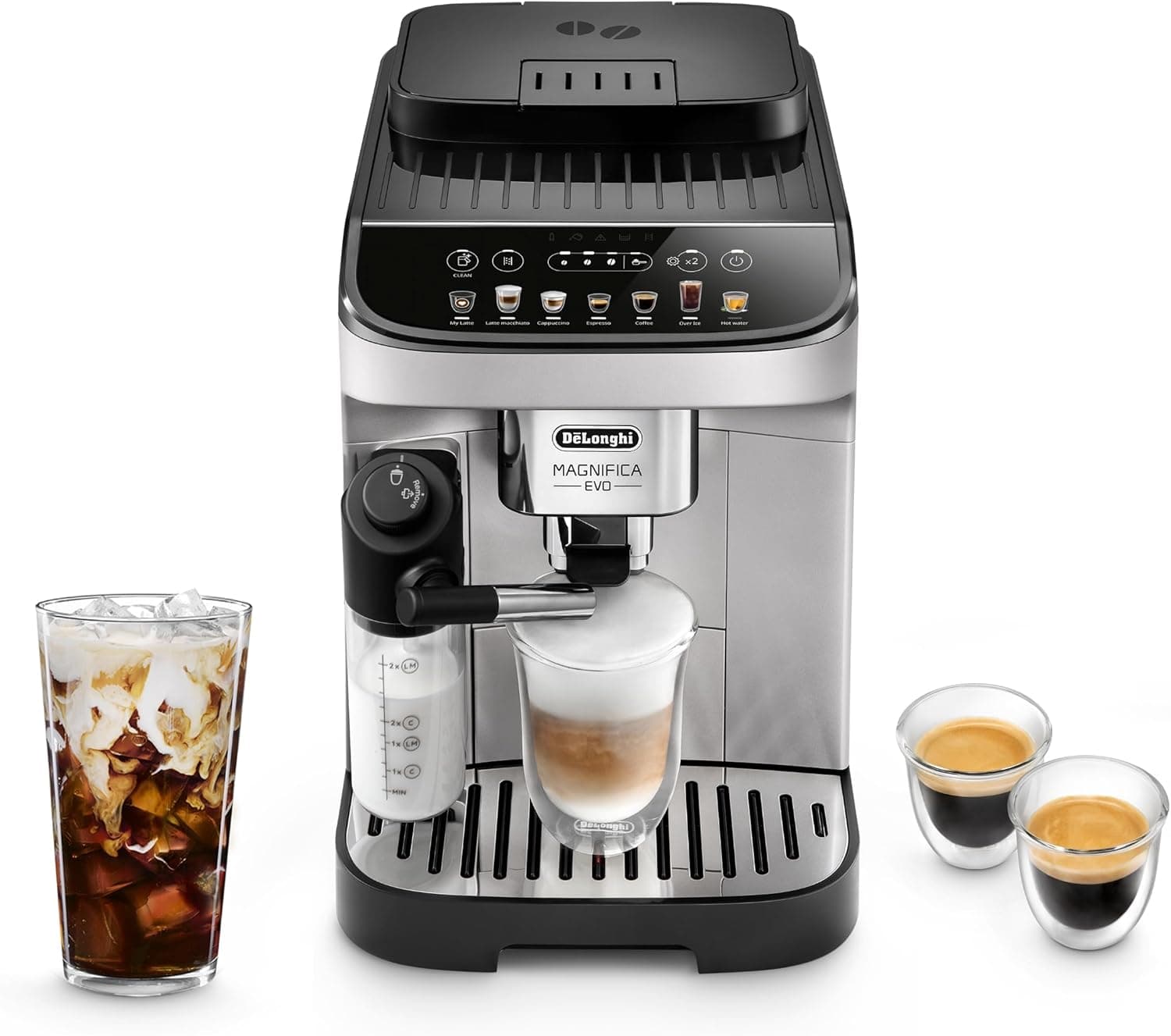
The debate around super-automatic espresso machines always lands in the same place: purists say it's not real espresso, most people say they don't care. Both are half right. The Magnifica Evo is a bean-to-cup espresso machine built around a stainless steel conical burr grinder and a one-touch workflow that removes dosing, tamping, and shot timing from the equation entirely. The trade is control. You get a consistent, pleasant espresso drink at the cost of understanding why it tastes the way it does.
That's not an insult. For a specific buyer, someone who wants fresh-ground coffee every morning without a learning curve, without a separate grinder, without a dosing ritual, the Magnifica Evo is a hard machine to argue against at its price point. The limitations are real too, and they're worth walking through. But most of them are limitations of the super-automatic category, not of this machine's execution.
The verdict
The Magnifica Evo is a strong pick for someone who wants fresh-ground espresso daily without learning extraction technique. The 13-setting grinder is adequate, not exceptional, and the one-touch workflow removes most of the friction points that cause people to abandon home espresso machines. Its most talked-about feature is the automatic milk carafe, which measures out exactly the amount of milk you pour in rather than guessing. It works well for one or two cappuccinos at a time. If you're making drinks for more than two people at once, or you want the deepest possible grind range for light roasts, look elsewhere in De'Longhi's own lineup or at the Philips 3200 LatteGo.
Magnifica Evo specs at a glance
- Grinder: Stainless steel conical burr, 13 grind adjustment levels
- Bean hopper: 8.8 oz (250 g)
- Water reservoir: 60.9 fl oz (1.8 L), removable
- Pump: 15 bar
- Milk system: Integrated, tubeless automatic carafe (LatteCrema-style, one-touch "My Latte" button)
- Grounds container: Holds up to 14 used pucks
- Dimensions: 14.2 x 9.5 x 17.4 in (36.1 x 24.1 x 44.2 cm)
- Weight: 21.1 lb (9.6 kg)
- Warranty: 2 years
What the Magnifica Evo actually does
The Evo grinds whole beans on demand and delivers espresso from a portafilter-free system: no basket, no tamp, no puck to handle yourself. Press a button and coffee comes out. The built-in conical burr grinder runs at 13 settings, adjustable only while the grinder is actively running. Everything that would require a manual decision on a semi-automatic machine is automated here.
This matters for adoption. The most common reason people abandon home espresso machines is the grind-dose-tamp-extract loop, since every step adds a failure mode. The Magnifica Evo removes all of them at once. That's an engineering choice, and it costs you something: the ability to adjust grind, dose, and extraction independently and understand which variable changed the shot. On the Evo, you turn a dial and accept the result.
The interface uses soft-touch icons rather than a screen: one icon per drink, plus a handful of adjustment controls. There's a "My Latte" button for saving a customized milk recipe, but the machine doesn't support separate user profiles. If you're the only person using it, that's irrelevant. If several people in the household drink coffee here, expect some friction over whose settings get overwritten.
Espresso quality
The honest starting point: the 15-bar figure on the pump is a marketing spec, not the pressure the coffee actually extracts at. Like most pump-driven espresso machines, real brew pressure runs closer to 9 bar once it reaches the puck. Crema on the Magnifica Evo is present and reasonably persistent, not the artificial puff you get from pressurized baskets on budget machines. Body sits in the medium range rather than espresso-thick.
Where the machine shows its ceiling: light roasts and delicate single origins. Thirteen grind settings is a workable range for commercial and medium-roast whole bean coffee, but it doesn't offer the fine resolution that specialty light roasts reward. Darker, fresher beans are where this machine performs closest to its potential. If you're buying natural-process light roasts from a local roaster, expect the machine to flatten some of that nuance.
Milk system: one-touch by design
This is the feature that sets the Magnifica Evo apart from most machines in its price range, and De'Longhi built the base model around it rather than saving it for a pricier variant. The machine ships with an integrated, tubeless milk carafe, not a manual steam wand. You pour milk into the carafe up to a marked level, attach it, and press the dedicated milk button. A sensor detects when the milk is used up and stops automatically, so you get roughly the amount you poured in rather than an approximation.
The result is genuinely convenient for cappuccino and latte macchiato, and it means you never have to purge or wipe down a steam wand by hand. The trade-offs are real too. The carafe holds enough milk for a couple of reasonably sized cappuccinos, but it's not large enough to prepare two full latte macchiatos back to back. Foam texture is creamy rather than fine microfoam, closer to what you'd expect from an automatic system than from a trained barista working a wand by hand. Layering on a latte macchiato (hot milk, foam, then espresso) comes out correctly without any manual technique.
Plant milk alternatives behave differently in an automatic frothing system than dairy does, and results can vary more than they do with a manual wand. If oat or almond milk is your daily driver, expect some trial and error to find a brand that froths consistently in this carafe.
Daily workflow and Eco Mode
Fill the bean hopper, fill the water tank, press a button. The machine grinds, doses, brews, and ejects the used puck into a built-in container that holds up to 14 pucks before it needs emptying. That's several days of typical use before you have to deal with it, depending on how much coffee the household drinks.
Eco Mode puts the machine into a lower-power standby after a period of inactivity and wakes it quickly when you press a button again. Pre-infusion, a brief low-pressure wetting of the grounds before full extraction, is a standard feature on this machine and is one of the reasons shots come out reasonably consistent even though nothing about the process is user-adjustable.
The 60.9 fl oz (1.8 L) water tank is removable from the front, which makes daily top-offs easy without shifting the machine. For one or two people drinking espresso and milk drinks daily, expect to refill every few days rather than daily.
Cleaning and descaling
Daily maintenance is straightforward. The water tank, drip tray, and grounds container all remove without tools and rinse under a tap. The brew group also comes out for a quick rinse, and De'Longhi recommends making this part of the daily routine, especially after milk drinks.
Descaling is required periodically, and the display prompts you when it's due. The full cycle, using De'Longhi's own descaling solution, takes around 45 minutes. Installing a water filter in the reservoir extends the interval between descales but doesn't eliminate the need for it. The full step-by-step is in my how to descale an espresso machine guide.
Magnifica Evo vs Magnifica Start vs Magnifica Evo Next vs Philips LatteGo
Several De'Longhi and Philips machines get confused with each other because they share the same basic formula: conical or flat burr grinder, automatic tubeless milk carafe, one-touch drink buttons.
Magnifica Start is the simplest of the three De'Longhi models here. It uses a monochromatic display instead of the Evo's colored touch icons, offers fewer preset drinks, but shares the same 13-setting grinder and the same integrated milk carafe. Pricing between the Start and the Evo has narrowed over time, so the gap that used to justify choosing one over the other is smaller than it used to be. If the simplest possible interface is what you want, it's a legitimate alternative.
Magnifica Evo Next is the step up: a color TFT display, support for multiple saved user profiles (useful if more than one person uses the machine daily), and a noticeably larger range of preset specialty drinks. It costs meaningfully more than the Evo. For a single user who's happy with fewer drink options, the extra cost is hard to justify. For a household sharing the machine, the user profiles alone can be worth the upgrade.
Philips 3200 LatteGo and its updated sibling, the 4300 LatteGo, are the closest competitors outside the De'Longhi lineup and, frankly, the machines the Evo's design borrows the most from. Philips uses a ceramic flat burr grinder instead of De'Longhi's stainless steel conical burr, with slightly fewer grind settings but more preset specialty drinks on the newer models. Cup clearance is taller on the Philips, which matters if you use tall travel mugs. The two brands are close enough in price and capability that the choice often comes down to which interface and drink menu you prefer. My Breville vs De'Longhi guide covers the broader semi-automatic vs. super-automatic decision if you're weighing this category against a machine with a portafilter.
Who should buy the Magnifica Evo
Buy it if: You want fresh-ground espresso and one-touch milk drinks every morning without learning extraction technique. You're making drinks for one or two people. You'd rather have a machine handle grinding, dosing, and milk frothing automatically than build the skill yourself.
Skip it if: You care about specialty coffee and want to understand why each shot tasted the way it did. You regularly serve milk drinks to more than two people at once, since the carafe is sized for one or two servings. You'd rather split the same budget between a semi-automatic and a separate grinder and learn the process. The Gaggia Classic Pro paired with a decent grinder lands at a similar total cost with a higher ceiling.
Does the Magnifica Evo make real espresso?
Mostly yes. The Evo uses a real conical burr grinder and a pump-driven brew system, which extracts at roughly 9 bar of brew pressure once it reaches the coffee, typical for machines in this class, even though the pump itself is rated at 15 bar. The result has genuine crema and real espresso body, not the pressurized-basket approximation you get on cheaper machines. The gap from a well-tuned semi-automatic is real but subtle in a blind comparison. If 'real espresso' means full manual control over every variable, the answer is no. If it means correctly extracted, fresh-ground espresso with minimal effort, yes.
How many grind settings does the Magnifica Evo have?
13, adjustable only while the grinder is running. That range covers most commercial and medium-roast whole bean coffee comfortably. It won't satisfy buyers chasing micro-adjustment for specialty light roasts. If grind resolution matters more than automation to you, the Breville Barista Express Impress offers 25 settings paired with a separate manual workflow.
Does the Magnifica Evo have an automatic milk frother?
Yes, and this is standard on the base model rather than a paid upgrade. The Magnifica Evo ships with an integrated, tubeless milk carafe. Pour in milk up to the marked level, press the dedicated milk button, and a sensor stops the machine automatically once the milk is used. It's built for cappuccino and latte macchiato for one or two people at a time; the carafe isn't large enough for two full latte macchiatos back to back.
What are the dimensions and weight of the De'Longhi Magnifica Evo?
14.2 x 9.5 x 17.4 in (36.1 x 24.1 x 44.2 cm), weighing 21.1 lb (9.6 kg). That's compact for a super-automatic with a built-in grinder and milk system, and it fits comfortably under most standard kitchen cabinets.
Is the Magnifica Evo good for beginners?
It's one of the easiest espresso machines available for beginners who define 'easy' as 'no technique required.' You don't dose, tamp, or time extractions. Press a button and get coffee and milk foam. The trade-off is that you won't build espresso skill by using it. If learning extraction is the goal, a semi-automatic like the Bambino Plus teaches that better. If the goal is fresh espresso with minimal friction, the Evo is built for exactly that.