
CASABREWS 5700 Pro Review

Jack · Founder & Lead Reviewer
Researches every machine through engineering analysis, long-term owner reports, and independent technical testing, including Italian and German sources most English-language reviews skip.
Last updated
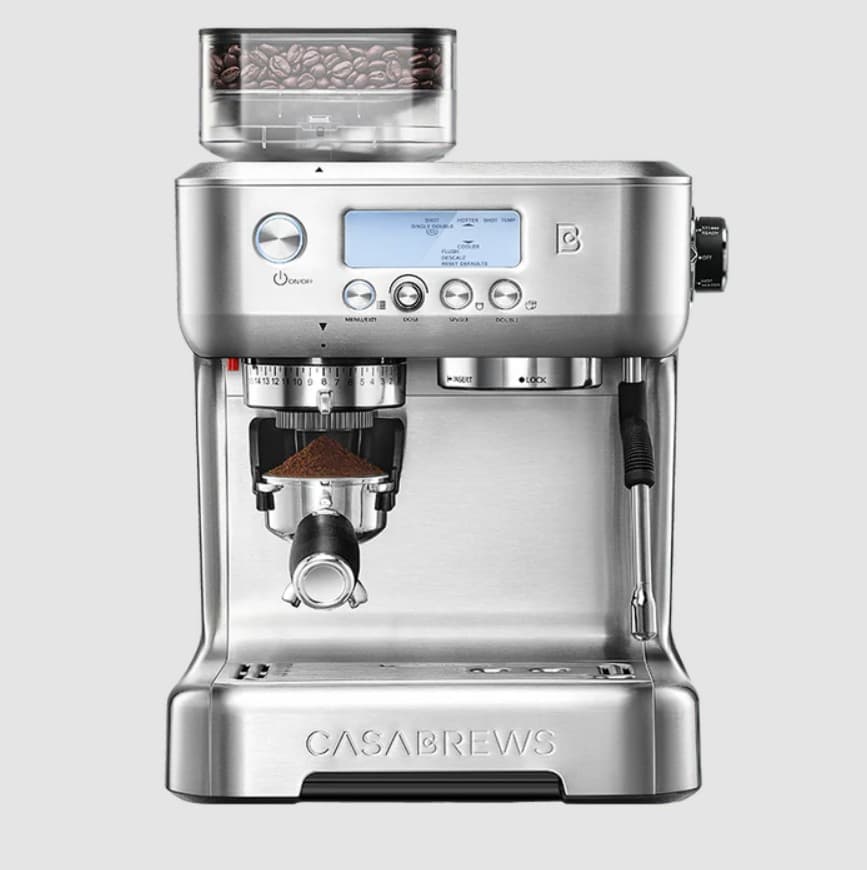
The pitch for a built-in grinder espresso machine never changes: one plug, one footprint, no separate grinder to research. The CASABREWS 5700 Pro makes that pitch at a price that moves around depending on retailer and promotion, generally somewhere in the $600–$900 range. That sits past budget territory but short of where Breville and Gaggia usually compete. Casabrews is a young American brand, founded in 2020, which raises a fair question: can a company that new deliver genuine all-in-one value against competitors with decades of espresso engineering behind them?
Based on the independent reviews and spec sheet I dug through for this piece, the answer is mostly yes, with conditions worth understanding before you commit.
The verdict
For someone who wants a grinder and machine in a single box, and would rather skip shopping for separate components, the 5700 Pro delivers. The PID-controlled digital display and a fast-heating system put it ahead of simpler budget machines in daily use. The ceiling on shot quality, set partly by the grinder's 15 settings and partly by the included pressurized baskets, sits lower than the price tier suggests, but upgrade baskets exist and help a lot.
Casabrews sells the 5700 Pro direct from its own site, and pricing has moved around: listings over the past year put it anywhere from about $600 to $900 depending on promotions. Check the current number before you buy rather than treating either figure as fixed.
Check Price on Casabrews.com →Build and design
The 5700 Pro leads with a brushed stainless steel front panel that photographs well and holds up to daily splashing. The sides, bean hopper, and portafilter holder are plastic, standard for this category, but worth naming at this price tier, where material expectations climb. Reviewers have flagged the portafilter holder specifically as less durable than the metal versions found on pricier machines. At about 21.5 lbs and roughly 12.8 x 11.2 x 16.5 inches, the machine is compact for what it includes, close to the footprint of a standalone espresso machine with no grinder attached.
The bean hopper isn't tinted and doesn't seal airtight, so it won't protect beans from light or air the way a dedicated canister would. Multiple reviewers recommend treating it as a hopper for daily-use beans rather than long-term storage, and keeping the actual bag sealed elsewhere.
As a PID temperature control espresso machine, the monochromatic LCD screen is the hardware feature that most distinguishes this machine from cheaper all-in-ones. Monitoring brew temperature in real time lets you confirm the heating system is in your target range, useful for anyone adjusting for different roast levels. There's no analog pressure gauge, a tradeoff several reviewers see as fair for a beginner-focused machine but a genuine downside if you want that retro, needle-and-dial look on the counter. A digital temperature readout isn't a feature you get on the De'Longhi Stilosa around $130, and it isn't common on machines around $300 either.
The water tank is one of the more common complaints in owner reviews. Two people pulling doubles each morning can push it toward a daily refill. The tank pulls straight out cleanly without moving the machine, so the act itself is painless, but the frequency adds up over a five-day week.
The built-in grinder
Fifteen grind settings, integrated conical burr, confirmed across multiple independent reviews. For medium and medium-dark roasts, the range most home espresso drinkers live in day to day, the middle of the 15-step scale covers the usable window without much fuss. Reviewers describe the factory calibration as sensible enough that dialing in doesn't take long.
Light roasts expose the limit. Getting fine enough for a slow, even extraction from a delicate Ethiopian or Colombian pushes against the top of the 15-step range, and you end up accepting "close enough" rather than landing exactly where you want. If your beans are typically medium or darker, this won't come up.
On noise, TechRadar's independent testing measured the machine at around 65dB while brewing and 75dB while frothing milk. That's not a whisper-quiet setup, but it's in line with most machines in this category rather than an outlier.
Price out the alternative and a built-in grinder espresso machine gets more interesting on value. A decent standalone conical burr grinder isn't cheap on its own, and pairing one with a grinder-less machine at a similar price point pushes the total cost close to what the 5700 Pro costs as a single unit. Whether an integrated grinder matches a dedicated unit's grind quality is a separate question, but the bundling itself isn't the ripoff it can look like on a spec sheet.
Espresso quality
A 20-bar Italian ULKA pump handles the pressure side, well past the roughly 9 bar espresso actually needs at the puck.
The included baskets are pressurized double-wall, which create artificial back-pressure through a restricted exit hole and produce consistent-looking crema across a wide range of coffee freshness and grind coarseness. For cappuccinos and lattes made with medium-roast supermarket beans, the results are balanced and genuinely pleasant. A trained barista wouldn't call it real espresso, but most people drinking their morning cappuccino never will either, and the baseline here beats what most people already have at home.
Switching to non-pressurized single-wall baskets, compatible with this machine's portafilter, changes the situation meaningfully. Real extraction from freshly ground beans, real crema, a noticeably more complex cup. Single-wall baskets reward a grinder that's already dialed in and punish one that isn't, which makes them a better fit after the first few weeks than on day one.
Temperature consistency is where reviewers give the 5700 Pro real credit over entry-level machines, since it's built around adjustable PID control rather than a single fixed thermostat. The heating hardware itself is where sources disagree. Coffeeness, a technical German outlet, describes the system as a thermocoil design and is skeptical of how well it holds heat through the portafilter, recommending you flush the group head for at least 10 seconds before pulling a shot to warm the metal. Other sources describe it as a 1500W thermal block instead. I haven't found independent testing that settles which description is accurate, so treat that detail as disputed rather than confirmed.
Steam wand
Steam pressure is adequate for home use, per multiple reviewers, and cappuccinos and flat whites come out right without the fight that some lower-pressure wands impose. The wand tip angle is slightly awkward: it points with a forward lean, so jug positioning has to compensate. That's the kind of quirk that takes some getting used to rather than a dealbreaker.
Latte art is achievable with this wand, though reviewers describe a real learning curve given the tip geometry, not something that clicks on the first try. For milk drinks for yourself in the morning, the wand delivers without drama once you've adjusted to it.
Living with it day to day
The water tank is the routine's main friction point for a two-person household, per owner reports, though the tank removal itself is clean and quick. Puck ejection is manual, the same knock box routine as any other portafilter machine, no surprises there.
The bypass doser, for pre-ground coffee, handles a guest's bag or a decaf capsule without fuss. I wouldn't reach for it daily, since fresh beans through the built-in grinder produce noticeably better results. The bypass reads as a secondary feature here, not the designed workflow.
Cleaning follows standard portafilter discipline: knock the puck, rinse the basket, wipe the steam wand immediately after every use. The drip tray fills quickly according to several owners and is worth checking every few sessions rather than letting it overflow. Descaling every two to three months keeps the heating system running cleanly, and the machine alerts you when it's due.
How it compares
The clearest alternative at a lower price is the De'Longhi Stilosa, around $130. The Stilosa has no built-in grinder, a smaller portafilter, and simpler controls. The 5700 Pro costs considerably more and justifies that gap mainly through the integrated grinder, the PID-controlled display, and better temperature consistency. If you already own a grinder, the Stilosa becomes a far more interesting option at a fraction of the price.
The harder comparison is the Breville Bambino Plus, around $499, which has no grinder but out-performs the 5700 Pro as a pure espresso machine: faster heat-up, better steam pressure, and a 54mm portafilter with a rich aftermarket ecosystem. Add a grinder and the combined cost lands in roughly the same range as the 5700 Pro, with a higher quality ceiling and a better upgrade path. The CASABREWS wins on simplicity. The Breville wins on everything else.
For a broader look at how the 5700 Pro fits in the budget field, see our best budget espresso machines guide. If you're deciding between your first machines, our best espresso machines for beginners walks through the full comparison.
Who should buy the CASABREWS 5700 Pro?
Buy it if: You want one machine with a grinder included, you don't want to research separate components, and your daily routine is medium-roast espresso and milk drinks. The all-in-one convenience is real, and the 5700 Pro delivers it without major technical issues.
Skip it if: You already own a decent burr grinder, in which case the Breville Bambino Plus delivers better espresso at a similar budget. Also skip it if specialty single-origin dialing-in is the goal: the 15-setting grinder will frustrate you inside six months.
Is the CASABREWS 5700 Pro good for beginners?
Yes, with the right expectations. The built-in grinder removes the biggest external decision for a first-time buyer, since you don't need to research and purchase a separate unit. The digital screen helps you understand what the machine is doing. The pressurized baskets forgive inconsistent technique. Where beginners hit a ceiling: the 15-setting grinder doesn't offer the fine-grained adjustment that more serious machines do, and the steam wand has a geometry that takes some practice to calibrate. It's a solid starting point, not a long-term ceiling machine.
What grind setting should I use for espresso on the CASABREWS 5700 Pro?
Start in the middle of the 15-step range for most medium roasts and adjust from there: go coarser if your shot runs long, finer if it runs fast. Light roasts generally need settings toward the fine end of the range. The 15-setting grinder has enough steps to dial in medium roasts reasonably well; light roasts are trickier because the finest settings sit close together and the ceiling is lower than on a dedicated conical burr grinder.
Can I use non-pressurized baskets with the CASABREWS 5700 Pro?
Yes. Third-party single-wall (non-pressurized) baskets that fit this machine's portafilter are available separately. They produce real extraction shots from freshly ground coffee, genuine crema, and more complexity in the cup, but they're far less forgiving than the included pressurized baskets. You'll need consistent grind, dose, and tamp technique, and the built-in grinder needs to be properly dialed in first. Recommended once you've spent a few weeks with the machine, not as a day-one setup.
Does the CASABREWS 5700 Pro work with pre-ground coffee?
Yes, a bypass doser lets you load pre-ground coffee directly without running it through the built-in grinder. It works cleanly for occasional use: decaf, a guest's preferred blend, or travel samples. Shots from pre-ground are noticeably flatter than shots from the built-in grinder with fresh beans, so the bypass is a fallback feature, not the intended daily workflow.