
KitchenAid Semi-Automatic Espresso Machine Review

Jack · Founder & Lead Reviewer
Researches every machine through engineering analysis, long-term owner reports, and independent technical testing, including Italian and German sources most English-language reviews skip.
Last updated
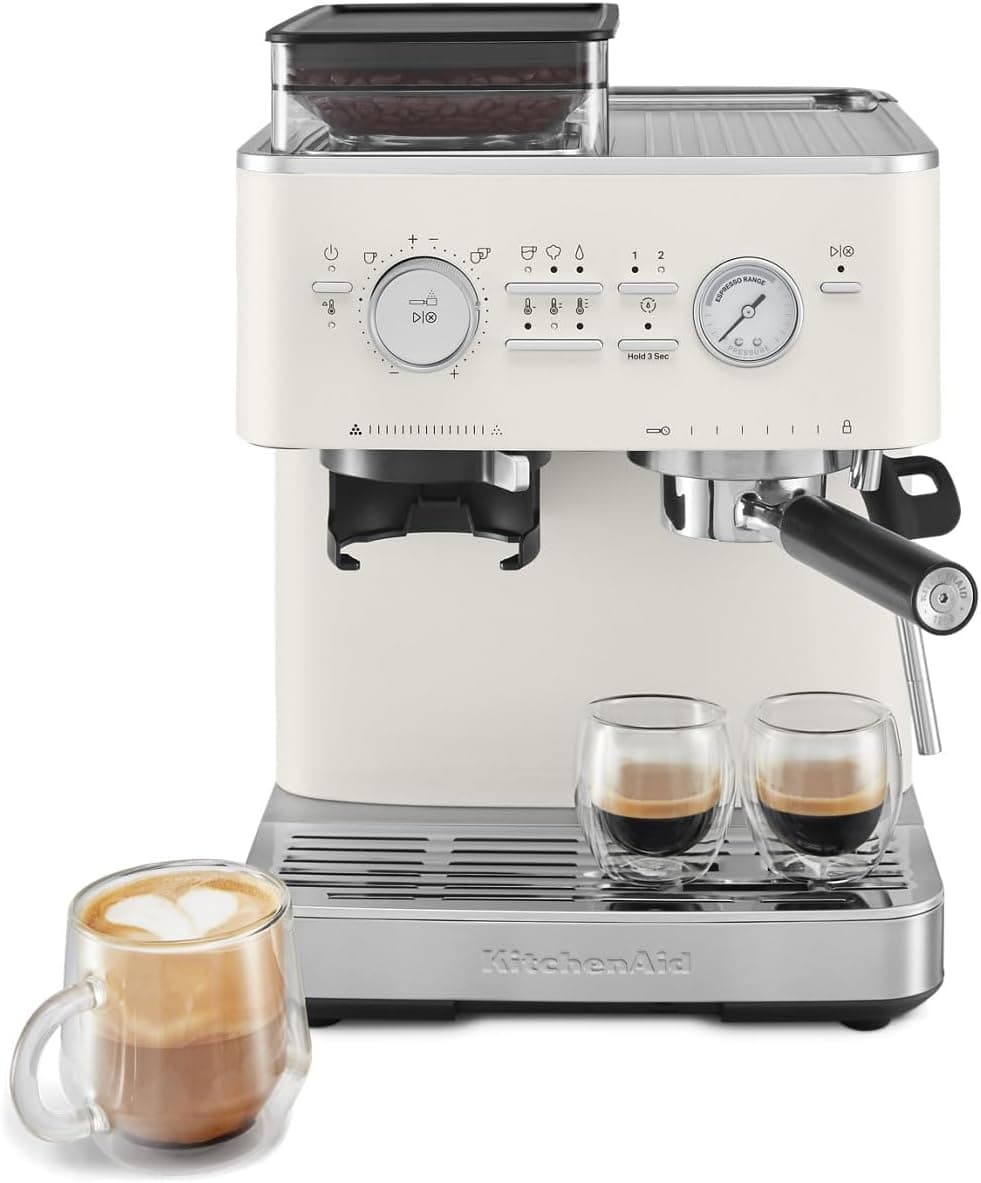
KitchenAid makes stand mixers. That's the brand's reputation, heavy, all-metal, built to outlast every apartment you'll ever live in. The KES6551 is the company's claim that the same DNA applies to espresso. It goes up against the Breville Barista Express at a similar list price, from a brand that's been building espresso machines long enough to have an enthusiast following. The honest question isn't whether KitchenAid can build a good machine. It's whether a company known for one product category earns the same trust in another. Here's how it actually stacks up.
The Verdict Up Front
The KES6551 makes genuinely good espresso. It ships with a 58mm flat-base portafilter that's more useful than anything in Breville's box at this price, and the built-in grinder is remarkably quiet. Reviewers single it out: The Modest Man rates it far quieter than a standalone Baratza Encore, quiet enough to run early without waking the house. Those two things are real. So is the confusing setup, the QC issue with water tank leaks on some units, and the absence of a built-in shot timer. Rating: 4.2 out of 5.
Which KitchenAid Model Is This?
Three KitchenAid model numbers show up in searches and reviews. They are not the same machine.
The KES6403 is a simpler sibling that's still on sale in 2026 across Amazon, Walmart, and KitchenAid's own site, not a discontinued predecessor. The real difference from the KES6551 is that the KES6403 has no built-in grinder at all: you pair it with a separate grinder or run pre-ground coffee. The KES6551 in this review adds the built-in burr grinder as its main upgrade. Both run the same fast-heating thermocoil, so a shot and then a steam happen in sequence with an auto-purge cooldown between them rather than at the same time. My KitchenAid KES6403 review covers that model in full.
The KES6551 is the current model and the subject of this review. It's what you find on Amazon and at major appliance retailers right now. Available in five colors: Porcelain White, Brushed Stainless Steel, Candy Apple Red, Cast Iron Black, and Juniper. This review covers the KES6551, which KitchenAid sells in several finishes that are functionally identical and differ only in appearance. When someone says "KitchenAid espresso machine" in 2025 or 2026, this is what they mean.
The KES6503 is the "Metal" line variant, a separate product, not a color option of the KES6551. If you see both numbers in search results, they're distinct machines with different specs.
Confirm your model number before buying, especially from marketplace sellers.
The Flat-Base Portafilter: A Genuinely Clever Detail
Most home machine portafilters have a rounded or angled base. You balance them against a counter edge while tamping, or you hold them with one hand while you work. Every home espresso person develops a workaround. It's the kind of friction you stop noticing until someone removes it.
The KES6551 ships with a 58mm portafilter that has a flat base. You put it down on the counter. It sits level. You tamp straight down, remove the tamper, and load the machine. No counter edge required. No awkward grip. It's a small thing that adds up: the 58mm easy-tamp portafilter has a flat base, so you tamp on a flat surface instead of balancing a rounded-base handle.
The 58mm spec matters separately. It's the commercial standard, and the aftermarket ecosystem is enormous. IMS, VST, Pullman, and Weber all make precision baskets in 58mm, and you can find calibrated tampers and distribution tools without searching for brand-specific parts. Compare that to Breville's 54mm across the Express and Barista Pro lines, where the aftermarket selection is thinner and usually costs more.
The recessed dual spouts handle simultaneous single and double shot pours without issue. The portafilter itself is heavy cast metal, it feels like what comes with machines at twice the price, not an OEM inclusion someone cheaped out on.
The Grinder: Surprisingly Quiet
The built-in conical burr grinder has 16 settings and a removable hopper.
The quiet grinder is a genuine practical advantage, easy to run early without disturbing a sleeping house. It's among the quietest built-in grinders at this price, and that's a genuine daily advantage in shared homes, apartments, or anywhere sound carries between rooms.
The removable hopper makes bean switching easy. Pull it out, swap bags, reattach, no digging with a brush to clear out one variety before loading another.
The limitation is dosing. Timer-based, not weight-based, which means finding the right dose requires adjusting grind time across multiple shots. Write your settings down when you find them. The machine doesn't consistently retain calibration across power cycles, so the first shot after a few days off may need minor re-dialing.
How the Espresso Tastes
Good. Better than you might expect from a brand entering this category for the first time.
KitchenAid's dual temperature sensors are meant to hold brew temperature steady, and Whole Latte Love reported no noticeable fluctuation in testing. The control is coarse, though: three settings (Low, Medium, High), not the granular PID adjustment a Breville Barista Express gives you, a limitation Coffeeness flags. KitchenAid advertises a 45-second heat-up, and Whole Latte Love clocked about 44 seconds on average across its trials, fast for this class thanks to the thermocoil. The 15-bar pump has headroom to spare at typical grind settings.
Both single-wall and pressurized double-wall baskets are in the box. Start with the pressurized basket while you're dialing in, it's more forgiving and gives you real crema before you've got the grind tuned to commercial standards. Switch to the single-wall once your settings are locked in. The flavor clarity improves noticeably.
No built-in shot timer on the machine. At this price, that's a gap. Use your phone. Target roughly 20 seconds for a single, 28–32 seconds for a double with the single-wall basket. Once those numbers are established for your beans, the machine holds them reliably, same settings produce the same shot repeatedly after dial-in.
Expect seven to ten shots before you pull one you're happy with. That's not a criticism of the hardware. That's the nature of manual espresso. But the KES6551 doesn't give you the guardrails the Breville Barista Express Impress provides with auto-tamping and dose confirmation, you're doing more of the work yourself, and there are more variables to control.
Where It Falls Short
Two issues worth taking seriously before you buy.
Setup is confusing. Multiple owners report spending an hour or more on the initial prime cycle, filter installation, and first-run sequence. The manual doesn't lay out the process clearly. Budget extra time for your first session and don't plan on pulling a real shot the same afternoon you unbox it.
Water tank leaks on some units. A subset of KES6551 machines develop a leak at the base after first use. This is a quality-control variance, not a design flaw, most units don't have it. KitchenAid covers it under warranty. Buy from a retailer with a strong return policy, inspect the base after the first fill, and photograph any moisture before calling support.
Two smaller issues: a slow drip from the steam wand during pumping on some units, and no adjustable pre-infusion control. The Breville Barista Express has user-adjustable pre-infusion time, a feature that matters for extracting lighter roasts evenly. KitchenAid's multi-valve manifold handles water distribution differently, but there's no manual pre-infusion setting. That's a real gap if you're a light roast drinker who relies on pre-infusion to manage extraction. No backflush disc is included either. KitchenAid's system handles cleaning differently, but if you want a conventional 58mm blind disc for a manual cleaning cycle, it's about $10 separately.
The Steam Wand and Milk
The multi-angle steam wand positions comfortably in a standard pitcher. A "Clean me" notification prompts you to purge and wipe after each steam session, a useful reminder that keeps dairy buildup from becoming a problem.
Microfoam is good once you work out the angle and entry depth. Cappuccino foam comes easily, thick and stable from early on. For flat whites and lattes, expect a week or two before the technique becomes reliable.
A slow drip from the wand during the brewing phase can appear. It's minor, but worth watching for in the first few sessions.
KitchenAid vs Breville Barista Express
Same price range, built-in grinders, thermocoil systems, and timer-based dosing. The differences are meaningful.
Breville's advantages: 25 grind settings versus 16. Adjustable pre-infusion time. A more polished setup process. The Barista Express Impress variant adds auto-tamping and dose confirmation at roughly the same price, a genuine help for beginners who want a shorter path to consistent shots.
KitchenAid's advantages: The 58mm flat-base portafilter and its aftermarket ecosystem. A quieter grinder by a noticeable margin. Five color options Breville doesn't offer. And KitchenAid's appliance longevity track record, which is real, though it's still early to know how it applies to espresso machines specifically.
For most buyers, the choice comes down to this: more control options and a smoother first week (Breville), or a quieter grinder, better portafilter out of the box, and KitchenAid's durability reputation (KitchenAid). Both are reasonable bets at the same price.
Who Should Buy the KitchenAid Semi-Automatic?
Buy it if you want a 58mm commercial portafilter with a flat-base design, a quiet grinder matters for your household, you care about KitchenAid's color range, or you trust the brand's appliance durability enough to bet it extends to espresso.
Skip it if you want adjustable pre-infusion, a built-in shot timer, or an easier first-week experience. Also worth waiting if you've seen recent QC reports about water tank issues from your specific retailer's stock, the problem is real enough to check before committing.
Our best semi-automatic espresso machines guide puts the KES6551 in context alongside the Gaggia Classic Pro, Rancilio Silvia, and the Breville lineup. If you're still mapping out the field, start there.
Frequently Asked Questions
What's the difference between the KitchenAid KES6551 and KES6403?
The KES6403 is the older, original model, discontinued or hard to find new. The KES6551 is the current machine available at major retailers now. The grinder has been updated and the feature set differs. If you're buying new, you want the KES6551. Reviews from a few years ago discussing the 'KitchenAid semi-automatic' are likely about the KES6403.
What size portafilter does the KitchenAid espresso machine use?
58mm, the commercial standard. This is one of the KES6551's genuine advantages over machines like the Breville Barista Express, which uses a 54mm portafilter. The 58mm ecosystem has more aftermarket basket and tamper options at lower prices, including precision baskets from IMS, VST, and Pullman that fit without modification.
Does the KitchenAid Semi-Automatic Espresso Machine have a shot timer?
No. There's no built-in shot timer on the KES6551. Use your phone, target around 20 seconds for a single shot and 28–32 seconds for a double with the single-wall basket. It's a genuine gap and worth knowing before you buy.
Is the KitchenAid Semi-Automatic Espresso Machine reliable?
Most owners report trouble-free use over months and years, and KitchenAid's appliance reputation is strong. A documented subset of units has a water tank leak issue at the base, a QC variance, not a design flaw, that KitchenAid replaces under warranty. Buy from a retailer with a good return policy, inspect the base after the first fill, and document any moisture with photos before contacting support.