The Best Semi-Automatic Espresso Machines of 2026

Jack · Founder & Lead Reviewer
Researches every machine through engineering analysis, long-term owner reports, and independent technical testing, including Italian and German sources most English-language reviews skip.
Last updated
A semi-automatic espresso machine puts you in charge of the variables that actually decide how a shot tastes. You grind the beans, you dose the basket, you tamp the puck, and you start and on some machines, stop, the extraction. The machine’s job is narrower: hold the right pressure and temperature while you do the rest.
That division of labor is exactly why semi-automatics have a higher ceiling than one-button machines, and exactly why they take longer to get good with. This is the category where most serious home baristas actually live, not because it’s the easiest path to a decent cup, but because it’s the only one where your technique keeps paying off the longer you stick with it.
What Is a Semi-Automatic Espresso Machine?
A semi-automatic machine has an electric pump that builds pressure for you, that’s the line that separates it from a fully manual lever machine, where you provide the pressure yourself. Every machine in this guide has a pump.
The more important distinction is against super-automatic machines. On a super-automatic, you load whole beans and press a button; the machine grinds, doses, tamps, brews, and ejects the puck without your input. On a semi-automatic, you do the grinding, dosing, and tamping yourself, then lock the portafilter in and start the pump. That hands-on process is where espresso quality actually comes from, more control over more variables, in exchange for more to learn.
“Semi-automatic” and “automatic” get used interchangeably, but there’s a technical difference: a strictly automatic machine stops the extraction for you at a programmed volume, while a true semi-automatic leaves you watching the shot and switching it off by feel. Most machines here blur that line with programmable presets, the semi-auto-vs-super-auto split is the one that actually changes how the espresso tastes.
This category is for anyone who wants to learn real espresso technique, not just drink the result of someone else’s engineering. If you want zero learning curve, my best super-automatic espresso machines guide is the better starting point.
My Top Semi-Automatic Picks at a Glance
Six machines from $130 to $1,000, ranked by overall value, build quality, and how much skill they ask of you.
| Machine | Rating | Pressure | Boiler | Price | Best for | |
|---|---|---|---|---|---|---|
| 4.7 | 9 bar | Thermocoil | Around $790price may vary | Best Overall | Check Price | |
Pros & consPros
Cons
| ||||||
| 4.5 | 9 bar | Single boiler | Around $452price may vary | Best for Enthusiasts | Check Price | |
Pros & consPros
Cons
| ||||||
| 4.4 | 9 bar | Single boiler | Around $995price may vary | Best for Enthusiasts | Check Price | |
Pros & consPros
Cons
| ||||||
| 4.6 | 9 bar | ThermoJet | Around $850price may vary | Best Upgrade Pick | Check Price | |
Pros & consPros
Cons
| ||||||
| 4.3 | 15 bar | Dual thermoblock | Around $1,000price may vary | Best Design | Check Price | |
Pros & consPros
Cons
| ||||||
| 4.0 | 15 bar | Thermoblock | Around $130price may vary | Best Budget | Check Price | |
Pros & consPros
Cons
| ||||||
9 bar · Thermocoil · $$$
Best OverallPros & cons
Pros
- Impress Puck System removes dosing and tamping errors
- Consistent shot quality, higher floor than the standard Express
- Built-in conical burr grinder with 25 grind settings
- Thermocoil holds extraction temperature tightly between shots
- Dry puck cleanup, puck knocks out cleanly every time
Cons
- 54mm portafilter limits accessories vs 58mm commercial standard
- Grinder steps are coarse at the fine end, hard to dial in light roasts
- Can't brew and steam simultaneously (single Thermocoil)
- Auto-tamp adds a real premium over the standard Express
9 bar · Single boiler · $$$
Best for EnthusiastsPros & cons
Pros
- 58mm commercial portafilter, vast accessories ecosystem
- Brass boiler (E24) with 3°F temperature swing
- 3-way solenoid valve for dry pucks
- Built to last, 15-year lifespans common
- Most moddable machine at any price
Cons
- No PID out of the box
- Included tamper is cheap plastic
- Steam wand not cold-touch
- Ships with almost no accessories
9 bar · Single boiler · $$$
Best for EnthusiastsPros & cons
Pros
- Stainless steel chassis and brass boiler built to last 15+ years
- 58mm commercial portafilter, full access to the café accessories ecosystem
- Stainless tamper with a blackwood handle included, not plastic
- The most-modded prosumer machine, PID kits, gauges, and more all fit
Cons
- No PID out of the box, temperature surfing or a mod is required for consistency
- Single boiler means brewing and steaming happen one at a time, never together
- Slow heat-up compared to thermoblock and ThermoJet machines
9 bar · ThermoJet · $$$
Best Upgrade PickPros & cons
Pros
- ThermoJet heats to brew-ready in 3 seconds, no warm-up routine
- 30 grind settings; newer units use Baratza-designed precision burrs
- LCD shows actual extraction temperature to the degree
- Powerful manual steam wand with fast recovery between drinks
- 54mm portafilter with single and dual-wall baskets included
Cons
- No dedicated PID, ThermoJet manages temp but you can't fine-tune it
- Grind retention in the chute, a quick purge before dosing fixes it
- No auto-tamping unlike the Barista Express Impress
- 54mm portafilter vs 58mm commercial standard
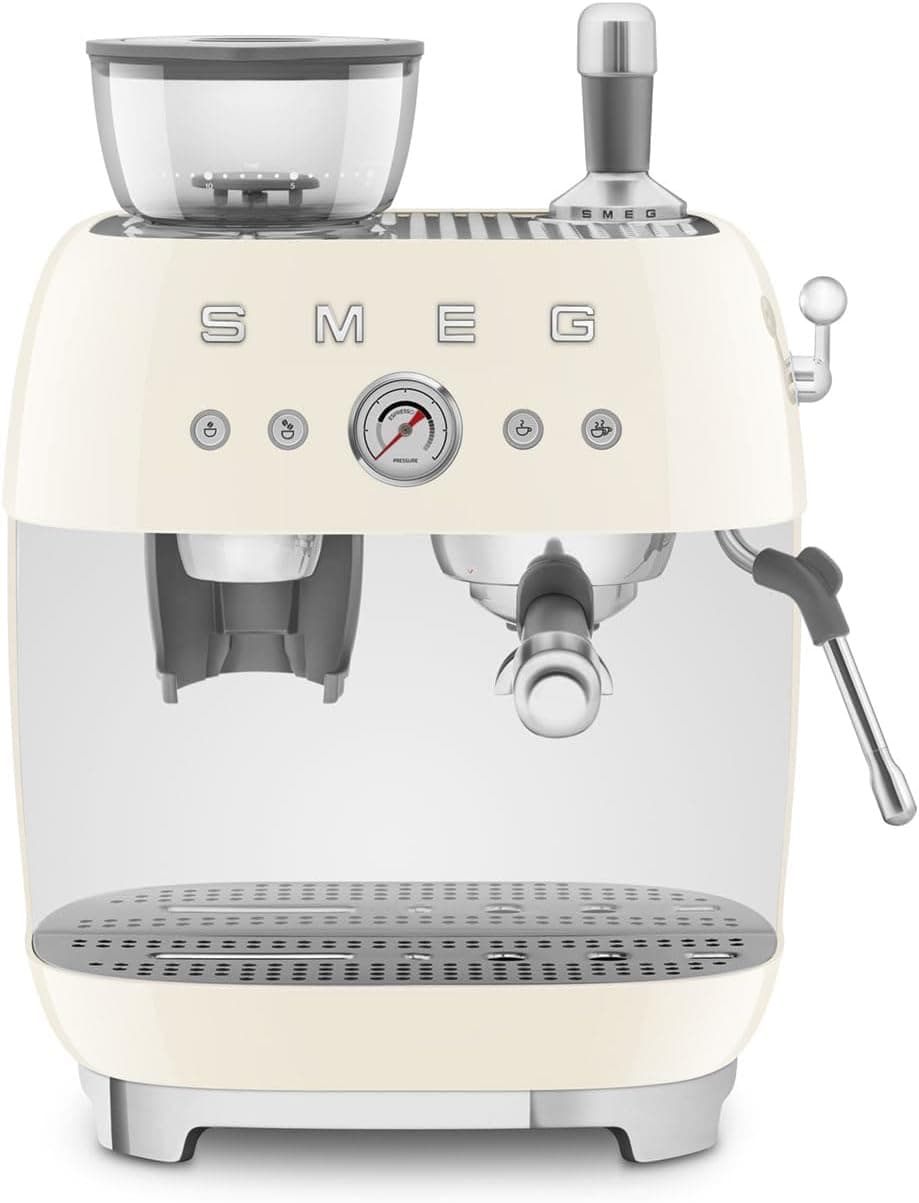
15 bar · Dual thermoblock · $$$
Best DesignPros & cons
Pros
- Built-in burr grinder with 15 settings, no separate grinder to buy
- 58mm commercial portafilter with 3 baskets, including a pre-ground bypass
- Dual thermoblock brews and steams at the same time, no waiting
- Functional analog pressure gauge that doubles as a real diagnostic tool
- Metal tamper included, and 6 colors to match the rest of a Smeg kitchen
Cons
- Programming the shot presets is confusing, four buttons, no display
- Grinder arm scatters a few grounds on the counter, especially on fine settings
- Descaling takes about 40 minutes, one of the longest cycles in its class
- Colored casing is plastic over the aluminum body, not solid metal
15 bar · Thermoblock · $
Best BudgetPros & cons
Pros
- Cheapest real espresso machine
- Compact
- Manual steam wand
- Dead simple to use
Cons
- Pressurized basket limits quality
- Mostly plastic build
- Basic steam wand
The Best Semi-Automatic Machines, Reviewed
1. Breville Barista Express Impress: Best Overall
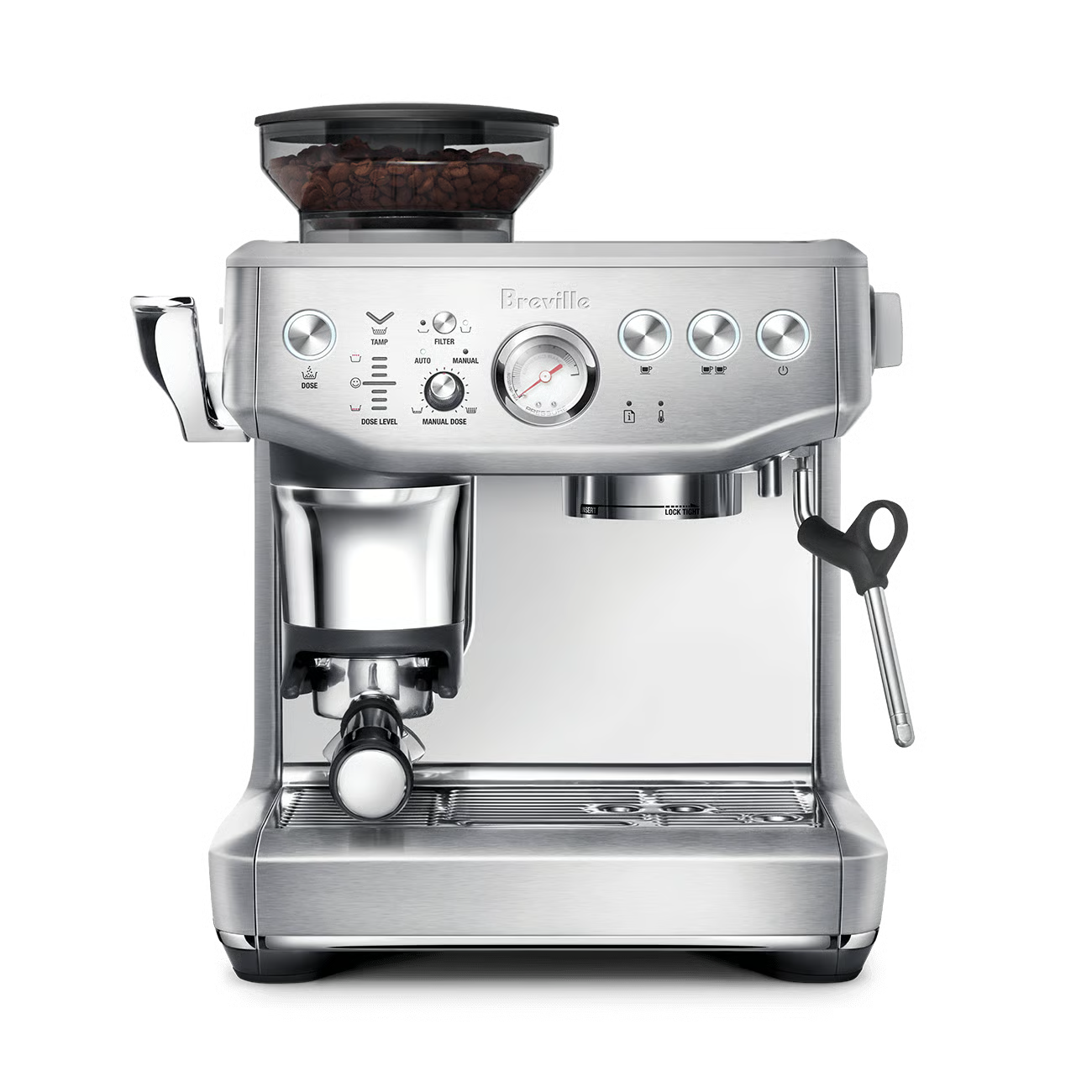
- Price: ~$790
- Portafilter: 54mm
- Boiler: Thermocoil
- Grinder: Built-in, 25 settings
- Best for: Lowest skill floor in true semi-automatic espresso
You still grind, lock in the portafilter, and decide when to stop the shot, this is a real semi-automatic, not a disguised super-auto. What it removes is the two mistakes that sink most beginners: uneven dosing and inconsistent tamping. The Impress Puck System handles both automatically, calibrating to your beans on the first pull, while leaving grind size and extraction timing entirely up to you.
The 54mm portafilter limits aftermarket accessory options versus 58mm, and the grinder steps get coarse at the fine end for light roasts.
The right entry point if you want the real semi-automatic learning curve without the two most common ways to fail at it.
Read my full Breville Barista Express Impress review →2. Gaggia Classic Pro E24: Best for Enthusiasts
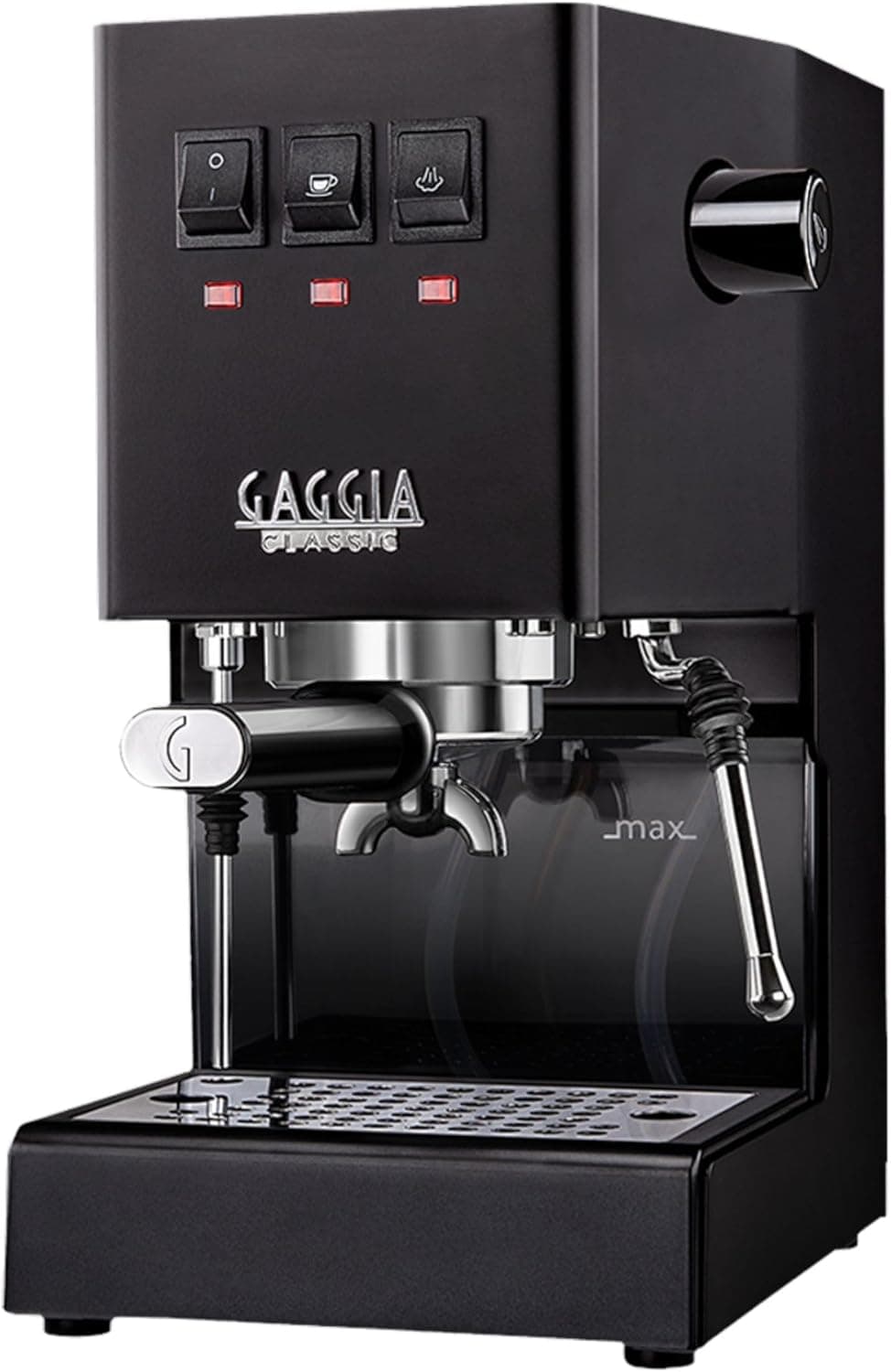
- Price: ~$450
- Portafilter: 58mm
- Boiler: Single boiler, brass
- Grinder: None, separate purchase
- Best for: Learning real technique on commercial-spec hardware
Nothing is automated here, and that’s the point. You’re grinding separately, dosing by feel or by scale, tamping by hand, and watching the shot to decide when to stop it. The 58mm portafilter is the full commercial standard, so every tamper, basket, and distributor tool on the market fits without compromise.
The machine controls pressure and gives you a brass boiler that Whole Latte Love’s lab testing measured at just 3°F temperature variance during extraction, everything else is yours to manage. No PID out of the box means temperature consistency depends on your own rhythm with the machine, not a digital display telling you what’s happening.
This is the machine for someone who wants to actually learn espresso, accepts a separate grinder purchase, and plans to keep the machine for a decade or more.
Read my full Gaggia Classic Pro E24 review →3. Rancilio Silvia: Best Prosumer
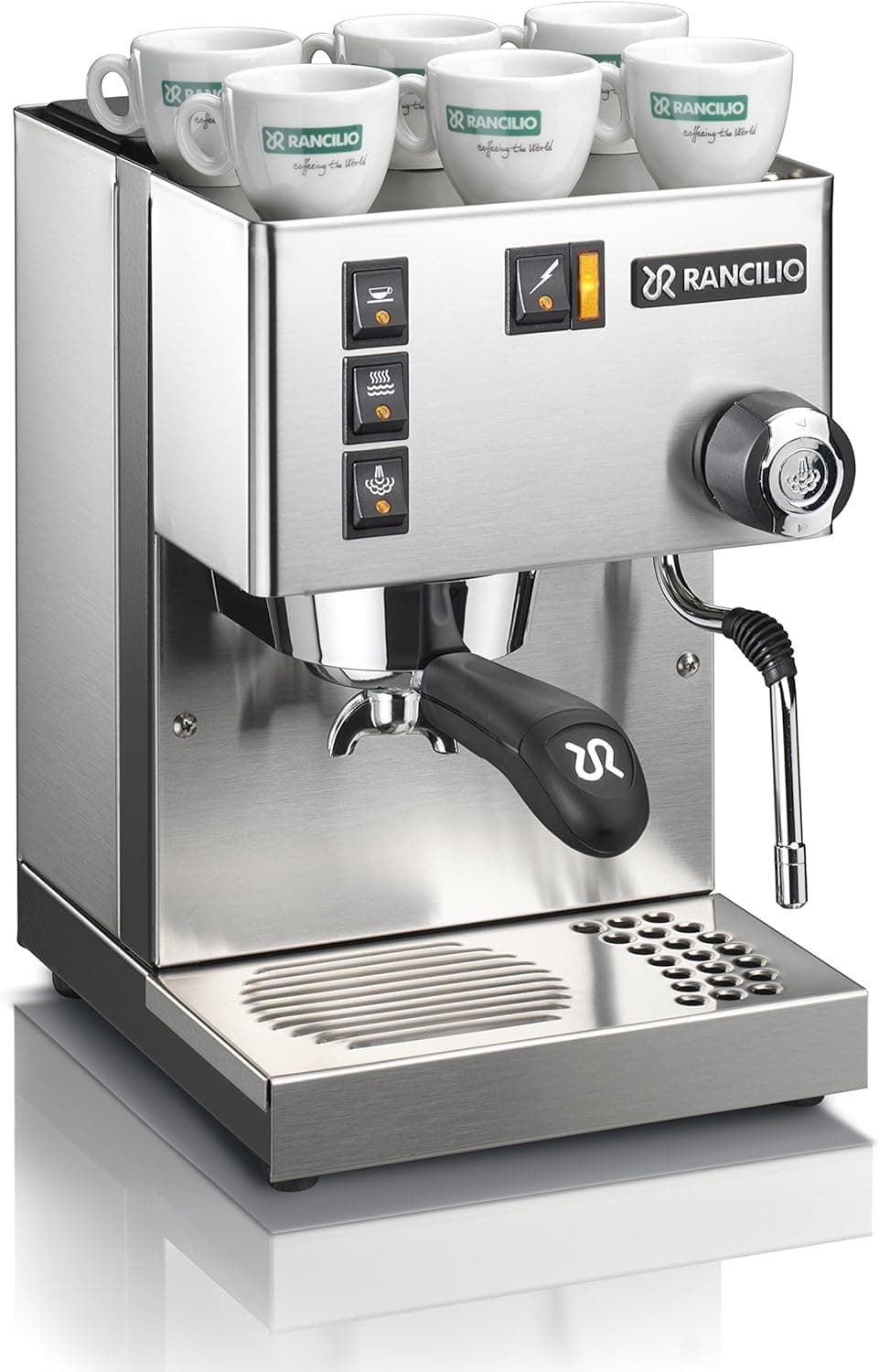
- Price: ~$1,000
- Portafilter: 58mm
- Boiler: Single boiler
- Grinder: None, separate purchase
- Best for: The most demanding, most rewarding semi-auto here
The Silvia asks the most of any machine in this guide. No PID, no display, three mechanical thermostats instead of digital temperature control. You’re managing dose, tamp, grind, and, without a mod, temperature surfing before every shot to get consistent results.
What you control in exchange is everything that determines whether a shot is excellent or merely fine: heat-soak timing, puck prep, and your own developed feel for the extraction. Stainless chassis, real brass boiler, a stainless tamper instead of plastic, the build quality matches the skill it demands, and matches the steepest, most rewarding learning curve in this guide.
Read my full Rancilio Silvia review →4. Breville Barista Pro: Best Fast Heat-Up
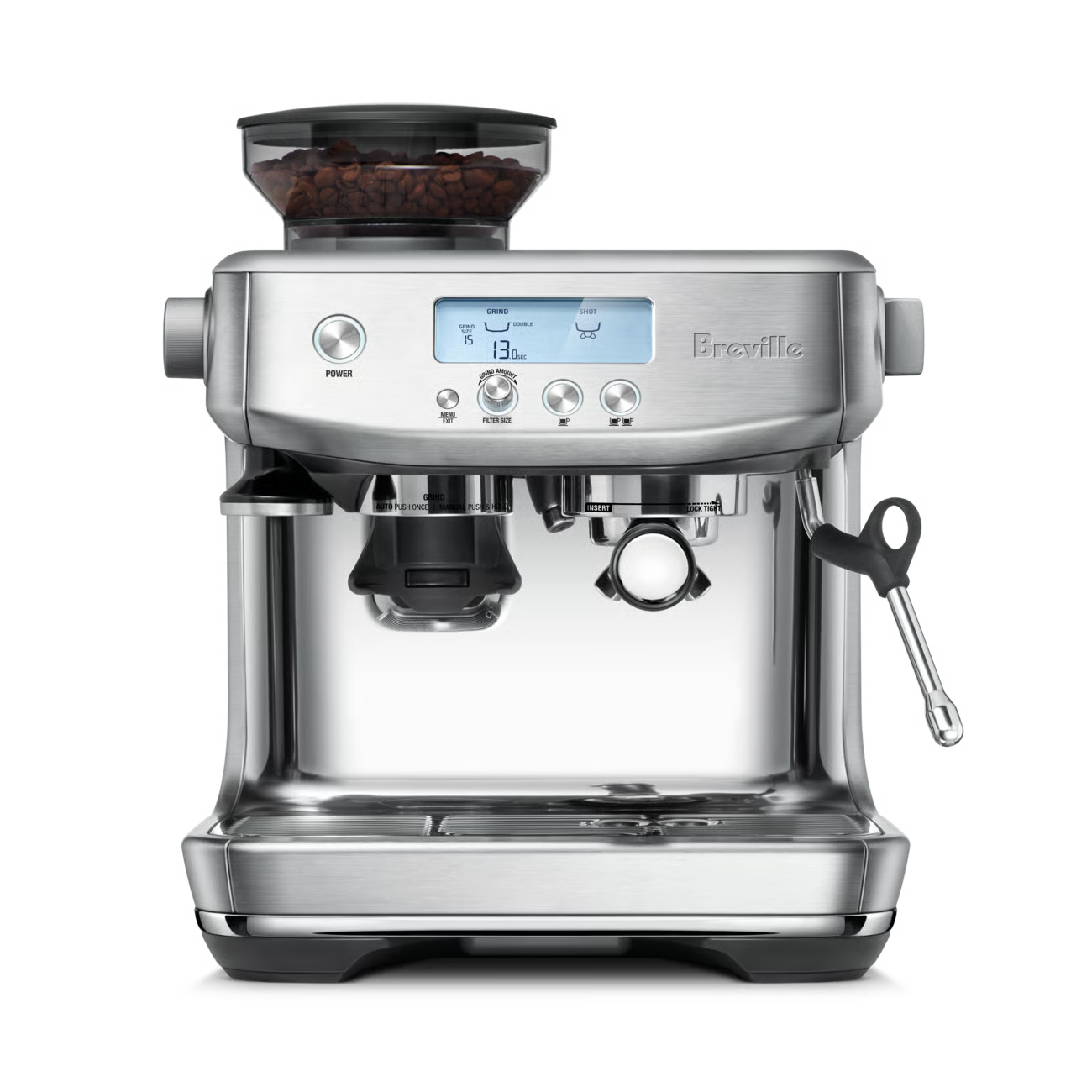
- Price: ~$850
- Portafilter: 54mm
- Boiler: ThermoJet
- Grinder: Built-in, 30 settings
- Best for: Hand-tamping with finer grind control than the Impress
Unlike the Barista Express Impress, the Pro leaves dosing and tamping entirely to you, no Impress Puck System here. In exchange, you get 30 grind settings instead of 25, real resolution at the fine end of the dial, and an LCD that shows your actual extraction temperature instead of a pressure gauge.
The skill demand sits between the Impress and the Gaggia: you’re tamping by hand and managing your own consistency, but the ThermoJet and built-in grinder still remove the slowest, most tedious parts of the routine. Three-second heat-up means no warm-up ritual before you start working on your technique.
Choose this over the Impress if grind precision matters more to you than automated tamping.
Read my full Breville Barista Pro review →5. Smeg EGF03: Best Design
- Price: ~$1,000
- Portafilter: 58mm
- Boiler: Dual thermoblock
- Grinder: Built-in, 15 settings
- Best for: 58mm semi-auto technique with a real pressure gauge to learn from
Most buyers come for the looks, but the EGF03 is a real semi-automatic underneath: you tamp by hand into a 58mm commercial portafilter, and the built-in pressure gauge gives you live feedback on whether your shot is running in a normal espresso range or drifting too fast or too slow.
That gauge is genuinely useful for learning, needle low means your grind’s too coarse, needle pinned high means too fine. The grinder’s 15 settings are the fewest of any built-in option here, and the four-button programming menu without a display is the weakest part of the experience.
Worth it for the 58mm portafilter and the design alone, if you’re already drawn to the Smeg ecosystem.
Read my full Smeg EGF03 review →6. De’Longhi Stilosa: Best Budget
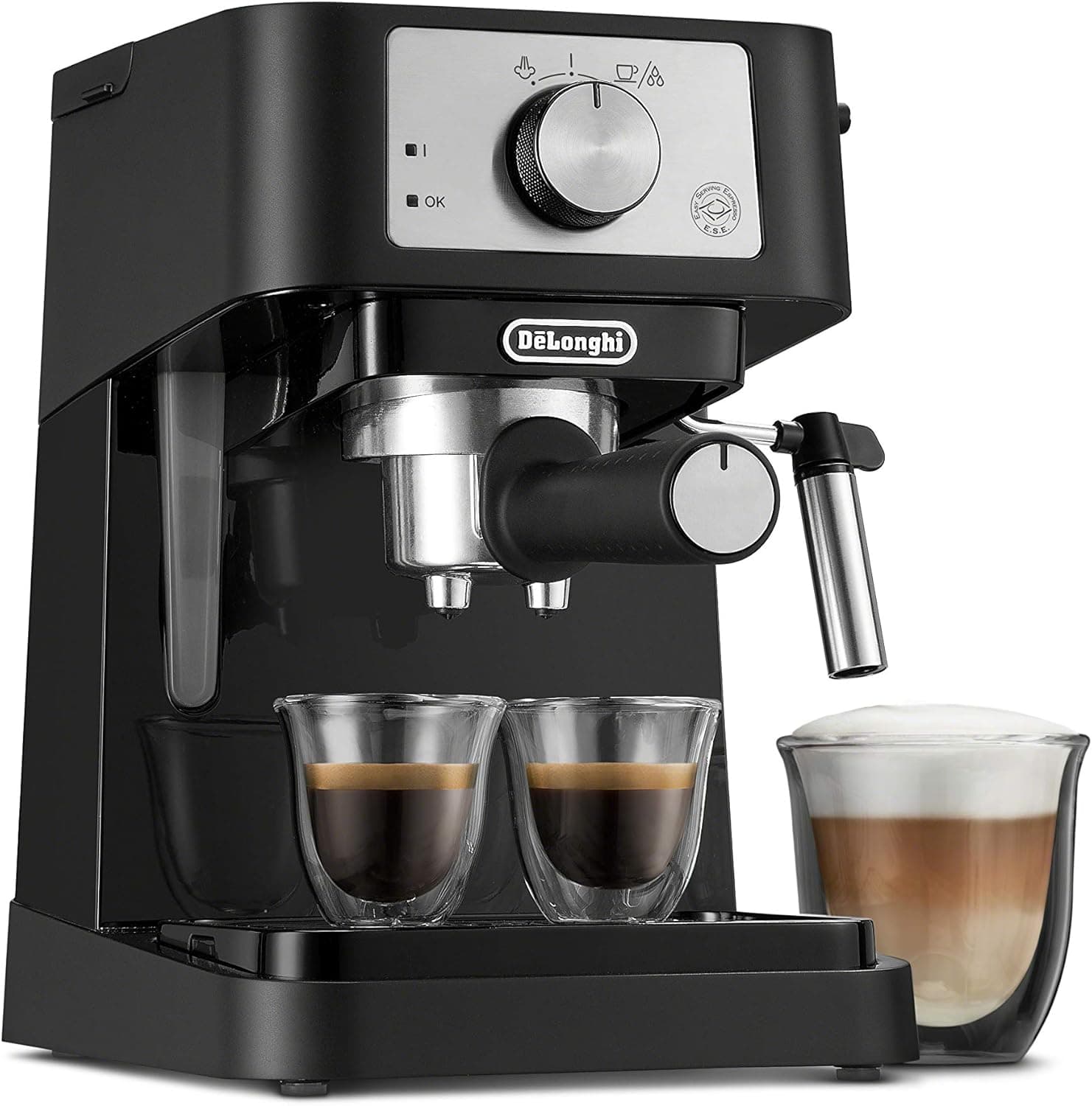
- Price: ~$130
- Portafilter: 51mm, pressurized
- Boiler: Thermoblock
- Grinder: None, separate purchase
- Best for: Cheapest real entry into semi-automatic technique
You’re still doing every manual step, grind, dose, tamp, start, stop, at this entry-level price, which is genuinely rare. The pressurized basket forgives some technique mistakes that would ruin a shot on the Gaggia or the Silvia, which makes it a gentler place to start learning.
That forgiveness has a ceiling: the pressurized basket caps how good the espresso can get, and the build is mostly plastic. Still, for finding out whether you want to learn this hobby before spending real money, it’s the lowest-risk semi-automatic on the market.
Read my full De’Longhi Stilosa review →What About KitchenAid?
The KitchenAid KES6551 Semi-Automatic is one of the most-searched machines in this category. I’ve covered it in a full review. Short version: it earns a 4.2 out of 5 and makes a legitimate case against the Breville Barista Express at the same price.
Its standout features are a 58mm flat-base portafilter that sits level on any counter, no counter-edge balancing while you tamp, and a built-in grinder that’s noticeably quieter than anything else at this price. The 58mm spec also opens the full commercial aftermarket ecosystem for baskets and tampers.
Two things to know before you buy: some units have a water-tank leak issue at the base (a QC variance, not a design flaw. KitchenAid replaces affected machines), and there’s no built-in shot timer. The setup instructions are also confusing enough that first-timers should budget extra time for their initial session.
Read my full KitchenAid Semi-Automatic Espresso Machine review →Semi-Automatic vs Super-Automatic: Which Should You Buy?
Semi-automatic machines have a higher espresso ceiling because you control the variables that actually shape flavor, grind, dose, tamp, and timing. The tradeoff is real: expect a genuine learning curve and inconsistent shots while you build the skill.
Super-automatic machines trade that ceiling for consistency and zero technique. Press a button, get the same drink every time, with no dial-in process and no chance of a botched tamp ruining your morning. For offices, shared households, or anyone who just wants coffee without the hobby, that’s the right trade. My best super-automatic espresso machines guide ranks six fully automatic machines from $549 to $4,000.
Want More Options?
- See my full espresso machine ranking , semi-automatics, super-automatics, and everything between.
- New to espresso? Start here for machines ranked by how forgiving they are to learn on.
- Looking for a smaller machine? My compact picks guide ranks options by real counter footprint.
What is the difference between semi-automatic and automatic espresso machines?
Technically, a semi-automatic machine requires you to stop the extraction yourself, you watch the shot and switch it off when it looks right. A fully automatic machine stops the extraction for you, usually by volume or a timer, once you've started it. In practice, most of the home machines people call "automatic", the Breville Barista Express Impress, the Gaggia Classic Pro, are semi-automatic by this strict definition. The terms get used interchangeably online, but the real dividing line that matters for shot quality is semi-automatic versus super-automatic, not semi versus automatic.
Is a semi-automatic espresso machine hard to use?
There's a real learning curve, but it's not as steep as it sounds. You're responsible for dose, grind, and tamp, and on simpler machines like the Rancilio Silvia, you're also managing extraction timing without digital guidance. Machines like the Breville Barista Express Impress automate the dosing and tamping steps, which removes the two mistakes beginners make most often and shortens the learning curve to a few weeks instead of a few months. Expect inconsistent shots for your first dozen or so attempts on any semi-automatic, that's normal, not a sign you bought the wrong machine.
What is the best semi-automatic espresso machine under $1,000?
The Breville Barista Express Impress is my top pick under $1,000, it includes a built-in grinder, automates dosing and tamping, and produces a consistently higher floor of shot quality than machines that leave those steps entirely to you. If you want the classic enthusiast experience and don't mind buying a separate grinder, the Gaggia Classic Pro E24 gives you a genuine 58mm commercial portafilter for less than half the price. The Rancilio Silvia and the Smeg EGF03 both fit under the $1,000 ceiling too, each with its own tradeoffs.
Does a semi-automatic espresso machine need a separate grinder?
Some do, some don't. The Gaggia Classic Pro, Rancilio Silvia, and De'Longhi Stilosa all ship without a grinder, so you're budgeting for a decent burr grinder on top of the machine price. The Breville Barista Express Impress, Breville Barista Pro, and Smeg EGF03 all include a built-in grinder, trading some grind precision for the convenience of one box. Whether you need a separate grinder comes down to which machine you buy, not whether it's semi-automatic in general.