The Best Small Espresso Machines of 2026

Jack · Founder & Lead Reviewer
Researches every machine through engineering analysis, long-term owner reports, and independent technical testing, including Italian and German sources most English-language reviews skip.
Last updated
Counter space is the most honest constraint in home coffee. You can want the biggest, most capable machine in my rankings and still not own a kitchen that fits it. The best espresso machines tend to be the biggest ones, with room for dual boilers and big tanks, which leaves a real question unanswered.
What do you actually give up when you go small? Less than you’d think, in some cases. Small machines have gotten genuinely good over the last few years, but a few of them are small specifically because they cut corners on the parts that make espresso taste right. This guide separates the two, the machines that are compact by smart engineering from the ones that are compact because they’re cheap.
What “Small” Actually Means (With Real Dimensions)
“Small” gets used loosely in this category, so here are real numbers. The Breville Bambino Plus is 7.7 inches wide and about 12.6 inches deep, narrower than most laptops are long. The De’Longhi Stilosa is close behind at roughly 7.5 inches wide, though it’s a little taller. The Gaggia Classic Pro runs about 9.5 inches wide and 8.2 inches deep, wider than the Bambino Plus, but shallow enough to tuck under most upper cabinets.
Not everything in this guide is actually small. The Ninja Luxe Café Pro and the De’Longhi La Specialista Touch both run closer to 13-14 inches wide once you account for their grinders and water tanks, they’re here because they punch above their footprint on features, not because they’re compact. I say so plainly in each section below.
Three categories actually matter when you’re shopping by size: under-cabinet clearance (the height that determines whether it fits under your upper cabinets), under-7-inch width (the real “fits anywhere” tier, currently just the Bambino Plus and the Stilosa), and portable or travel machines, which trade real pump pressure for pocket size. Measure your counter before you fall for a product photo.
My Top Small Picks at a Glance
Ranked by footprint and value, smallest genuine semi-automatics first, feature-rich larger options at the bottom.
| Machine | Rating | Pressure | Boiler | Price | Best for | |
|---|---|---|---|---|---|---|
| 4.6 | 9 bar | ThermoJet | Around $500price may vary | Best Compact | Check Price | |
Pros & consPros
Cons
| ||||||
| 4.0 | 15 bar | Thermoblock | Around $130price may vary | Best Budget | Check Price | |
Pros & consPros
Cons
| ||||||
| 4.5 | 9 bar | Single boiler | Around $452price may vary | Best for Enthusiasts | Check Price | |
Pros & consPros
Cons
| ||||||
| 4.5 | 19 bar | Thermoblock | Around $749price may vary | Best All-in-One | Check Price | |
Pros & consPros
Cons
| ||||||
De'Longhi La Specialista Touch | 4.4 | 9 bar | Dual Thermoblock | Around $700price may vary | Best for Cold Brew | Check Price |
Pros & consPros
Cons
| ||||||
9 bar · ThermoJet · $$$
Best CompactPros & cons
Pros
- 3-second ThermoJet heat-up, no warm-up wait
- Automatic steam wand produces latte-art microfoam hands-free
- Low-pressure pre-infusion improves extraction consistency
- 7.7-inch footprint fits where no other espresso machine will
- 64oz removable tank, several days between refills
Cons
- No built-in grinder, budget for a separate one
- Auto steam wand limits manual technique development
- 54mm portafilter narrower accessories ecosystem than 58mm
15 bar · Thermoblock · $
Best BudgetPros & cons
Pros
- Cheapest real espresso machine
- Compact
- Manual steam wand
- Dead simple to use
Cons
- Pressurized basket limits quality
- Mostly plastic build
- Basic steam wand
9 bar · Single boiler · $$$
Best for EnthusiastsPros & cons
Pros
- 58mm commercial portafilter, vast accessories ecosystem
- Brass boiler (E24) with 3°F temperature swing
- 3-way solenoid valve for dry pucks
- Built to last, 15-year lifespans common
- Most moddable machine at any price
Cons
- No PID out of the box
- Included tamper is cheap plastic
- Steam wand not cold-touch
- Ships with almost no accessories
19 bar · Thermoblock · $$$
Best All-in-OnePros & cons
Pros
- Non-pressurized baskets pull real espresso
- Built-in scale for weight-based dosing
- Integrated tamper + Barista Assist guidance
- Hands-free milk frother for dairy and plant milk
- Espresso, drip, cold brew, and hot water in one machine
Cons
- Drip tray too small, fills after two cappuccinos
- Runs a touch hot on back-to-back shots
- Bulky footprint on the counter
- Steep price for a newer brand
- De'Longhi La Specialista Touch
9 bar · Dual Thermoblock · $$$
Best for Cold BrewPros & cons
Pros
- Bean Adapt guides grind and dose by bean profile, cuts first-week guesswork
- Pressure-assisted cold brew in ~5 minutes
- Dual heating system brews and steams simultaneously
- 10 drink presets with 5 milk texture settings, including plant milks
- Consistent brew temperature between back-to-back shots
Cons
- Only 15 grind settings, far less control than Breville's 25 at this price
- Dosing scale lacks fine graduations, imprecise without a separate scale
- No knock box included at this price tier
- 51mm portafilter, not the 58mm commercial standard
The Best Small Espresso Machines, Reviewed
1. Breville Bambino Plus: Best Overall Small
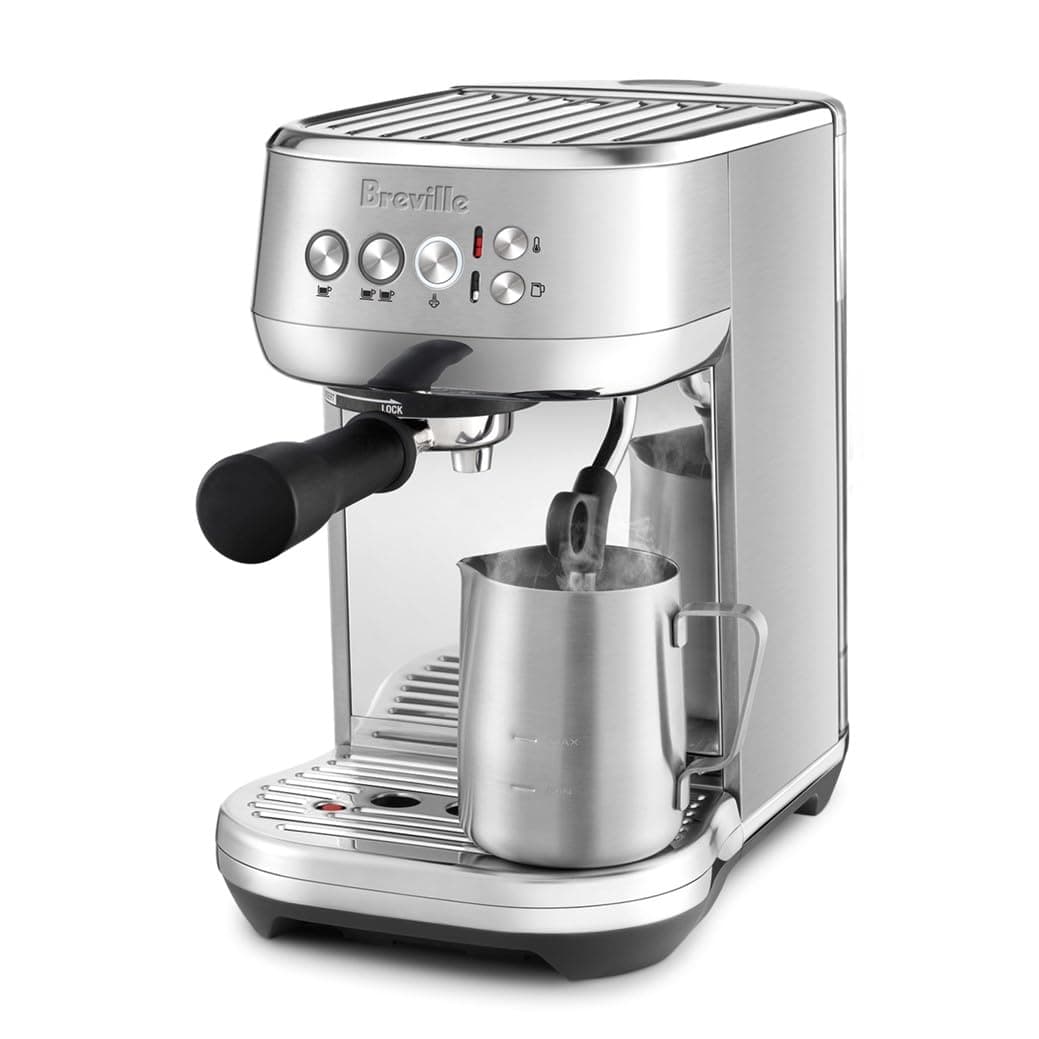
- Price: ~$500
- Dimensions: 7.7″W × 12.6″D × 12.6″H
- Portafilter: 54mm
- Best for: Tightest real counter footprint without sacrificing shot quality
7.7 inches wide is the number that matters here, and it’s not a marketing rounding trick, measure it yourself against a laptop and the Bambino Plus comes up shorter. It fits under cabinets too low for the Barista Express, on counter corners nothing else reaches, and in apartment kitchens with exactly one open surface.
The 3-second ThermoJet heat-up means the small size isn’t a compromise on speed either. The honest catch: there’s no built-in grinder, so the real footprint math includes a separate grinder sitting next to it, budget another 6-8 inches of counter for a Baratza Encore ESP or similar.
Still the machine to beat for anyone whose counter is the actual constraint, not the budget.
Read my full Breville Bambino Plus review →2. De’Longhi Stilosa: Best Budget Small
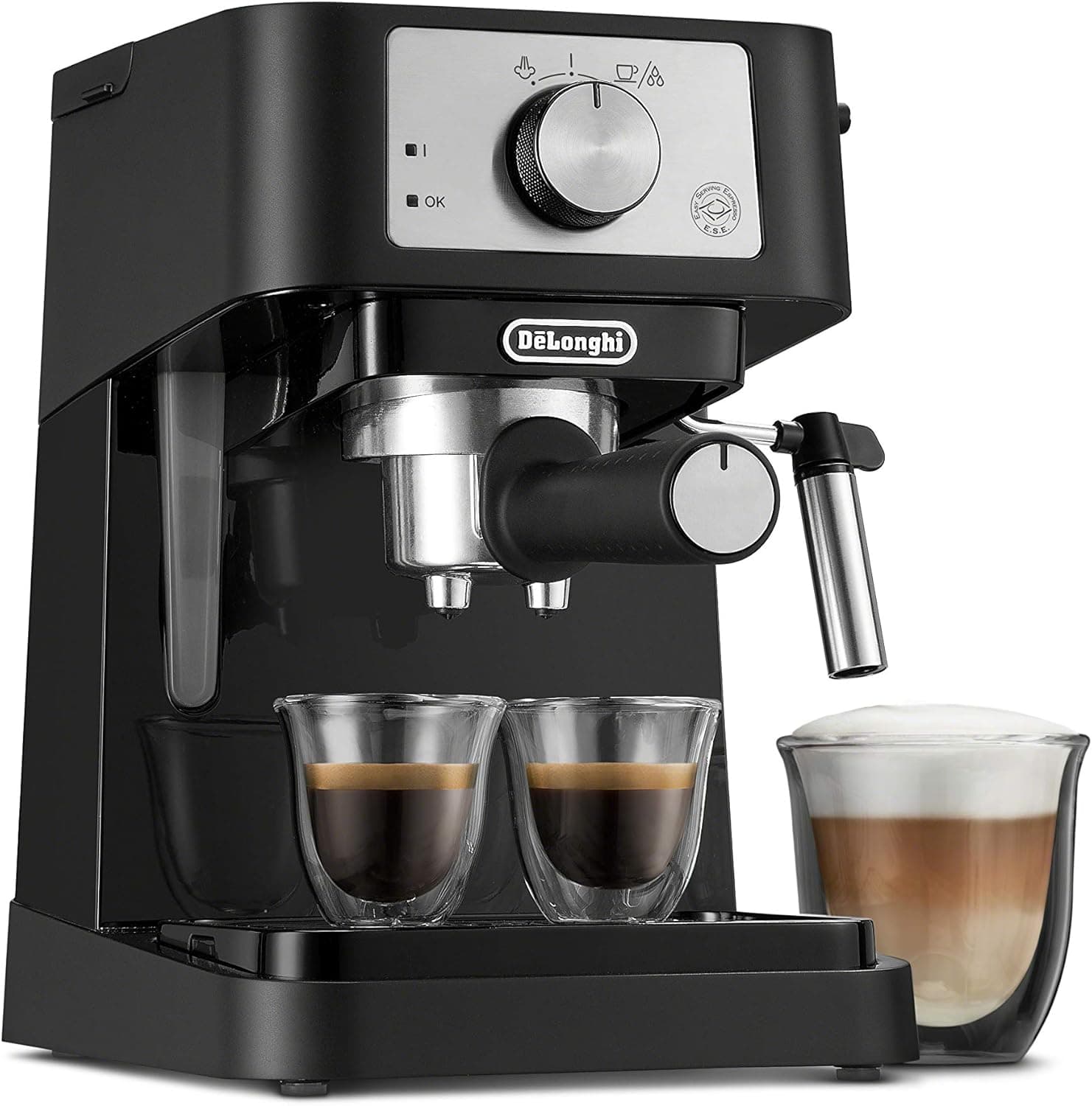
- Price: ~$130
- Dimensions: 7.5″W × 9.6″D × 11.4″H
- Portafilter: 51mm, pressurized
- Best for: Smallest footprint at the lowest possible price
At 7.5 inches wide, the Stilosa is nearly as narrow as the Bambino Plus, and it’s a foot shorter in depth than most machines at any price. It’s also the cheapest way into this entire guide by a wide margin.
The honest tradeoff is the pressurized basket, which caps how good the espresso can actually get no matter how well you dial in the grind. The build is mostly plastic, and it feels like it. For testing whether home espresso is worth pursuing before spending real money, it’s a small, low-risk way to find out.
Read my full De’Longhi Stilosa review →3. Gaggia Classic Pro E24: Best Compact Enthusiast
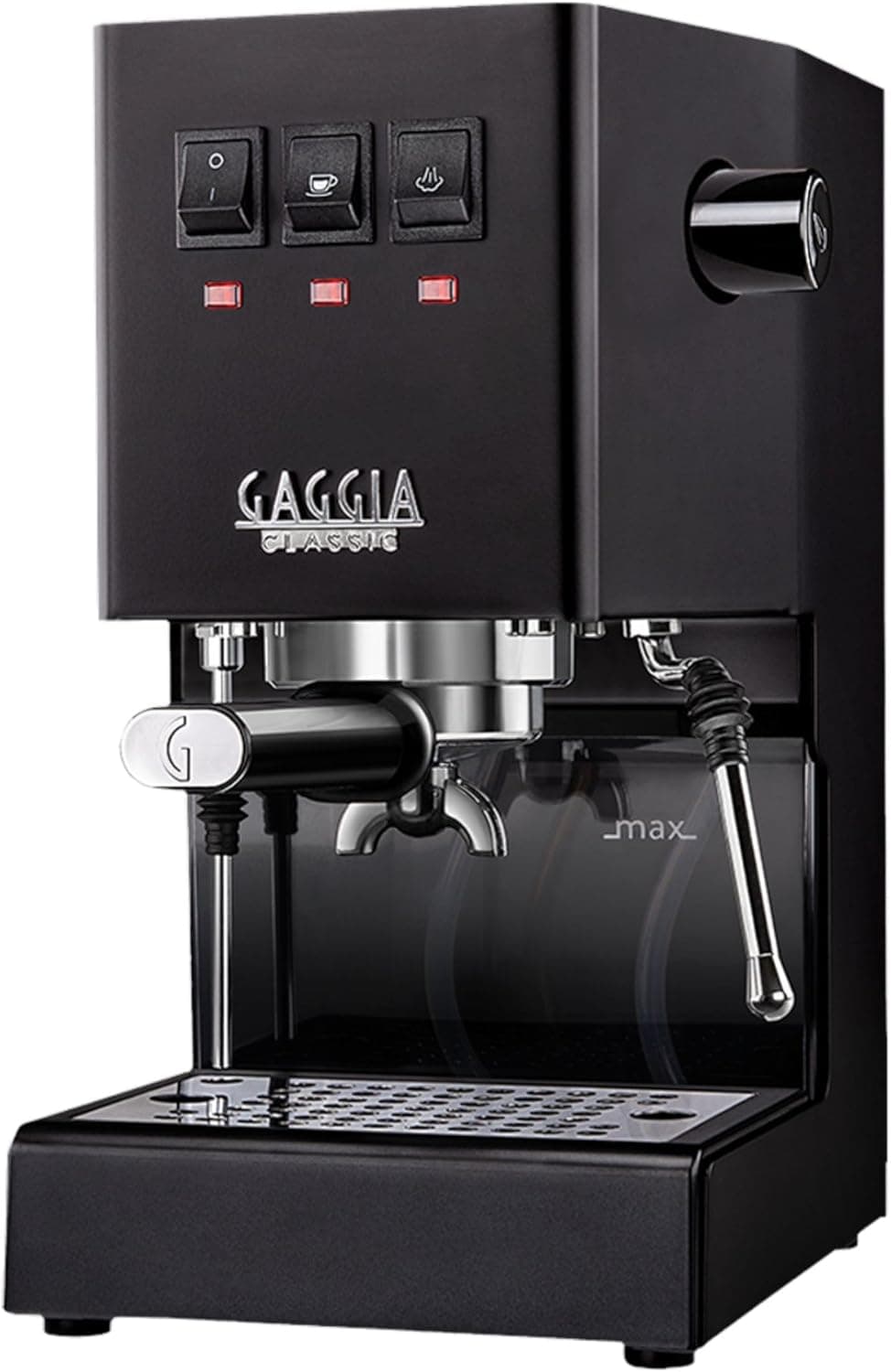
- Price: ~$450
- Dimensions: 9.5″W × 8.2″D × 7.9″H
- Portafilter: 58mm
- Best for: Real 58mm enthusiast machine in a shallow footprint
At 8.2 inches deep, the Classic Pro is one of the shallowest machines in this guide front-to-back, which matters more than width if your counter is narrow rather than short on length. At 7.9 inches tall, it tucks under most upper cabinets without trouble.
What you get inside that footprint is the real surprise: a 58mm commercial portafilter and a brass boiler, the same build quality enthusiasts pay much more for. No built-in grinder, so you’re still finding room for one nearby, but the machine itself asks for less counter than its commercial pedigree suggests.
The right pick if you want to learn real espresso technique without needing a wide counter to do it.
Read my full Gaggia Classic Pro E24 review →4. Ninja Luxe Café Pro: Best Feature-Rich
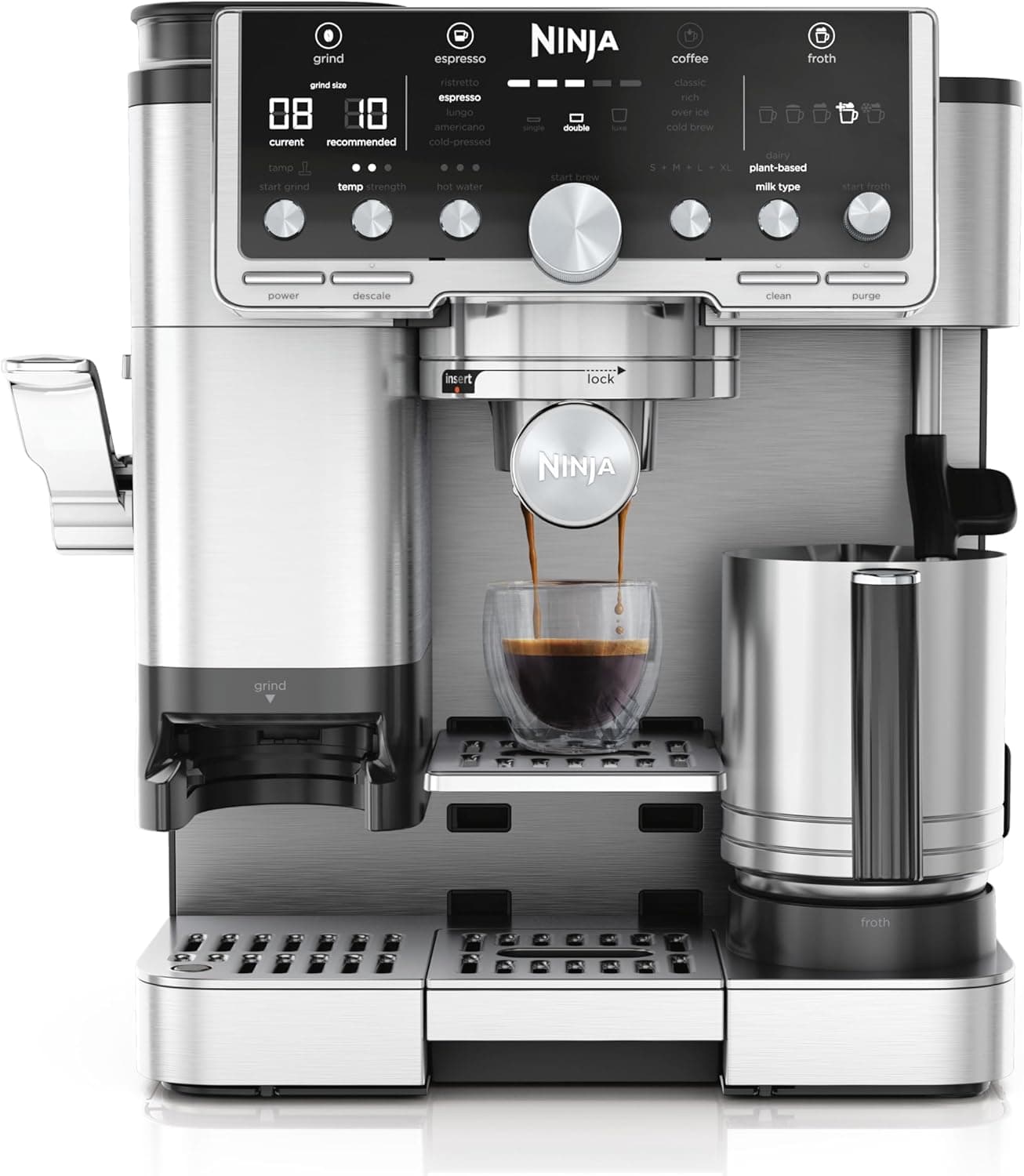
- Price: ~$750
- Dimensions: ~13.4″W × 16.4″D × 16.3″H
- Portafilter: Non-pressurized, built-in grinder
- Best for: Most features per square inch, not actually small
Honest caveat up front: this is the biggest machine in this guide, at roughly 13.4 inches wide and over 16 inches deep once you account for the built-in grinder and scale. It’s here for a different reason, it replaces an espresso machine, a grinder, a scale, and a drip coffee maker with one footprint instead of four separate ones on your counter.
If you were going to buy a Bambino Plus plus a grinder plus a scale plus a separate coffee maker, the combined footprint of those four devices is larger than the Luxe Café Pro alone. That’s the math that earns it a spot here. The drip tray fills fast and needs frequent emptying, a real annoyance at this price.
Choose this only if you were going to own multiple machines anyway and want to consolidate, not if a small footprint is your primary goal.
Read my full Ninja Luxe Café Pro review →5. De’Longhi La Specialista Touch: Compact Bean-to-Cup
- Price: ~$700
- Dimensions: ~8.4″W × 14.6″D × 15.6″H
- Portafilter: 51mm
- Best for: Narrow width with a built-in grinder and cold brew
The width is the genuinely compact part: about 8.4 inches, close to the Gaggia Classic Pro despite packing in a built-in grinder and a cold brew system. The tradeoff shows up in depth instead, at roughly 14.6 inches front-to-back, it needs a deeper counter than anything else in this guide except the Luxe Café Pro.
If your kitchen has a narrow but deep counter section, common in galley kitchens, this is the machine that actually fits where the Bambino Plus’s shallower-but-wider footprint might not work as well, despite the Bambino Plus winning on pure width.
Read my full De’Longhi La Specialista Touch review →Mini and Portable Espresso Machines
Everything above is a countertop machine you plug in and leave in place. A different category exists below it: truly portable, hand-pump devices like the Wacaco Minipresso or Handpresso, small enough to fit in a backpack pocket and built to work with no electricity at all.
These make sense for camping, flights, and hotel rooms, not for your kitchen counter. You’re pumping a lever by hand for each shot, pressure is inconsistent compared to a real pump, and there’s no steam wand for milk. I haven’t covered this category in enough depth yet to rank specific models here. When I do, I’ll cover them properly rather than guess.
If your actual goal is a small machine for daily use at home, the Bambino Plus above is the better answer. If your goal is espresso in a tent, a hand-pump portable is the right category , just set expectations for the shot quality accordingly.
Want More Options?
- See my full best espresso machines ranking , every size, every budget, eight machines ranked.
- Need a beginner-friendly pick? My beginners guide ranks machines by how forgiving they are to learn on.
- Looking for the best budget pick? My budget guide covers real espresso machines from $130 to $500.
What is the smallest espresso machine you can buy?
Among real semi-automatic espresso machines, the Breville Bambino Plus is the smallest I'd recommend at 7.7 inches wide and about 12.6 inches deep, narrower than most laptops are long. If you mean truly portable, hand-pump devices like the Wacaco Minipresso are smaller still, fitting in a jacket pocket, but they trade real pump pressure and consistency for that size. For counter-based home espresso, the Bambino Plus is the practical floor.
Can a small espresso machine make good espresso?
Yes, size and shot quality aren't linked the way people assume. The Bambino Plus at 7.7 inches wide produces shots that compete with machines twice its footprint, because the ThermoJet heating system and pre-infusion don't need a bigger chassis to work well. The De'Longhi Stilosa is the exception that proves the rule the other way: it's small and cheap, and the pressurized basket genuinely caps how good the espresso can get. Footprint tells you about your counter, not about your cup.
What's the best compact espresso machine for a small kitchen?
For most small kitchens, the Breville Bambino Plus is the right call, it fits under low cabinets where the Barista Express line can't, and it still delivers real semi-automatic espresso with an automatic steam wand. If you want a built-in grinder in a similarly tight footprint, the Gaggia Classic Pro is narrower than most machines with a 58mm portafilter, though you'll still need to find room for a separate grinder next to it.
How wide is the Breville Bambino Plus?
7.7 inches wide and about 12.6 inches deep. That's narrower than most kitchen laptops are long, and it's the width that lets the Bambino Plus fit on counter corners and under cabinets where larger Breville machines, like the 13-inch-wide Barista Express, simply won't go.