
De'Longhi La Specialista Arte Review (EC9155)

Jack · Founder & Lead Reviewer
Researches every machine through engineering analysis, long-term owner reports, and independent technical testing, including Italian and German sources most English-language reviews skip.
Last updated
 4.3
4.3
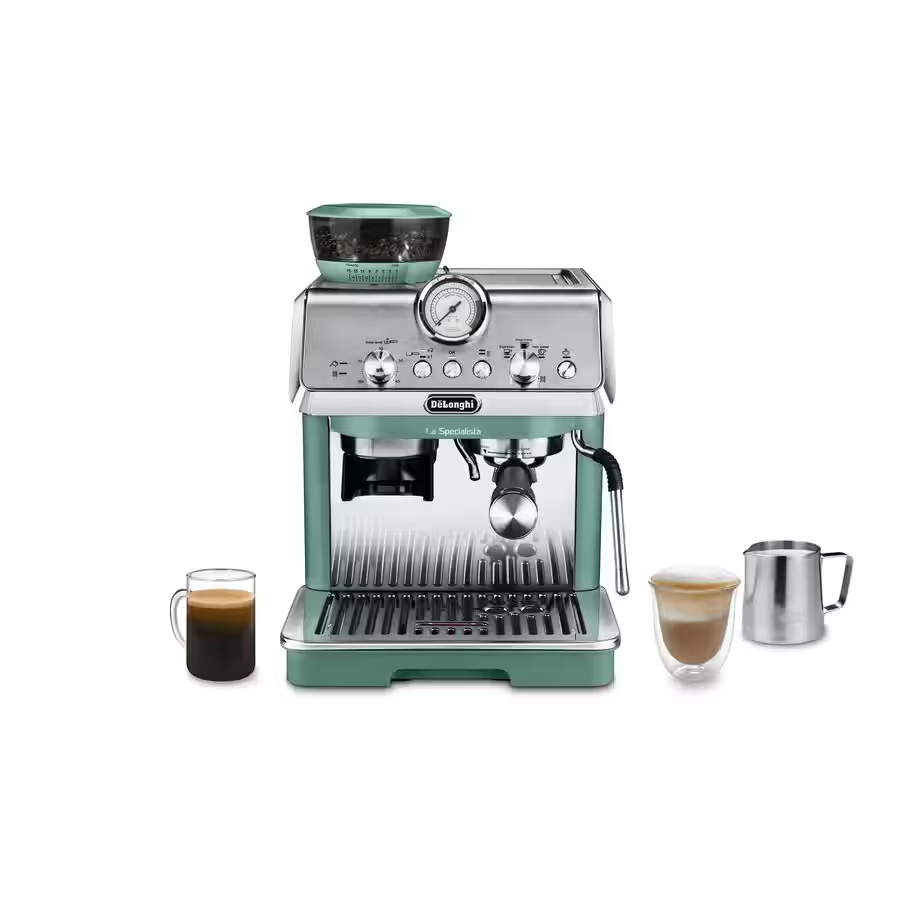
The La Specialista Arte (EC9155) is the entry point to De'Longhi's La Specialista lineup: an integrated conical burr grinder, a manual steam wand, and De'Longhi's Active Temperature Control on a single thermoblock. It sits below the La Specialista Touch, which adds a touchscreen, Bean Adapt guided dial-in, and a wider 15-setting grinder, and below the Arte Evo (EC9255), which adds pressure-assisted cold brew. This review covers the base Arte specifically. It does not have cold brew, a second thermoblock, or true PID temperature control, features that get attributed to it when comparisons with its siblings get sloppy.
The trade-off with the Arte is manual control instead of automation. No touchscreen, no guided dial-in profiles, no auto-tamping. What it does include: a 51mm non-pressurized portafilter with single and double baskets, a 15-bar pump, and a stainless steel manual steam wand with a non-burn exterior design.
The verdict
What you get
- Integrated conical burr grinder, 8 settings, grinds directly into the portafilter
- 51mm non-pressurized portafilter with single and double baskets included
- 15-bar pump
- Manual stainless steel steam wand with a non-burn exterior
- Active Temperature Control: three selectable brew temperatures, 92°C, 94°C, and 96°C, on a thermoblock system
- Pressure gauge showing an "optimal zone" rather than precise bar numbers
- Barista kit included: tamper, dosing funnel, tamping mat
- Drink options: espresso, americano, hot water. No built-in cold brew; that's the Arte Evo
The grinder
Eight grind settings on a 1–8 dial. The grinder doses by time rather than weight, and the grind time is adjustable in the settings, which lets you shift the dose up or down by a few tenths of a gram without a scale.
The limitation is the setting count itself. With only 8 steps, the gap between adjacent settings is wider than on machines with 16 to 30 settings, such as the Breville Barista Express. On medium and dark roasts, that gap rarely matters, there's enough tolerance in the roast to land inside the workable window. On light and washed single-origin coffees, the margin narrows, and it's common to find one setting running too fast and the next running too slow with nothing in between. Multiple independent reviewers flag this as the Arte's main compromise, including Coffeeness's review of the La Specialista Arte, which calls out the narrower range directly against grinder-equipped rivals.
Temperature control
The Arte uses De'Longhi's Active Temperature Control: three selectable brew temperatures, 92°C, 94°C, and 96°C, run through a single thermoblock heating system. Instead of a true PID controller, which continuously modulates temperature through a feedback loop, the Arte uses a preset selector on a thermoblock, a simpler and less precise system, though a genuine improvement over machines with no temperature adjustment at all.
Because there's a single thermoblock rather than two separate heating circuits, the Arte cannot brew and steam milk at the same time. You pull the shot, then wait for the machine to switch over and reach steam temperature before working the wand. Machines with dual boilers or dual thermoblocks skip that wait; the Arte doesn't.
Portafilter and pump
A 51mm portafilter ships with the Arte, along with non-pressurized single and double baskets. Non-pressurized baskets rely on the coffee puck itself to build resistance, which produces more authentic espresso than pressurized baskets but requires a workable grind and a reasonable tamp to extract properly. The 51mm size is smaller than the 58mm commercial standard, which narrows the pool of aftermarket baskets and bottomless portafilters compatible with the machine.
At 15 bar, the pump runs well above the roughly 9 bar needed at the puck during extraction. That headroom is standard across this price class and isn't a differentiator on its own.
The steam wand
This is a manual, stainless steel design with a non-burn exterior, meaning the outside of the wand doesn't get hot enough to burn you during use, unlike some bare metal wands on cheaper machines. There's no automatic cycle and no hands-free mode. You control depth, angle, and air introduction yourself.
Independent reviews consistently rate the wand as a strength of the Arte. Tom's Coffee Corner's review of the EC9155 rates the steam performance as genuinely capable for microfoam once the technique is learned, comparable to or better than other machines at this price point. A manual wand takes longer to get consistent results from than an automatic system, but it also gives you control over texture that automatic wands remove.
Pressure gauge
The Arte includes a pressure gauge, but it shows an "optimal zone" band rather than a numbered bar reading. That's useful for a beginner who just needs to know whether the shot is in a reasonable range, but it's less informative than a numbered gauge if you want to diagnose exactly where an extraction is running.
What's in the box
De'Longhi includes a barista kit with the Arte: a tamper, a dosing funnel, and a tamping mat. These are the standard accessories for hand-tamping and dosing, not an automated tamping mechanism. If a listing or comparison describes the base Arte as having a built-in, lever-actuated tamping station, that claim should be verified against the current retail packaging; it is not part of the verified feature set for this model.
Arte vs La Specialista Touch
The Touch sits above the Arte in De'Longhi's lineup. It adds a color touchscreen with programmable presets, Bean Adapt guided dial-in by bean profile, and a wider 15-setting grinder range, compared to the Arte's 8 settings. The Touch also adds an Advanced Latte System for selecting milk texture on the automated side, versus the Arte's fully manual wand.
The decision comes down to how much guided setup is worth to you. Bean Adapt and the touchscreen presets shorten the dial-in process on a new bag of beans and make sense in a household where multiple people want different drinks with less manual adjustment. If you'd rather learn the manual process and don't need the wider grind range, the Arte covers the same core espresso and steaming fundamentals at a lower price point.
See my De'Longhi La Specialista Touch review for the full comparison.
Arte vs Breville Bambino Plus
The Bambino Plus is the natural cross-brand comparison at a similar price tier. It runs Breville's ThermoJet system for fast heat-up, an automatic steam wand, and a 54mm portafilter, but it has no built-in grinder; you need a separate one.
The Arte's built-in grinder is the deciding factor for most buyers choosing between the two. If you don't already own a grinder, the Arte's integrated unit offsets a meaningful chunk of the price difference between the two machines. If you already own a quality grinder and want the most consistent milk texture with the least technique required, the Bambino Plus's automatic steam wand is easier to get good results from immediately.
Who should buy the Arte
Buy it if you want to learn manual steam wand technique, you're buying a first machine and don't already own a grinder, or you want the La Specialista system's core espresso workflow without paying for the Touch's guided interface.
Think carefully if light roasts make up most of what you drink. Eight grind settings limits how precisely you can dial in high-acidity washed coffees; a machine with 16 to 30 settings handles that range more gracefully.
Skip it if you want cold brew on the same machine (the Arte Evo adds it), you want guided dial-in and a touchscreen (the La Specialista Touch), or you want simultaneous brew-and-steam from a dual heating system, which the Arte's single thermoblock doesn't support.
What is the difference between the De'Longhi La Specialista Arte and Arte Evo?
The Arte Evo (EC9255) adds pressure-assisted cold brew over the base Arte (EC9155) covered in this review. Beyond that, the two share the same integrated conical burr grinder with 8 settings, the same 51mm non-pressurized portafilter, the same manual steam wand, and the same Active Temperature Control thermoblock system. If cold brew doesn't matter to you, the base Arte delivers the same espresso and steaming performance.
How many grind settings does the La Specialista Arte have?
Eight grind settings, on a dial from 1 (finest) to 8 (coarsest). That range is adequate for medium and dark roasts, where there's enough tolerance to land inside the workable window on one of the eight steps. It's a real limitation on light or washed single-origin coffees, where the gap between adjacent settings can leave you stuck between one that runs too fast and one that runs too slow. Machines with 16 to 30 settings, like the Breville Barista Express or Barista Pro, give you finer control if light roasts are a priority.
Is the La Specialista Arte good for latte art?
It's a reasonable choice for learning latte art at this price, mainly because of its manual steam wand. A manual wand gives you direct control over air introduction and milk spin, which is what lets you shape microfoam consistency deliberately rather than relying on an automatic cycle. Independent reviewers rate the wand's performance well for the price. It takes more practice to get consistent results than an automatic steam system, but it also gives you more control once you've learned it.
Does the La Specialista Arte have cold brew?
No. The base Arte (EC9155) makes espresso, americano, and hot water. Cold brew is exclusive to the Arte Evo (EC9255), which adds a pressure-assisted cold extraction cycle. If cold brew is a priority, look at the Evo instead of the base Arte.