The Best Espresso Machines with Built-In Grinders (2026)

Jack · Founder & Lead Reviewer
Researches every machine through engineering analysis, long-term owner reports, and independent technical testing, including Italian and German sources most English-language reviews skip.
Last updated
Buying a grinder is its own research project, burr type, settings, retention, noise. A machine with one built in skips all of that. You get fresh-ground espresso from whole beans, one footprint on the counter, and one box to learn instead of two.
Here’s the honest tradeoff. Built-in grinders almost never match a dedicated grinder at the same price, the burrs share space with a boiler, a pump, and a portafilter cradle, and something gives. What you gain in simplicity, you spend in ceiling. This guide is for buyers who want one machine, not a project: people who’ve decided convenience matters more than chasing the last 5% of grind precision. For the full field including machines that need a separate grinder, see my best espresso machines of 2026.
Built-In vs Separate Grinder: Which Is Right for You?
Built-in wins on: convenience, footprint, and price-per-feature. You’re buying one warranty, one set of cleaning instructions, and one thing that has to fit on the counter rather than two. For beginners especially, not having to research and pair a separate grinder removes a real barrier to getting started.
Separate wins on: grind quality ceiling, upgradability, and longevity. A dedicated grinder can be replaced or upgraded independently of the machine, and its burrs aren’t constrained by sharing a chassis with a boiler. Most standalone grinders also offer a wider, finer-stepped adjustment range than anything built into an all-in-one at the same price.
Here’s the tipping point, stated plainly: once you’re spending over $800 total, a separate setup usually beats an all-in-one at the same price. The Breville Bambino Plus plus a Baratza Encore ESP lands at a similar total to the machines in this guide, often with better shot quality from the dedicated grinder. Below $800, the math flips: a built-in grinder gets you real espresso for less than buying both pieces separately.
My Top Picks at a Glance
Six all-in-one machines, ranked by overall value, grinder quality, and daily usability.
| Machine | Rating | Pressure | Boiler | Price | Best for | |
|---|---|---|---|---|---|---|
| 4.7 | 9 bar | Thermocoil | Around $790price may vary | Best Overall | Check Price | |
Pros & consPros
Cons
| ||||||
| 4.6 | 9 bar | ThermoJet | Around $850price may vary | Best Upgrade Pick | Check Price | |
Pros & consPros
Cons
| ||||||
| 4.3 | 15 bar | Dual thermoblock | Around $1,000price may vary | Best Design | Check Price | |
Pros & consPros
Cons
| ||||||
De'Longhi La Specialista Touch | 4.4 | 9 bar | Dual Thermoblock | Around $700price may vary | Best for Cold Brew | Check Price |
Pros & consPros
Cons
| ||||||
| 4.5 | 19 bar | Thermoblock | Around $749price may vary | Best All-in-One | Check Price | |
Pros & consPros
Cons
| ||||||
| 4.4 | 15 bar | Thermoblock | Around $550price may vary | Best Super-Automatic | Check Price | |
Pros & consPros
Cons
| ||||||
9 bar · Thermocoil · $$$
Best OverallPros & cons
Pros
- Impress Puck System removes dosing and tamping errors
- Consistent shot quality, higher floor than the standard Express
- Built-in conical burr grinder with 25 grind settings
- Thermocoil holds extraction temperature tightly between shots
- Dry puck cleanup, puck knocks out cleanly every time
Cons
- 54mm portafilter limits accessories vs 58mm commercial standard
- Grinder steps are coarse at the fine end, hard to dial in light roasts
- Can't brew and steam simultaneously (single Thermocoil)
- Auto-tamp adds a real premium over the standard Express
9 bar · ThermoJet · $$$
Best Upgrade PickPros & cons
Pros
- ThermoJet heats to brew-ready in 3 seconds, no warm-up routine
- 30 grind settings; newer units use Baratza-designed precision burrs
- LCD shows actual extraction temperature to the degree
- Powerful manual steam wand with fast recovery between drinks
- 54mm portafilter with single and dual-wall baskets included
Cons
- No dedicated PID, ThermoJet manages temp but you can't fine-tune it
- Grind retention in the chute, a quick purge before dosing fixes it
- No auto-tamping unlike the Barista Express Impress
- 54mm portafilter vs 58mm commercial standard
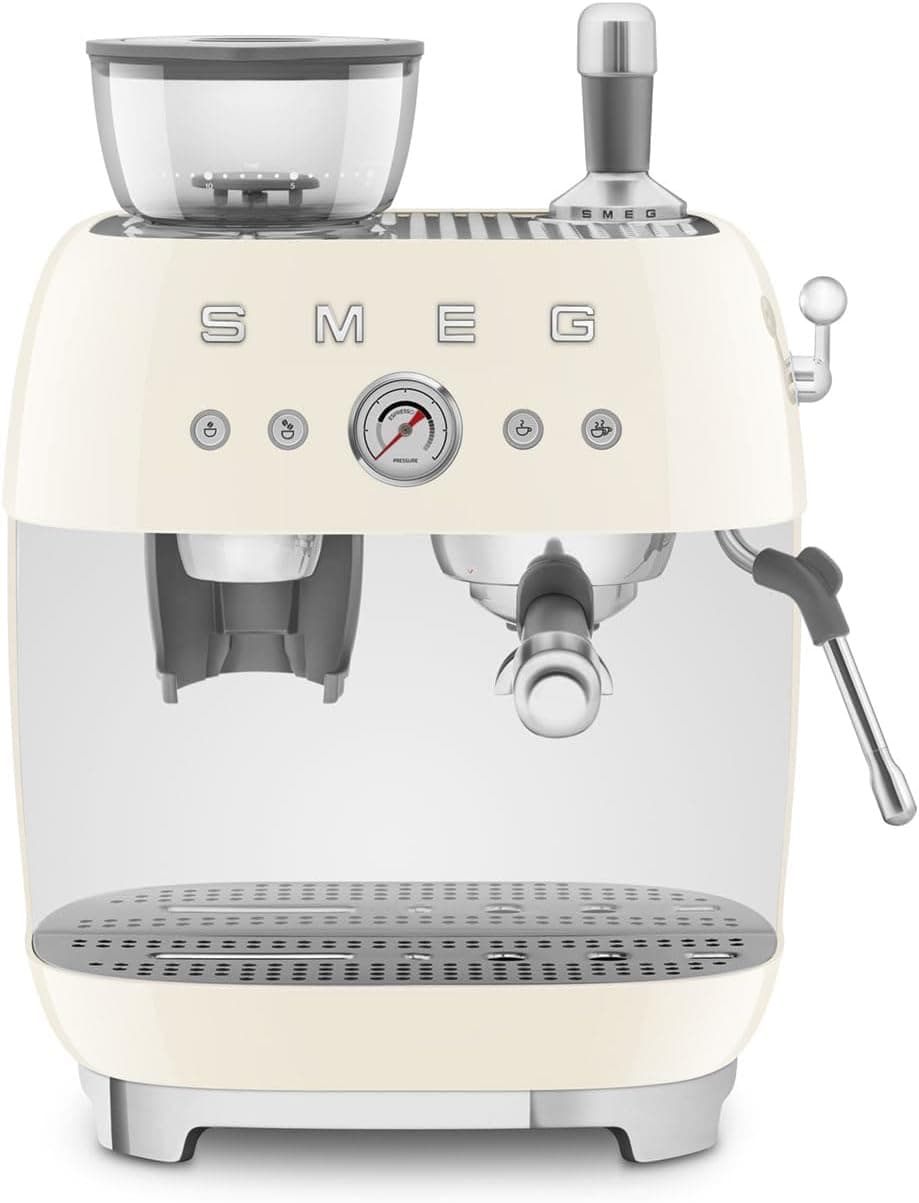
15 bar · Dual thermoblock · $$$
Best DesignPros & cons
Pros
- Built-in burr grinder with 15 settings, no separate grinder to buy
- 58mm commercial portafilter with 3 baskets, including a pre-ground bypass
- Dual thermoblock brews and steams at the same time, no waiting
- Functional analog pressure gauge that doubles as a real diagnostic tool
- Metal tamper included, and 6 colors to match the rest of a Smeg kitchen
Cons
- Programming the shot presets is confusing, four buttons, no display
- Grinder arm scatters a few grounds on the counter, especially on fine settings
- Descaling takes about 40 minutes, one of the longest cycles in its class
- Colored casing is plastic over the aluminum body, not solid metal
- De'Longhi La Specialista Touch
9 bar · Dual Thermoblock · $$$
Best for Cold BrewPros & cons
Pros
- Bean Adapt guides grind and dose by bean profile, cuts first-week guesswork
- Pressure-assisted cold brew in ~5 minutes
- Dual heating system brews and steams simultaneously
- 10 drink presets with 5 milk texture settings, including plant milks
- Consistent brew temperature between back-to-back shots
Cons
- Only 15 grind settings, far less control than Breville's 25 at this price
- Dosing scale lacks fine graduations, imprecise without a separate scale
- No knock box included at this price tier
- 51mm portafilter, not the 58mm commercial standard
19 bar · Thermoblock · $$$
Best All-in-OnePros & cons
Pros
- Non-pressurized baskets pull real espresso
- Built-in scale for weight-based dosing
- Integrated tamper + Barista Assist guidance
- Hands-free milk frother for dairy and plant milk
- Espresso, drip, cold brew, and hot water in one machine
Cons
- Drip tray too small, fills after two cappuccinos
- Runs a touch hot on back-to-back shots
- Bulky footprint on the counter
- Steep price for a newer brand
15 bar · Thermoblock · $$$
Best Super-AutomaticPros & cons
Pros
- One-touch espresso, bean to cup
- Built-in grinder with 13 settings
- Automatic milk carafe included on base model
- Compact for a super-automatic
Cons
- No user profiles for multiple drinkers
- Plastic-heavy build
- Milk carafe too small for two latte macchiatos at once
The 6 Best Espresso Machines with Grinders, Reviewed
Each machine below ships with a real burr grinder built in, no pairing required, no separate purchase.
1. Breville Barista Express Impress: Best Overall
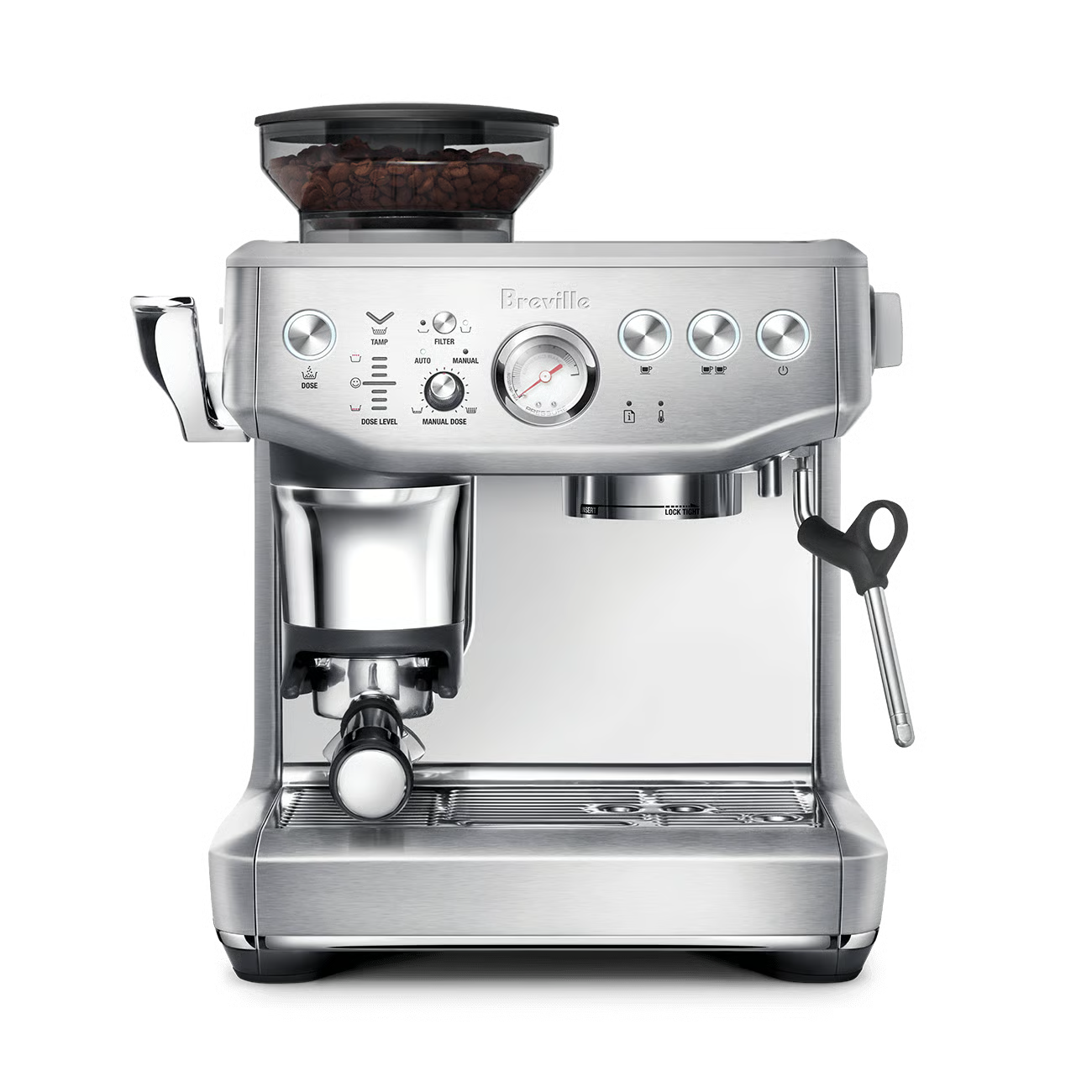
- Price: ~$790
- Grinder: Conical burr, 25 settings
- Portafilter: 54mm
- Best for: Best overall balance of automation and grinder quality
The grinder is a real conical burr with 25 settings, and it’s paired with the Impress Puck System, automatic dosing and tamping that removes the two mistakes beginners make most often. Grind, dose, and tamp all happen with minimal input, and the floor on shot quality is measurably higher than on machines where you’re tamping by feel.
The honest catch: 25 settings sounds like plenty, but the steps get coarser at the fine end, which makes dialing in a very light roast a matter of “close enough” rather than precise. The 54mm portafilter also sits outside the 58mm commercial standard, narrowing your aftermarket basket and tamper options if you want to upgrade later.
For most buyers wanting one machine that handles grinding and dosing without daily fuss, this is the easiest recommendation in the category.
Read my full Breville Barista Express Impress review →2. Breville Barista Pro: Best Fast Heat-Up
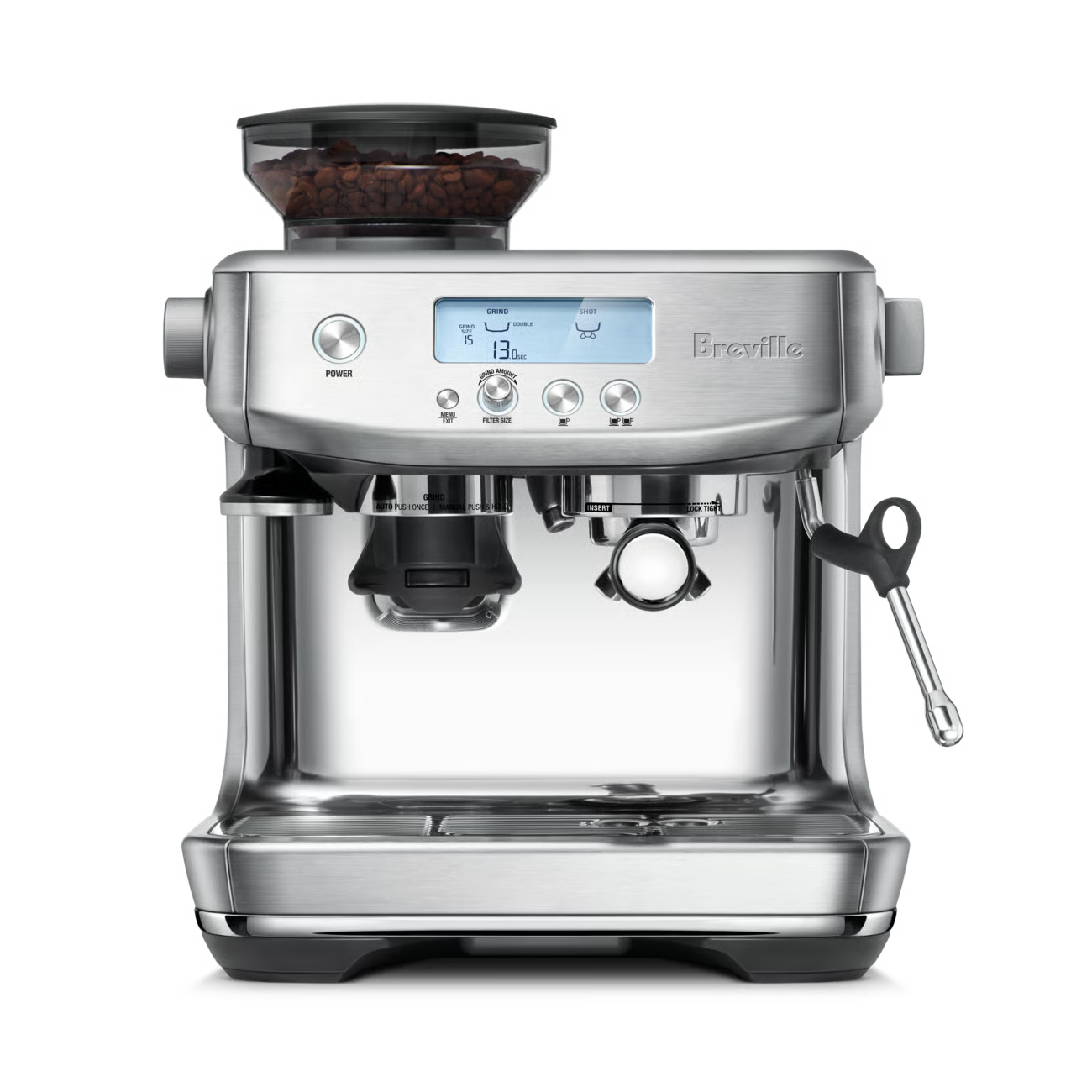
- Price: ~$850
- Grinder: Conical burr, 30 settings
- Portafilter: 54mm
- Best for: Fast mornings and fine grind dial-in
Thirty grind settings is the highest resolution of any machine in this ranking, and newer units quietly ship with Baratza-designed precision burrs, a byproduct of Breville’s 2020 acquisition of Baratza. That resolution matters most at the fine end of the dial, exactly where light and medium roasts need the most precision.
The ThermoJet heating system gets the machine brew-ready in 3 seconds from cold, which changes the daily routine more than the spec implies, no warm-up wait, no wondering if it’s ready. The tradeoff for that speed and grinder resolution is no auto-tamping: you’re tamping by hand, and there’s grind retention in the chute that needs a quick purge before each dose.
Choose this over the Barista Express Impress if grinder precision and heat-up speed matter more to you than hands-off dosing.
Read my full Breville Barista Pro review →3. Smeg EGF03: Best Design
- Price: ~$1,000
- Grinder: Burr, 15 settings
- Portafilter: 58mm
- Best for: Matching a Smeg kitchen without sacrificing real espresso
Most people buying a Smeg already own the kettle and the toaster, the EGF03 is the espresso machine for that ecosystem. It earns the price beyond the looks, though: a 58mm commercial portafilter, a dual thermoblock for simultaneous brewing and steaming, and a functional pressure gauge that actually helps you dial in extraction.
Fifteen grind settings is the fewest of the semi-automatics in this ranking, and the programming menu for shot presets is genuinely confusing without any display. The grinder arm also scatters a few grounds on the counter, especially at the finest settings. None of it breaks the machine, but none of it is a surprise you want to discover after buying.
Buy this for the aesthetics and the Smeg ecosystem. Buy the Barista Pro instead if grinder settings matter more to you than how it looks.
Read my full Smeg EGF03 review →4. De’Longhi La Specialista Touch: Best for Cold Brew
- Price: ~$700
- Grinder: Burr, 15 settings
- Portafilter: 51mm
- Best for: Households that want cold brew without a separate machine
Pressure-assisted cold brew in about five minutes, from whole beans, is the feature nothing else in this ranking offers. Bean Adapt guides grind and dose by bean profile, which cuts real guesswork in the first week, and the dual heating system lets you brew and steam at the same time.
The grinder is the clear tradeoff: 15 settings ties the Smeg EGF03 for the narrowest range here, meaningfully short of the Barista Pro’s 30. The 51mm portafilter is also the smallest in this ranking, and the dosing scale lacks the fine graduations a separate scale would give you.
Choose this one specifically for the cold brew feature and the guided bean profiles, not for grinder precision.
Read my full De’Longhi La Specialista Touch review →5. Ninja Luxe Café Pro: Best All-in-One
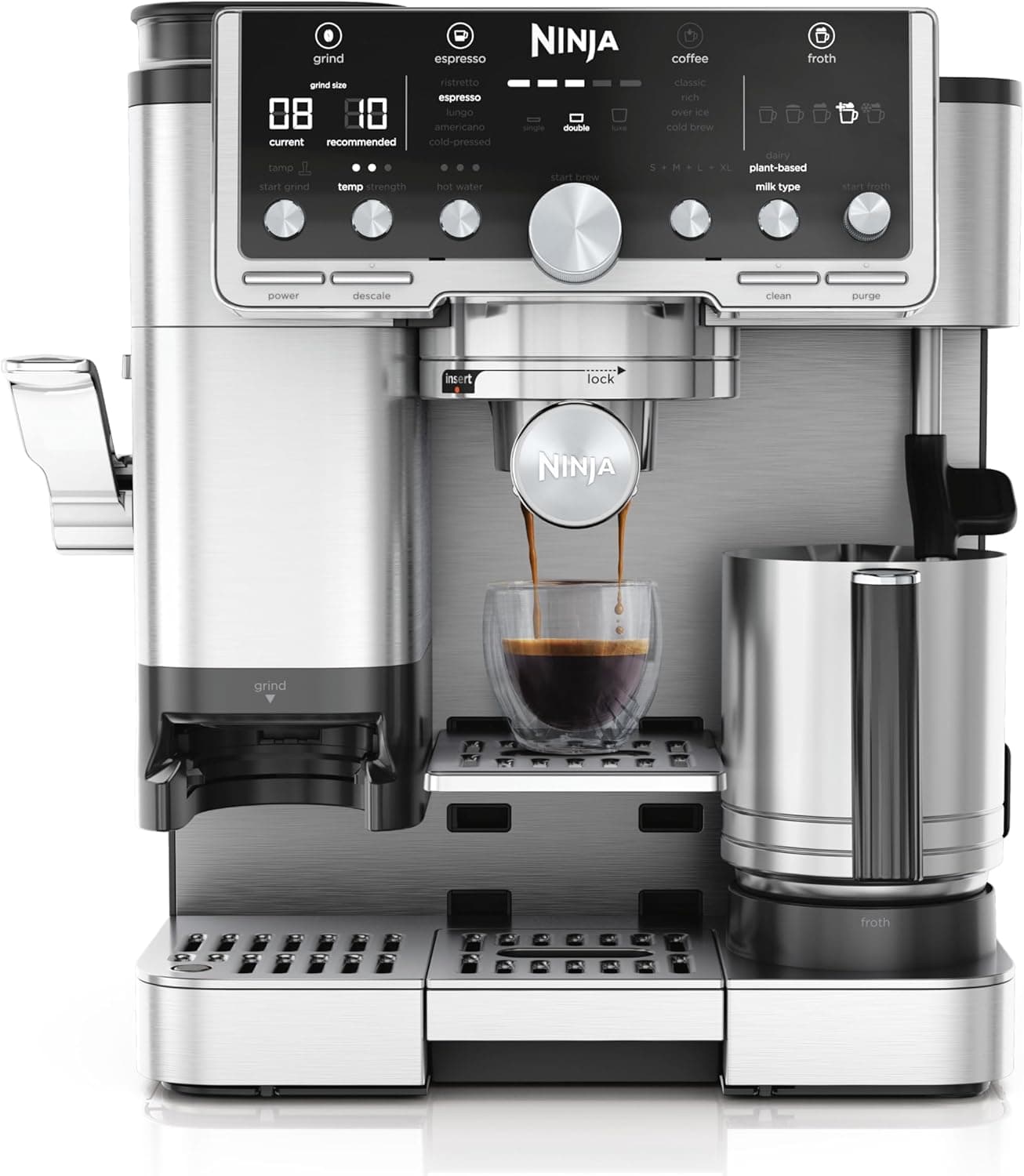
- Price: ~$750
- Grinder: Built-in burr with Barista Assist guidance
- Portafilter: Non-pressurized, single-wall
- Best for: One device for espresso, drip, and cold brew
Barista Assist gives directional grind feedback during extraction, not precise click-by-click guidance, but enough to cut a new user’s dial-in time meaningfully. The built-in scale is rare at this price, a feature that typically shows up on machines costing considerably more. Non-pressurized baskets mean real crema, not the foamy approximation pressurized baskets fake.
It also handles drip coffee, cold brew, and hot water from the same machine, which matters if your household drinks more than just espresso. The drip tray is the honest complaint, it fills after two cappuccinos and needs emptying constantly, and the machine runs a touch hot on back-to-back shots.
Best for a shared kitchen that wants grinder-equipped espresso plus other brew styles in one footprint.
Read my full Ninja Luxe Café Pro review →6. De’Longhi Magnifica Evo: Best Super-Auto Option
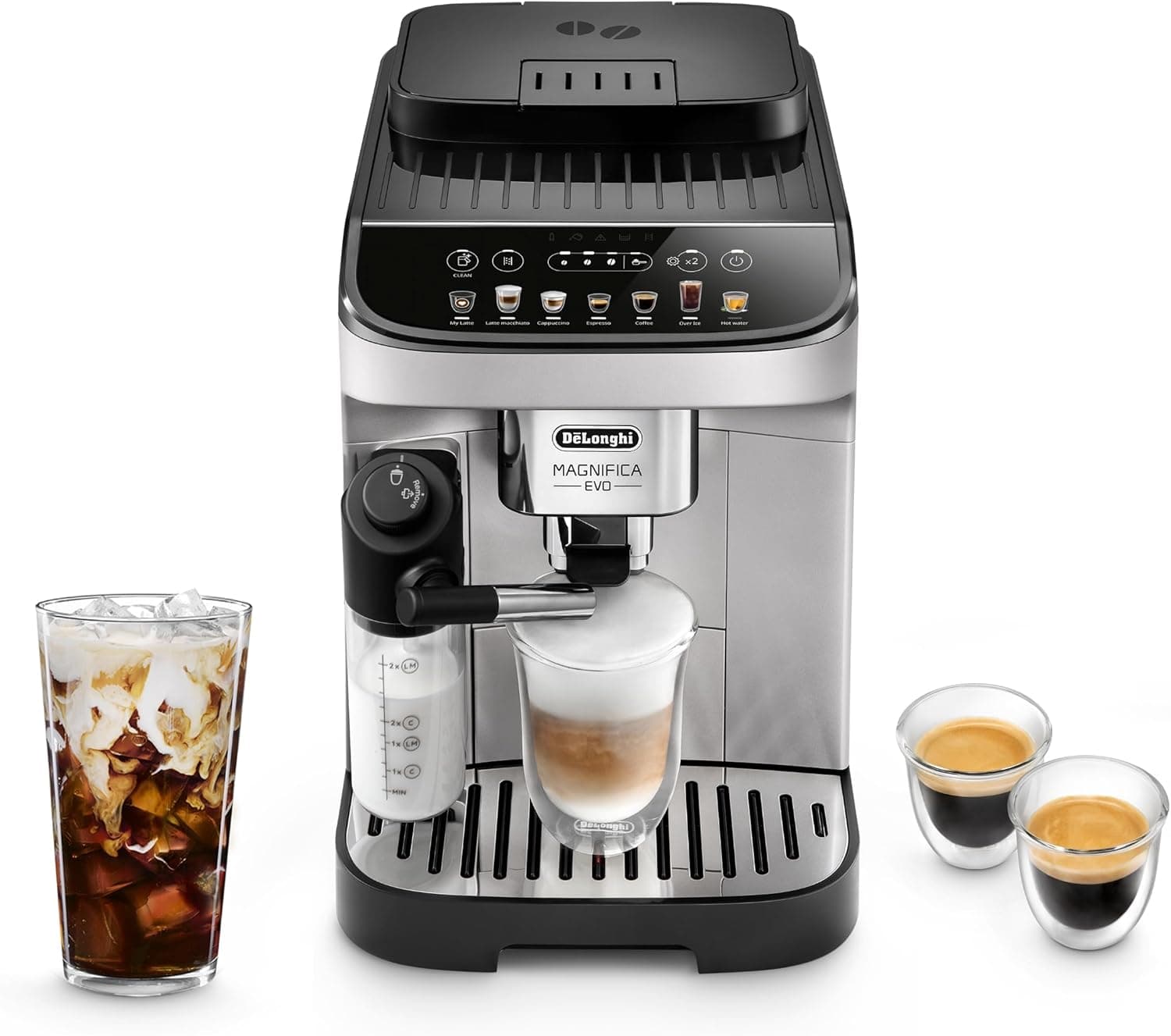
- Price: ~$550
- Grinder: Steel burr, 13 settings
- Portafilter: None, internal brew unit
- Best for: Zero-technique, one-button espresso
If every other machine here is a semi-automatic that needs you to tamp and pull a shot, the Magnifica Evo is the exception: whole beans in, button press, espresso out. The 13-setting steel burr grinder, the dosing, and the tamping all happen inside the machine without your involvement.
That automation is also the ceiling. Crema definition is softer than on a well-dialed semi-automatic, and there’s no portafilter to upgrade or technique to develop, what you see in the cup is what the machine decides to give you. The build is more plastic-heavy than the semi-automatics in this ranking, and the base model’s milk frother is manual.
Pick this one if you want grinder-to-cup espresso with genuinely zero learning curve, for an office or a household where training every user isn’t realistic.
Read my full De’Longhi Magnifica Evo review →How to Choose an Espresso Machine with a Grinder
Grinder settings. More settings mean finer control over dial-in, especially at the fine end where espresso actually lives. Thirty settings (Barista Pro) beats the 15 settings on both the Smeg EGF03 and the La Specialista Touch. If you only ever buy one type of roast, fewer settings matter less; if you switch between light and dark roasts, more settings pay off quickly.
Grinder type.Every machine worth considering for espresso uses a burr grinder never a blade grinder, which can’t produce a consistent particle size. Within burrs, conical (Breville’s machines) and flat designs both work well at the home level; conical is more common and slightly more forgiving of inconsistent bean density.
Portafilter size. 58mm is the full commercial standard, used by the Smeg EGF03 in this ranking, it unlocks the largest aftermarket ecosystem of baskets, tampers, and bottomless portafilters. 54mm (Breville’s machines) and 51mm (La Specialista Touch) are proprietary sizes with a narrower accessories selection, though still perfectly capable of good espresso.
Grind retention. Ask whether coffee sits in the grinder chute between uses. Most built-in grinders retain a small amount, which stales and mixes into your next dose unless you purge the chute first a quick habit, but one every owner should know about before buying.
Super-auto vs semi-auto with grinder.These are genuinely different experiences wearing the same “built-in grinder” label. A semi-automatic with a grinder (five of the six machines here) still asks you to tamp and pull the shot, you get control and a learning curve. A super-automatic (the Magnifica Evo) removes every manual step, including the portafilter itself, in exchange for less control over the final cup.
Want Something Different?
- See my full best espresso machines ranking , including machines that need a separate grinder.
- Prefer a super-automatic bean-to-cup? My super-automatic guide ranks six fully automatic machines by milk quality and ease of cleaning.
- On a tight budget? My budget guide covers real espresso machines from $130 to $500.
- Want more detail on a specific model? My reviews archive covers each machine on its own page.
Is it better to get an espresso machine with a built-in grinder or buy them separately?
It depends on your budget and how much you care about grind precision. Under roughly $800, a built-in grinder like the Breville Barista Express Impress's 25-setting burr gives you one box, one footprint, and good results without research. Above $800, a separate setup, something like the Breville Bambino Plus paired with a Baratza Encore ESP, often beats an all-in-one at the same total price, because a dedicated grinder isn't compromised by also having to fit inside an espresso machine's chassis. Buy built-in for convenience and counter space. Buy separate if grind quality is the priority and you're willing to manage two devices.
What espresso machine with a grinder makes the best espresso?
The Breville Barista Express Impress produces the most consistent shots in this ranking, thanks to its Impress Puck System automating dosing and tamping on top of a 25-setting conical burr grinder. If you want finer control over light roasts specifically, the Breville Barista Pro's 30 settings give more resolution at the fine end of the dial. The Smeg EGF03's 58mm portafilter and dual thermoblock also pull genuinely excellent shots once you've worked around its 15-setting grinder and confusing presets.
Do espresso machines with built-in grinders work well?
Yes, with caveats. The grinders in machines like the Barista Express Impress and Barista Pro use real conical burrs, not the blade grinders found in cheap drip-coffee makers, and they produce shots that compete with separate-grinder setups at the same price. The honest limitation is grind retention, most built-in grinders leave a small amount of old coffee in the chute between uses, and a narrower fine-end range than a dedicated grinder twice the price. For daily home use, they work well. For chasing the last 5% of extraction precision, a standalone grinder still wins.
What's the difference between a burr grinder and a blade grinder?
A burr grinder crushes beans between two abrasive surfaces, conical or flat, producing a consistent particle size you can adjust with a dial. A blade grinder chops beans with a spinning blade, producing an uneven mix of fine dust and large chunks with no real size control. Every machine in this guide uses a burr grinder; blade grinders can't produce the consistent grind espresso extraction requires, full stop. If a machine or accessory advertises a blade grinder for espresso, that's a sign to look elsewhere.