
De'Longhi La Specialista Maestro Review (EC9665M)

Jack · Founder & Lead Reviewer
Researches every machine through engineering analysis, long-term owner reports, and independent technical testing, including Italian and German sources most English-language reviews skip.
Last updated
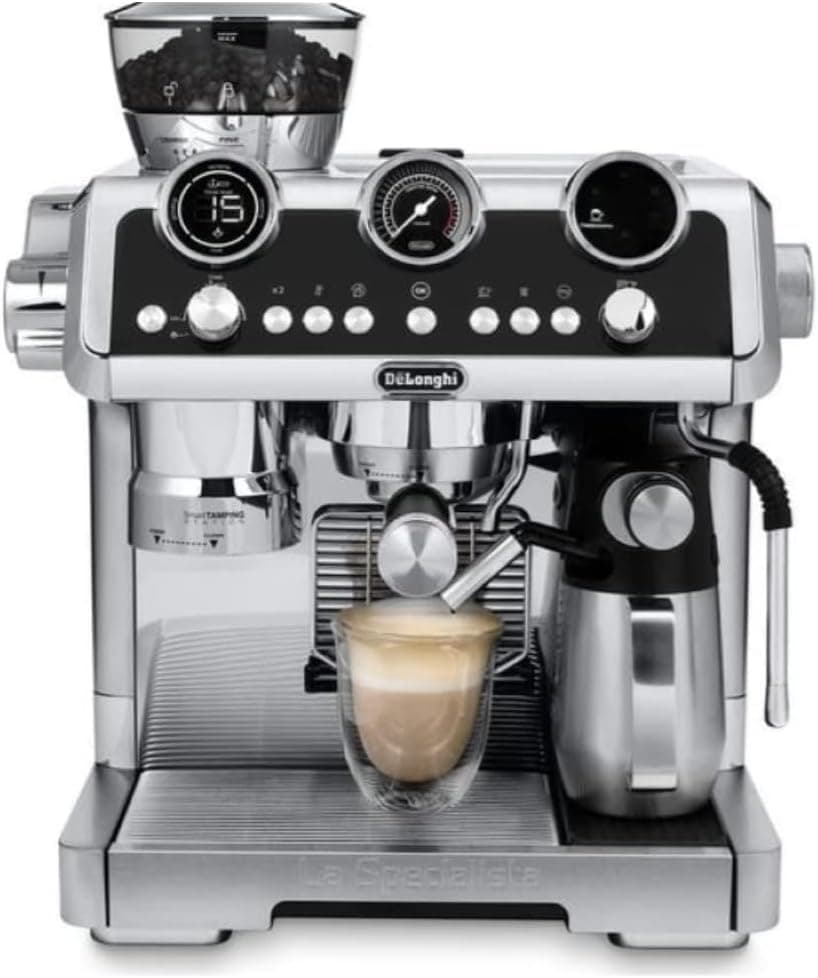


The La Specialista Maestro (EC9665M) sits at the top of De'Longhi's La Specialista lineup, above the Touch and the entry-level Arte. It pairs an integrated conical burr grinder with Sensor Grinding Technology, a lever-actuated Smart Tamping Station, and a dual heating system with PID-based Active Temperature Control across five profiles. At this price tier, comparisons naturally turn to prosumer machines that skip the built-in grinder in favor of pairing a dedicated burr grinder, and that context matters when weighing whether the Maestro's asking price is justified. Two things are worth stating before the feature list takes over: the grinder is limited to 8 settings despite the machine's flagship positioning. Independent reviews and owner reports consistently describe the steam wand as a real weak point relative to the price.
The verdict
Which La Specialista is this?
De'Longhi's La Specialista family spans several machines, and the model numbers don't make the differences obvious.
The Arte (EC9155M) is the entry point. It has an integrated conical burr grinder with 8 settings, a 51mm non-pressurized portafilter, a manual steam wand, and Active Temperature Control on a single thermoblock, three selectable presets rather than a full PID system. It ships with a barista kit (tamper, dosing funnel, tamping mat), not an integrated tamping station. See my La Specialista Arte review for the full breakdown.
The Touch (EC9455M) adds a color touchscreen, De'Longhi's Bean Adapt guided dial-in, and a wider 15-setting grinder range. See my La Specialista Touch review if you're weighing the Maestro against a less expensive option in the same family.
The Maestro (EC9665M) is what this review covers. It adds the Smart Tamping Station, Sensor Grinding Technology, Dynamic Pre-Infusion, a dual heating system with PID-based Active Temperature Control across five temperature profiles, and a front-facing pressure gauge. It stays on the same 8-setting grinder as the Arte despite sitting well above both the Arte and the Touch in price and position, a genuine oddity in the lineup worth stating plainly.
A separate SKU sold in some markets, the EC9885M, is marketed with De'Longhi's Cold Extraction Technology for cold brew. Whether this represents a distinct "Maestro with Cold Brew" variant or a region-specific designation for essentially the same machine varies by source, and I have not been able to independently confirm which framing is accurate. I do not attribute cold brew capability to the EC9665M covered in this review.
What makes it "Smart"
Four technologies separate the Maestro from everything below it in the La Specialista lineup.
Sensor Grinding Technology monitors dose delivery and stops the grinder once a target amount is reached, rather than running for a fixed time regardless of flow rate. De'Longhi's own guidance, cited across multiple independent reviews, recommends starting around setting 5 for espresso and adjusting from there based on extraction time. The 8 grind settings still control grind size itself; the sensors only automate when grinding stops.
Smart Tamping Station is the feature most reviews single out. Lock the dosed portafilter into the cradle, pull the lever, and the machine tamps at a consistent, repeatable pressure without a handheld tamper. Some reviewers note that a double shot occasionally needs a second pull of the lever to produce a fully compact puck, a minor caveat on an otherwise reliable mechanism.
Dynamic Pre-Infusion pre-wets the puck before full extraction pressure kicks in, and adjusts the duration based on dose density. This matters most on medium and light roasts, where an aggressive pressure spike at the start can channel through dry spots and produce uneven extraction.
Dual heating with PID-based Active Temperature Control runs two separate heating circuits, one oriented toward brewing and one toward steaming, both regulated by a PID controller across five selectable temperature profiles. The dual circuits speed up the switch between pulling a shot and steaming milk, cutting the wait that single-boiler machines require. They do not, however, let the machine brew and steam at exactly the same time. At least one owner review flags this distinction as a letdown relative to what "dual heating" implies, since the two functions still run sequentially rather than simultaneously. Heat-up to brewing temperature is fast, well under a minute according to independent reviews.
Grinder and extraction consistency
Sensor Grinding and the Smart Tamping Station remove two of the largest sources of shot-to-shot inconsistency on manually-dosed machines: dose drift and uneven tamping pressure. Independent reviews and long-term owner reports describe the combination as effective at producing repeatable pucks once the machine is dialed in.
The persistent constraint is the grinder's 8-setting range. On medium and dark roasts, the tolerance in the roast is wide enough that 8 steps cover the workable window. On light and washed single-origin coffees, the gap between adjacent settings narrows the margin for error, and it becomes common to land between one setting that runs too fast and the next that runs too slow, the same limitation documented on the Arte. Coffeeness's review of the Maestro flags this as a surprising omission on a flagship-priced machine, particularly next to rivals like the Breville Barista Pro, which offers far more grind resolution at a fraction of the price.
Some long-term owner reports describe inconsistent grind or extraction flow developing over extended use. This isn't independently quantified across a large sample and isn't universal, but it's a genuine caveat worth weighing rather than a confirmed defect.
The steam wand
The Maestro pairs an automatic Advanced Latte System with a manual latte-art mode on the same wand setup, giving you the choice of walking away from milk texturing or controlling it by hand.
Despite the flagship positioning, the steam wand is the detail most independent reviewers and owners flag as underwhelming. T3's review of the Maestro describes the steam performance as falling short of what the price suggests it should deliver, and at least one owner review specifically describes the wand's output as underwhelming relative to expectations set by the rest of the machine's automation. That's a notable gap next to machines costing a fraction as much, including the Breville Bambino Plus and the Gaggia Classic Pro, both rated more highly for milk texturing in independent reviews.
The likely explanation is where De'Longhi directed engineering effort. Sensor dosing, Smart Tamping, and the dual heating system are the Maestro's headline features, and the steam wand reads as comparatively unchanged from less expensive siblings in the lineup.
Maestro vs cheaper prosumer machines
At its price tier, the Maestro sits well above machines like the Gaggia Classic Pro and even above the Breville Barista Pro, both of which pair a separate grinder purchase with steam performance that independent reviewers generally rate higher.
The Breville Barista Pro offers far more grind settings than the Maestro's 8, plus a capable steam wand, but no automated tamping or sensor-based dosing. You dose, tamp, and grind manually.
Pair the Gaggia Classic Pro with a quality separate grinder and you get more grind resolution and, per independent reviews, a stronger steam wand, at meaningfully less combined cost than the Maestro, with the flexibility to upgrade either component independently.
The Rancilio Silvia follows similar logic: no built-in grinder, a strong steam wand, and a long track record, paired with a separate grinder for a fraction of the Maestro's price.
What the Maestro offers instead is automation. Sensor dosing and Smart Tamping remove two variables that frustrate espresso beginners most. Whether that convenience is worth the premium over a manually-dosed prosumer setup depends on how much you value skipping the learning curve on tamping and dosing by hand.
Drink menu and daily use
The Maestro's drink menu covers espresso, americano, cappuccino, latte macchiato, flat white, coffee, and hot water, with the Advanced Latte System selecting milk texture automatically or handing control to the manual wand mode.
The machine stores dose, grind, and temperature profile preferences per drink once you've dialed them in. A front-facing pressure gauge gives a live read during extraction: a needle sitting low with the shot running fast usually means the grind is too coarse, and a needle pinned high with the shot barely moving usually means the opposite. It's a genuinely useful diagnostic when adjusting to a new bag of beans.
The 51mm portafilter, standard across the La Specialista line, is smaller than the 58mm commercial standard. The removable water tank holds approximately 67.6 fl oz (roughly 2 liters).
Maintenance follows the same pattern as other De'Longhi semi-automatics: a removable drip tray and brew group, a built-in descale prompt tied to water hardness and usage, and daily habits like purging the steam wand after use and flushing the group head before the first shot. My descaling guide covers the process step by step.
Who should buy the La Specialista Maestro?
Buy it if you want De'Longhi's most automated semi-automatic in the La Specialista line and prioritize consistent, hands-off dosing and tamping over maximum grind precision or steam performance. The Smart Tamping Station and Sensor Grinding are functioning, sourced features, not marketing language. This machine's price varies meaningfully by retailer and timing, so check current pricing rather than relying on a fixed figure.
Skip it if you want the strongest steam performance at this price, more than 8 grind settings, or would rather put the budget toward a prosumer machine paired with a dedicated separate grinder. For how the Maestro compares across the full field, my best espresso machines guide has the wider picture.
What's the difference between the De'Longhi La Specialista Maestro and the EC9885M?
The Maestro reviewed here is the EC9665M. A related SKU, the EC9885M, is marketed in some regions with De'Longhi's Cold Extraction Technology for cold brew. Sources differ on whether this represents a genuinely separate cold brew variant or a region-specific designation for essentially the same core machine, and I haven't been able to independently confirm which is accurate. I don't attribute cold brew capability to the EC9665M model covered in this review.
Is the De'Longhi La Specialista Maestro worth the price?
It depends on what you value. The Smart Tamping Station and Sensor Grinding Technology are genuine automation that removes two of the most inconsistent manual steps in home espresso, and independent reviews confirm they work as intended. If that hands-off consistency matters more to you than maximum grind resolution or best-in-class steam performance, the Maestro delivers on its core promise. If you want the most grind settings or the strongest milk texturing at this budget, a prosumer machine like the Gaggia Classic Pro or Rancilio Silvia paired with a separate grinder is likely to serve you better. This machine's price varies significantly by retailer and timing, so the value case shifts depending on what you actually pay.
How many grind settings does the La Specialista Maestro have?
Eight. That matches the Arte, despite the Maestro sitting well above it in the lineup and in price. Coverage is adequate for medium and dark roasts, but light and washed single-origin coffees can fall between adjacent settings, since 8 steps offer less resolution than rivals like the Breville Barista Pro. If grind precision on light roasts is a priority, that gap is worth weighing against the Maestro's automation.
What's the difference between the La Specialista Arte and the Maestro?
The Arte (EC9155M) is the entry-level machine in the lineup: an 8-setting grinder, a 51mm non-pressurized portafilter, a manual steam wand, and Active Temperature Control on a single thermoblock rather than a full PID system. It ships with a barista kit (tamper, funnel, tamping mat) rather than an integrated tamping mechanism. The Maestro adds Sensor Grinding Technology, a lever-actuated Smart Tamping Station, Dynamic Pre-Infusion, a dual heating system with PID-based temperature control across five profiles, and a pressure gauge. Both machines share the same 8-setting grinder range, one of the more notable similarities given the price gap between them.