
Cappuccino vs Latte: The Real Difference

Jack · Founder & Lead Reviewer
Researches every machine through engineering analysis, long-term owner reports, and independent technical testing, including Italian and German sources most English-language reviews skip.
Last updated
The core difference between a cappuccino and a latte is milk structure. A cappuccino is built in roughly equal thirds: espresso, steamed milk, and thick foam, giving it a bolder, more coffee-forward character in a small 5 to 6 oz cup. A latte uses far more steamed milk with only a thin foam layer on top, producing a milder, creamier drink that typically runs 8 to 12+ oz. Same espresso. Same caffeine. Completely different drink.
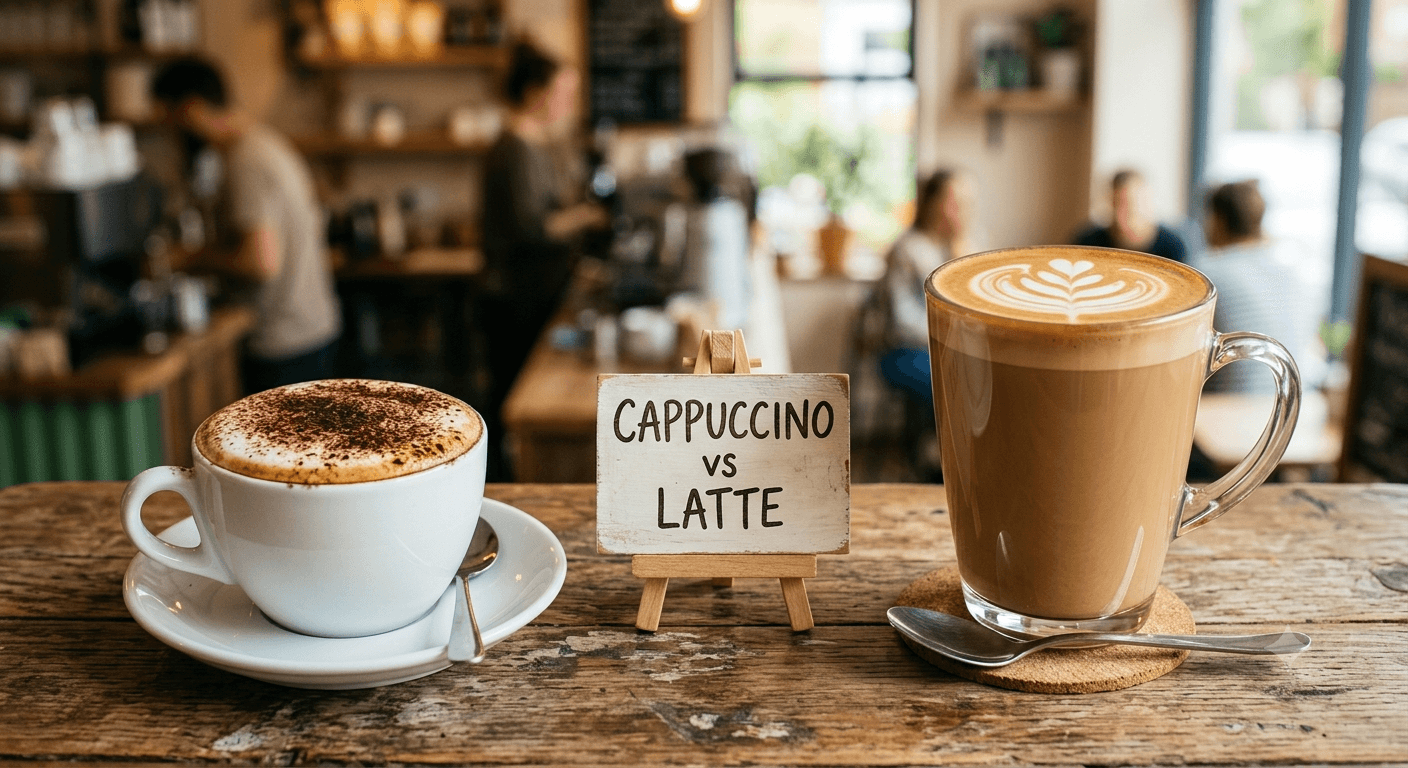
Cappuccino vs Latte at a Glance
| Cappuccino | Latte | |
|---|---|---|
| Espresso base | Single or double shot | Single or double shot |
| Steamed milk | Less, roughly one-third | More, roughly two parts or more per part espresso |
| Foam | Thick, stiff, distinct | Thin microfoam, about 1 cm or less |
| Cup size | 5 to 6 oz (150 to 180 ml) | 8 to 12+ oz |
| Texture | Dry, airy, layered | Creamy, integrated |
| Flavor | Bold, espresso-forward | Mild, milk-dominant |
| Latte art | Harder (stiff foam resists) | Easier (silky microfoam) |
| Serving temperature | Around 65 to 70°C | Around 60 to 65°C |
The Real Distinction: Foam and Milk Structure
Both drinks start from the same espresso. What separates them is what happens to the milk.
For a cappuccino, the steam wand introduces more air into the milk at the start of frothing, building thick, stiff foam with real body and holding capacity. The steamed milk sits underneath. Layers stay distinct, and the foam stays firm enough to hold a spoon's weight. The Specialty Coffee Association defines a traditional cappuccino as 150 to 180 ml total with a minimum foam depth of around 1 cm. In practice a properly made cappuccino carries far more foam than that floor, but the SCA definition anchors the traditional standard.
A latte calls for what baristas call microfoam: milk heated and aerated just enough to create a silky, velvety texture with very fine bubbles and only a thin cap on top. The milk and espresso integrate rather than sitting in layers. That smooth, continuous surface is exactly what makes latte art possible. You cannot draw a rosette into a cappuccino's foam because the stiffness resists the pour.
Which Tastes Stronger?
Neither drink is made with stronger espresso. Both use the same shot, single or double, so the caffeine is identical.
What changes is the ratio of espresso to milk. In a cappuccino, less milk means the espresso flavor is less diluted. The drink tastes stronger and more intense. In a latte, the larger volume of steamed milk softens and stretches the espresso character across a much bigger cup. The perception gap is real and noticeable, but it is a dilution effect, not a difference in the espresso or the caffeine.
If you want a bolder taste without adding another shot, the cappuccino is the answer.
Italian Tradition
The name cappuccino comes from the Capuchin monks, the Ordine dei Frati Minori Cappuccini. The color of the drink's foam matched the brown habit of that religious order, and the name stuck. That etymology is Italian to the core.
In Italy, a cappuccino is a breakfast drink. Ordering one after about 11 in the morning still raises eyebrows in most bars. The reasoning is part cultural and part culinary: a large amount of milk after a full meal is considered heavy on the stomach, so milky coffee belongs to the morning. My family in Italy follows this instinctively, not as a rule they recite but as the natural order of the day. The large milky cappuccinos that American chains serve at 3 in the afternoon are not the Italian version.
"Latte" in Italian is simply "caffè latte," milk coffee. The drink exists in Italy but not in the large-format American style. The 8-to-12-oz milky latte that most people picture was shaped in American coffee culture in the 1950s, popularized well outside Italy. The name traveled; the original proportions did not come with it.
Making Both at Home
Both drinks require a steam wand or automatic milk frother. The technique differs in one meaningful way: cappuccino foam needs more air introduced at the start of steaming, building stiffer, drier foam. Latte microfoam needs minimal air and more even heat, creating that silky, integrated texture. It takes practice to get both right on the same machine, and the machine's milk system matters considerably.
A few machines that handle the milk side well, and that I have covered in full reviews:
Breville Bambino Plus: The automatic steam wand produces latte-quality microfoam hands-free, which is the main reason this compact machine punches above its size. Cappuccino foam takes a manual override of the default settings, but it is doable. Read the full Breville Bambino Plus review for the details on the steam system.
Philips 3200 LatteGo: The LatteGo milk carafe handles everything automatically. The two-part design takes about 15 seconds to clean. Silky microfoam without touching a wand. Read the Philips 3200 LatteGo review.
De'Longhi Magnifica Evo: The base model includes a manual Cappuccino System wand. The premium configuration adds the LatteCrema Auto for fully hands-off milk frothing. Read the De'Longhi Magnifica Evo review for the difference between the two milk systems.
Breville Barista Touch: A touchscreen machine with guided steam settings that walks you through milk texturing for each drink type. Read the Breville Barista Touch review.
On milk choice: whole milk froths best and produces the most stable foam for both drinks. For plant-based alternatives, oat milk in a barista-edition formulation is the closest substitute and gives the most stable froth. Standard almond milk froths poorly; barista-edition almond milk performs better but is still inconsistent.
The Rest of the Espresso Milk Drink Family
Once you have cappuccino and latte clear, the other classic milk drinks fall into place. My macchiato vs latte page covers a drink that is espresso with just a small dot of foam or a splash of milk, far more coffee-forward than either. My flat white vs latte page covers a drink that sits between latte and cappuccino, using less total milk than a latte with thin, velvety microfoam, originating from Australia and New Zealand. My cortado vs latte page covers a drink that balances equal parts espresso and steamed milk with minimal foam, cutting the intensity of espresso without diluting it as far as a latte does.
That is the complete family. The EspressoRadar coffee drinks section ties all four comparisons together.
Is a cappuccino stronger than a latte?
A cappuccino tastes stronger because less milk dilutes the espresso. Both drinks use the same espresso base, whether a single or double shot, so the caffeine content is identical. The difference is milk ratio and dilution, not the espresso itself.
Do a cappuccino and a latte have the same caffeine?
Yes. Both start from the same espresso shot, so caffeine content is the same. A cappuccino only tastes bolder because the smaller volume of milk dilutes the espresso flavor less.
Can you make latte art on a cappuccino?
Intricate latte art is much harder on a cappuccino. Latte art requires thin, silky microfoam that can be poured and drawn into patterns on a smooth, fluid surface. A cappuccino's thicker, stiffer foam does not have that fluid quality and resists fine patterning. Simple designs are possible in skilled hands, but the detailed rosettes and tulips you see in specialty cafes are made for the latte's microfoam.
Which drink has more milk?
A latte has significantly more milk. A cappuccino uses roughly equal thirds of espresso, steamed milk, and foam in a 5 to 6 oz cup. A latte uses roughly two parts or more of steamed milk per part espresso in a cup that typically runs 8 to 12+ oz.
Can I make a cappuccino or latte with plant milk?
Yes, with some trade-offs. Whole milk froths best and gives the most stable foam. For plant-based options, oat milk in a barista-edition formulation is the closest substitute, producing a reasonably stable froth for both drinks. Standard almond milk froths poorly; barista-edition almond milk performs better but remains inconsistent. Soy milk can froth but results vary by brand.
What is the traditional cappuccino size according to the SCA?
The Specialty Coffee Association defines a traditional cappuccino as approximately 150 to 180 ml total, which is roughly 5 to 6 oz, with a minimum foam depth of around 1 cm. In traditional Italian bars the cappuccino is a small, concentrated morning drink, not the large format sold in some international chains.