Philips 3300 LatteGo Review

Jack · Founder & Lead Reviewer
Researches every machine through engineering analysis, long-term owner reports, and independent technical testing, including Italian and German sources most English-language reviews skip.
Last updated
 4.0
4.0
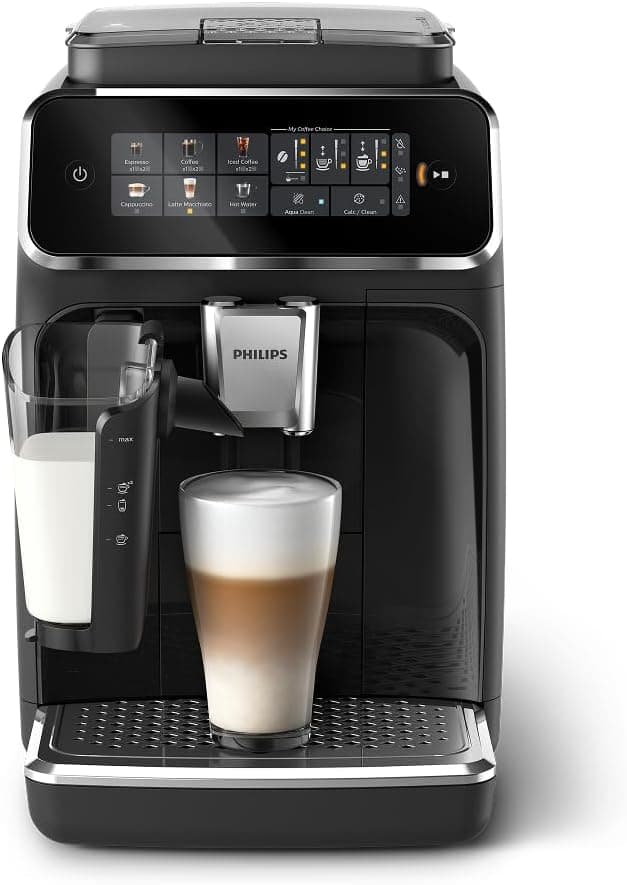
The Philips 3300 LatteGo is the machine Philips would rather you buy than the 3200. It carries the same tubeless milk carafe and the same ceramic grinder as its cheaper sibling, then layers on a quieter grinding system, a color touch display, and a bit more control over how milk drinks get built. I haven't run one on my own counter. This Philips 3300 LatteGo review leans on Philips' spec sheets, independent lab measurements, and owner reports rather than hands-on time, and I'll keep what's measured separate from what's my read.
There's a wrinkle worth naming up front. One source used elsewhere on this site, homecoffeeexpert, reports that the Philips 3200 has been discontinued and replaced by the 3300, with the listings that remain being old stock. I haven't confirmed that independently, and I treat it the same way in my Philips 3200 LatteGo review. If it holds up, the 3300 is simply the current version of this machine rather than an optional upgrade.
The verdict up front
Buy the Philips 3300 LatteGo for the milk system and the quieter grinder, not for a bolder shot. The LatteGo carafe is the easiest milk setup to clean in this category, and independent testing backs up that SilentBrew drops grinder noise by a real margin. What you accept in return is an espresso that runs lighter and less full-bodied than what De'Longhi or a portafilter machine gives you, which Philips appears to have chosen on purpose. If your daily drink is a latte or a cappuccino, that barely registers. If you drink espresso straight, it matters more.
Philips has listed the 3300 LatteGo across a fairly wide band depending on retailer and promotion, and I haven't verified where it sits today. Treat the figure below as a reference point rather than a current quote, and check the live listing before buying.
Philips 3300 LatteGo specs at a glance
- Grinder: Ceramic flat burr, 12 grind settings, the same as the Philips 3200
- Grinder noise: SilentBrew housing, independently measured at 61 to 62 dB with the lid closed, 72 to 73 dB open
- Milk system: Two-part tubeless LatteGo carafe, dishwasher-safe, rinses in about 15 seconds
- Brew group: Removable for cleaning, shared with the 3200
- Interface: Color touch display, a step up from the 3200's plainer icon panel
- Milk customization: Adjustable milk volume, finer than the 3200's fixed ratios
- Heating: Thermoblock
- Pump: 15-bar
- Drinks: Philips lists six one-touch hot and iced presets
- Descaling: Roughly every 24 weeks with the water filter fitted
The grinder and SilentBrew
The 3300 uses the same ceramic flat burr grinder as the 3200, with the same 12 grind settings. Ceramic burrs run cooler than steel and hold an edge longer, and Philips leans on that in its marketing, though the taste difference is smaller than the copy implies.
What actually changes between the two machines is the noise. SilentBrew is Philips' name for the acoustic housing around the grinder, and it does measurable work. Cafelista's testing recorded the grinder at 61 to 62 dB with the bean hopper lid closed, rising to 72 to 73 dB with it open. Ten decibels is a large swing in perceived loudness, close to a halving. Against the 3200, which has no equivalent treatment, Cafelista calls the difference notable. If an early-morning grind in a quiet kitchen is the thing that would stop you buying a super-automatic, this is the part of the 3300 that speaks to it directly.
Keep the lid closed to get the benefit. The measurements make plain that an open hopper hands most of it back.
The LatteGo milk system
The LatteGo carafe is the reason this whole Philips line exists, and it carries into the 3300 unchanged. It's a two-part unit with no tubes and no hidden channels for milk to dry inside. Split it, rinse both halves under the tap in about 15 seconds, or drop them in the dishwasher. Next to tube-fed carafes that need a purge cycle and still clog over time, it's the lowest-effort milk system in the category.
The 3300 does hand you more say over the drink than the 3200. Milk volume adjusts in finer steps rather than sitting locked to fixed ratios, so a flat white and a latte can come out genuinely different rather than different on the label. Foam from an automatic frother like this lands in the creamy range rather than tight microfoam, which is the normal ceiling for the format.
The lighter extraction tradeoff
Here is the part to be clear-eyed about. Cafelista measured the 3300's espresso at 4.5 to 5.5 percent total dissolved solids, against 6 to 7 percent for the competing machines it tested. In plain terms, the cup is thinner and less concentrated. The reason, per that review, is a brew group built to let water pass with less resistance, which keeps the unit simpler to clean and maintain but pulls a gentler shot.
Cafelista frames this as a deliberate choice rather than a defect, and I'd agree with that while still flagging it plainly. A latte drinker pouring espresso into six ounces of milk will not notice much. Someone drinking espresso or a short macchiato, where the coffee has nowhere to hide, will find the 3300 milder than a De'Longhi or a decent portafilter setup. Buy it knowing which of those two people you are.
Philips 3300 vs Philips 3200: worth the step up?
The two machines share their core: the same 12-setting ceramic grinder, the same LatteGo carafe, the same removable brew group, the same thermoblock, the same 15-bar pump. The espresso is the same gentle profile on both.
The 3300 adds three things. SilentBrew drops grinder noise by a measured margin. The color touch display reads and navigates more easily than the 3200's simpler icon panel. And milk volume customization is more granular. None of those touch the coffee. If a quieter grind and a nicer interface are worth the price gap to you, the 3300 earns it. If you mostly care about the milk system and the cup, the 3200 delivers the same thing for less, assuming it's still in stock given the discontinuation question above. My Philips 3200 LatteGo review covers that model in full.
Philips 3300 vs the Ninja Luxe Café
These two get cross-shopped often, and they run on opposite ideas. The Philips 3300 is a true one-button super-automatic: beans in, one press, walk away. The Ninja Luxe Café is closer to a guided portafilter machine, with a real basket, a tamper, and on-screen coaching, so it asks for involvement and pays it back with a fuller shot. If hands-off is the whole point for you, the Philips wins. If you want to actually make the coffee and get more out of the cup, the Ninja does that. My Ninja Luxe Café vs Philips 3300 LatteGo comparison walks through that split in detail.
Who should buy the Philips 3300 LatteGo
Buy it if your daily drinks are milk-based, you want the easiest milk cleanup available in a super-automatic, and a quiet grinder matters in your kitchen. The touch display and finer milk control are real quality-of-life gains over the 3200 if the budget allows.
Skip it if you drink espresso straight and want body and intensity, since the 3300 is tuned deliberately mild. Skip it too if you want to control grind, dose, and extraction yourself, because this is a sealed one-button system with no bypass doser for pre-ground coffee. Anyone after a fuller automatic shot should price the De'Longhi LatteCrema machines against it.
What's the difference between the Philips 3200 and 3300?
They share the same ceramic flat burr grinder with 12 settings, the same tubeless LatteGo milk carafe, the same removable brew group, and the same thermoblock and 15-bar pump, so the espresso is identical. The 3300 adds SilentBrew, an acoustic housing that independent testing measured at 61 to 62 dB with the lid closed, plus a color touch display in place of the simpler icon panel and finer control over milk volume. None of the upgrades change the coffee. One source, homecoffeeexpert, also reports the 3200 as discontinued and replaced by the 3300, though that isn't independently confirmed.
Is the Philips 3300 quiet?
Quieter than most super-automatics, and quieter than the 3200 specifically. Cafelista's lab testing put the 3300's grinder at 61 to 62 dB with the bean hopper lid closed, rising to 72 to 73 dB with it open, so the SilentBrew housing does measurable work as long as you keep the lid shut. The pump sits around 62 dB. It isn't silent, but a 10 dB drop is close to half the perceived loudness, which is a real difference for an early-morning grind in a quiet kitchen.
How many grind settings does the Philips 3300 have?
Twelve, on a ceramic flat burr grinder. That's the same count and the same grinder as the cheaper Philips 3200, so grind range is not a reason to pick one over the other. Twelve steps is enough to adjust for most medium and medium-dark roasts. It's a narrower range than a dedicated grinder offers, which is the usual trade for a sealed one-button machine.